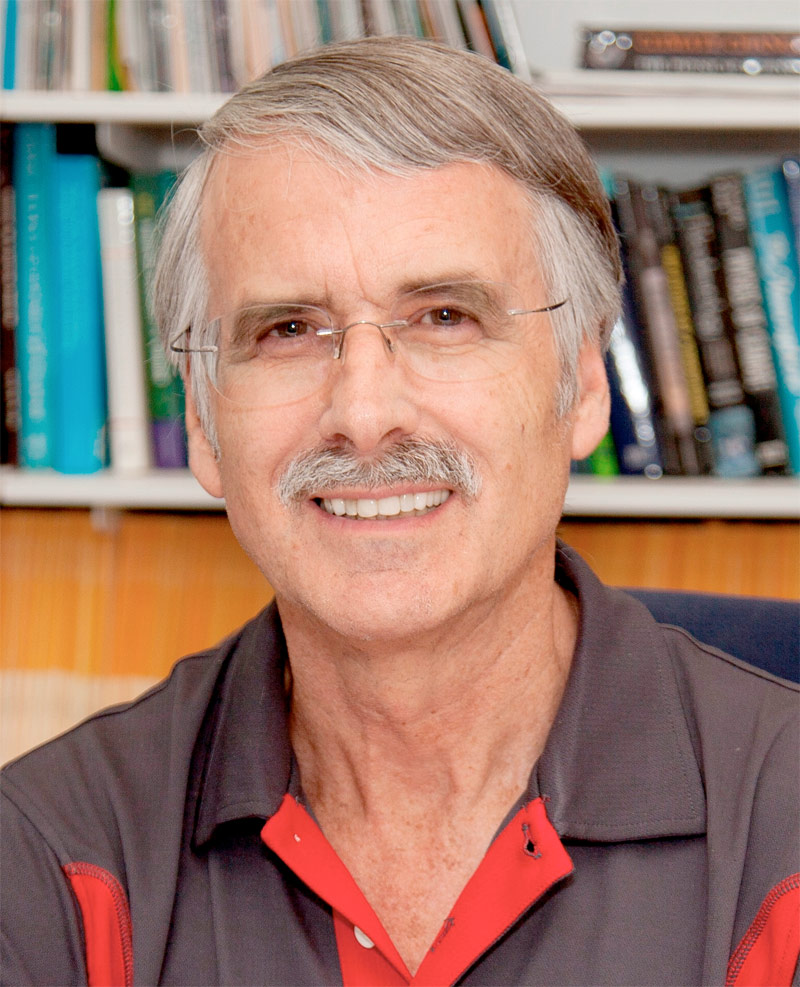
Kevin Trenberth
New Zealand-American scientist
5
APPEARANCES
5
PODCASTS
Nov 4, 2026

Tim HewlettGUEST
If even institutions which purport to be the biggest purveyors of truth can't tell the truth about this, then what hope have we?

Kevin TrenberthGUEST
The work that I've been focusing on in the last few years deals very much with the flow of energy through the climate system.
Kevin TrenberthGUEST
This relates more directly to the main sources of human induced climate change.
Kevin TrenberthGUEST
Now, the reason for that is because the direct effects of humans are relatively small from space heating and electricity use.
Kevin TrenberthGUEST
And the main way in which humans change the climate is by interfering with the natural flows of energy through the climate system.
Kevin TrenberthGUEST
And so we have the sun beating down with a certain amount of radiation coming in.

Tim HewlettGUEST
If even institutions which purport to be the biggest purveyors of truth can't tell the truth about this, then what hope have we?
Kevin TrenberthGUEST
The work that I've been focusing on in the last few years deals very much with the flow of energy through the climate system.
Kevin TrenberthGUEST
This relates more directly to the main sources of human induced climate change.
Kevin TrenberthGUEST
Now, the reason for that is because the direct effects of humans are relatively small from space heating and electricity use.
Kevin TrenberthGUEST
And the main way in which humans change the climate is by interfering with the natural flows of energy through the climate system.
Kevin TrenberthGUEST
And so we have the sun beating down with a certain amount of radiation coming in.


Kevin TrenberthGUEST
And one of the reasons he moved to Denmark was not just to get out of the way, but, uh, because he's a glaciologist and he works, uh, extensively in, in Greenland, and, uh, and he's, he's done a lot of work there.
Kevin TrenberthGUEST
I, I do not agree with, uh, his statement about that we're doomed by any means, though.
Kevin TrenberthGUEST
I mean, I mean, we're certainly headed in the direction where we're going to experience significant climate change, and exactly what magnitude that climate change will be is still somewhat in our hands, but we are going to experience some of it, and it will have some consequences.
Kevin TrenberthGUEST
Uh, you know, the, the way in which we often talk about this is that there are two, two parts to the overall solution.
12 MINS LATER


Jenny DoeringHOST
For those of us who don't remember from high school earth science, what is an El Nino?
Kevin TrenberthGUEST
And El Nino refers to an exceptional warming of the central and eastern tropical Pacific Ocean.
Kevin TrenberthGUEST
The reason is that the Pacific Ocean is huge in the tropics, and it extends more than a quarter of the way around the globe.
Kevin TrenberthGUEST
But there are trade winds, easterly trade winds in the tropics and along the equator.
8 MINS LATER
Jenny DoeringHOST
And so in the short term, what does an El Nino year mean in terms of the global temperature that we see?