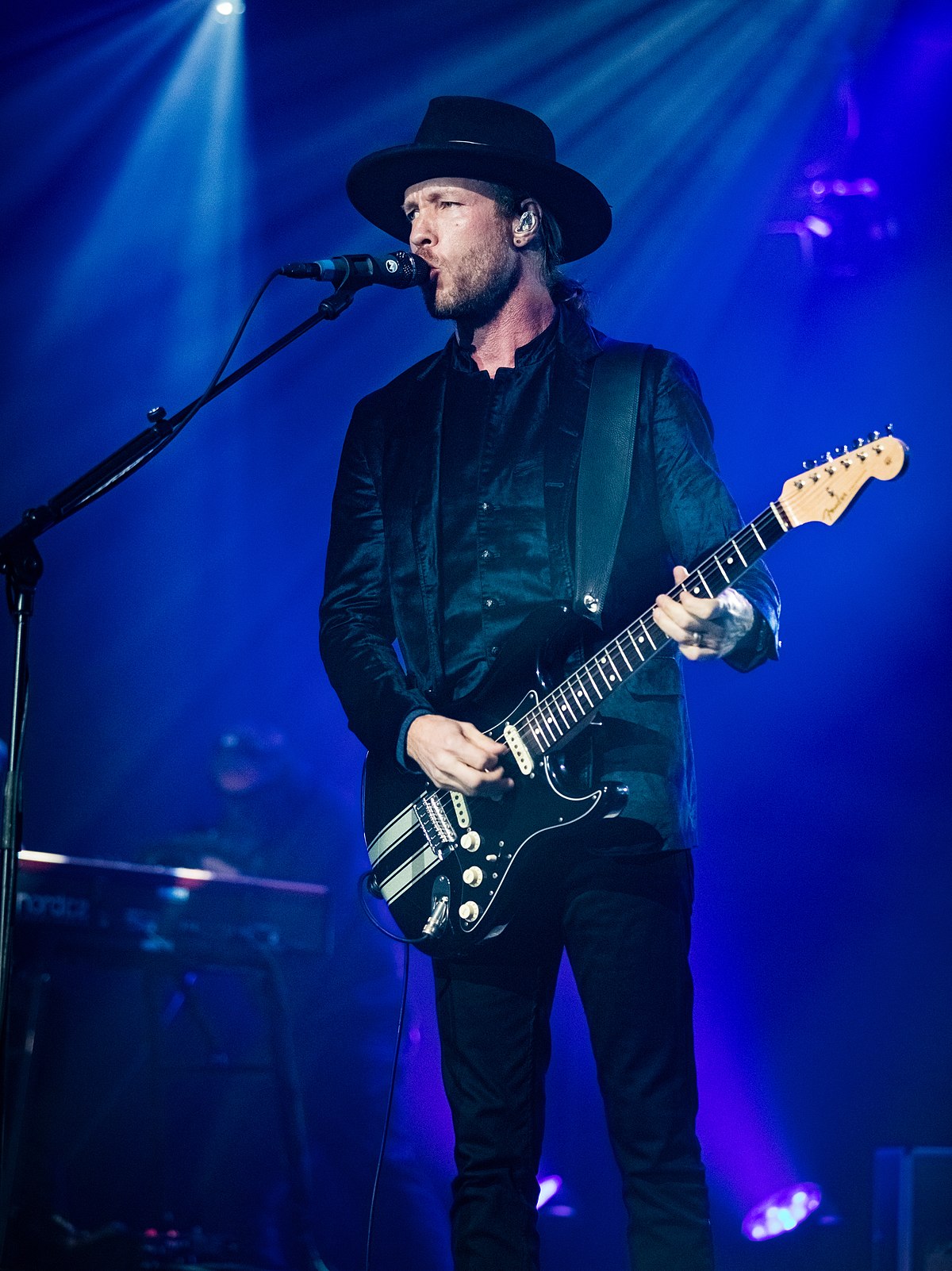
Kenny Wayne Shepherd
American guitarist
10
APPEARANCES
9
PODCASTS
Oct 16, 2026


Kenny Wayne ShepherdGUEST
And then, you know, I've got- I have a studio that I just bought in the past year, and so that's given me the opportunity to, like, work on a lot of stuff.
Kenny Wayne ShepherdGUEST
And then I've been working with some other artists, producing their records and stuff.
Kenny Wayne ShepherdGUEST
So I've got about five different album projects that I'm working on right now.
Kenny Wayne ShepherdGUEST
I got a traditional blues record that should come out next year with Bobby Rush.
Kenny Wayne ShepherdGUEST
So I did this record, like, I think it came out last year, with me and Bobby Rush.

Kenny Wayne ShepherdGUEST
So those two, if you listen to the original Trouble Is and the 25th anniversary edition of Trouble Is, they sound incredibly similar.
Kenny Wayne ShepherdGUEST
The new Ledbetter Heights, the 30th anniversary Sessions Ledbetter Heights album, is not a recreation of the original.

Jack AnthonyHOST
When you listen back to Ledbetter Heights, the original album, does it take you back to that time?


Terrie CarrHOST
So give me your reaction when you look back to that period of time and the one thing you remember the most.
Kenny Wayne ShepherdGUEST
Because when we're doing this anniversary tour, we're celebrating 30 years of Leber Heights.
Kenny Wayne ShepherdGUEST
We're playing every song off that record live in concert for the first time ever.
Kenny Wayne ShepherdGUEST
And we recorded a new version of the record that was released back in May in conjunction with the launch of this tour.

Brian ColburnHOST
But before we hung up the line, I got a chance to ask him what his pick was for the perfect album.
Kenny Wayne ShepherdGUEST
if I just had to off the cuff, I would say that Muddy Waters record Art Again, just because like you, when you listen to that, it's the perfect production of like, you can hear that these guys are just playing music in the studio and they're having a blast doing it.
Kenny Wayne ShepherdGUEST
And that's always been my goal is to try and make records that sound like we're performing live and that we're not trying to you know, to fabricate something in the studio that we're actually trying to capture the energy of that live performance.


LA LloydHOST
It was like, "Oh, he's so young, this guitar prodigy," or, you know, were you and your dad and everyone that was hearing all this response going like, "Bring it on," man?
8 MINS LATER

Kenny Wayne ShepherdGUEST
Obviously, the ones that were singles that people heard on the radio, Born with a Broken Heart, Deja Voodoo.
Kenny Wayne ShepherdGUEST
aberdeen like those are crowd favorites um shame shame shame which is like a slow blue song which has like you know a real extended guitar solo that song has really evolved over there because that's one of the ones that's kind of been in regular rotation in our set list over the past 30 years so i've played that one enough over the years that it's evolved you know and it becomes like a showstopper for sure um There's While We Cry, which is an instrumental song that always had a great impact, but that one certainly has evolved and become even more of a highlight of the concert and the setlist anytime that song is put into the setlist.
Kenny Wayne ShepherdGUEST
So yeah, things have evolved, and certain songs have turned into different experiences than they originally were, for sure.
Kenny Wayne ShepherdGUEST
But the coolest thing about this tour is that A lot of our fans, you know, we're still reaching new people and there's still fans that are coming to see us for the first time, even on this tour.
John StanquireHOST
What were some of the other influences that were coloring your artistic direction that maybe didn't get talked about as much because people found it more convenient to say, okay, Stephen Ray Vaughan, Kenny Wayne Shepard.

Kenny Wayne ShepherdGUEST
But it, for us, like, so I got in, my career started, the first record came out at the end of 1995.
Kenny Wayne ShepherdGUEST
So I, I'm really proud of the fact that we, that I got in on the end, at the end of what I believe was a golden era in the music industry.
Kenny Wayne ShepherdGUEST
Which is another reason why this tour is going so well for us, is that our fans, like, they know all these songs.
Kenny Wayne ShepherdGUEST
Because you would hear a song on the radio, you'd figure out who the artist is, and you'd go buy the record, and you would listen to the whole record.

Adam CarollaHOST
But it's, but you obviously since age four, having that S&H Green Stamps plastic guitar in your hands, you have to just walk out on stage and completely feel at ease.


Dean DelrayHOST
Is there some kind of old label deal that you're ditching? Is that what's going on?
Kenny Wayne ShepherdGUEST
Well, it's all, it's every, it's all of the above, right? So, like, there's a business case for owning your own masters, which, you know, a lot of times, uh, most of the time the record company, like, ties up the masters when they, when you sign your deal.
Kenny Wayne ShepherdGUEST
Well, th- I think it's, like, 35, but, like, even really they, for the duration, like, they feel they own it.
18 MINS LATER
Kenny Wayne ShepherdGUEST
And Cory and I parted ways after that tour, so we haven't, had not been in touch basically since then, but, but he also, um, unfortunately passed away just, like, m- you know, not that long ago, maybe about a year ago.
Kenny Wayne ShepherdGUEST
So just without having him as a part of this, like, w- there was no attempt.
Kenny Wayne ShepherdGUEST
And there was other people, too, like Will Ainsworth, who played some of the bass.
7 MINS LATER

Buzz KnightHOST
so what varied if anything in the creative process from volume one to volume two
Kenny Wayne ShepherdGUEST
What happened was I had all these songs and we started recording them.
26 MINS LATER
Buzz KnightHOST
In closing, if there was a 16-year-old up-and-coming musician who was just starting out, maybe who just got signed, what advice from your time would you give that individual on how they could kind of make it in this awesome business, but this difficult business?