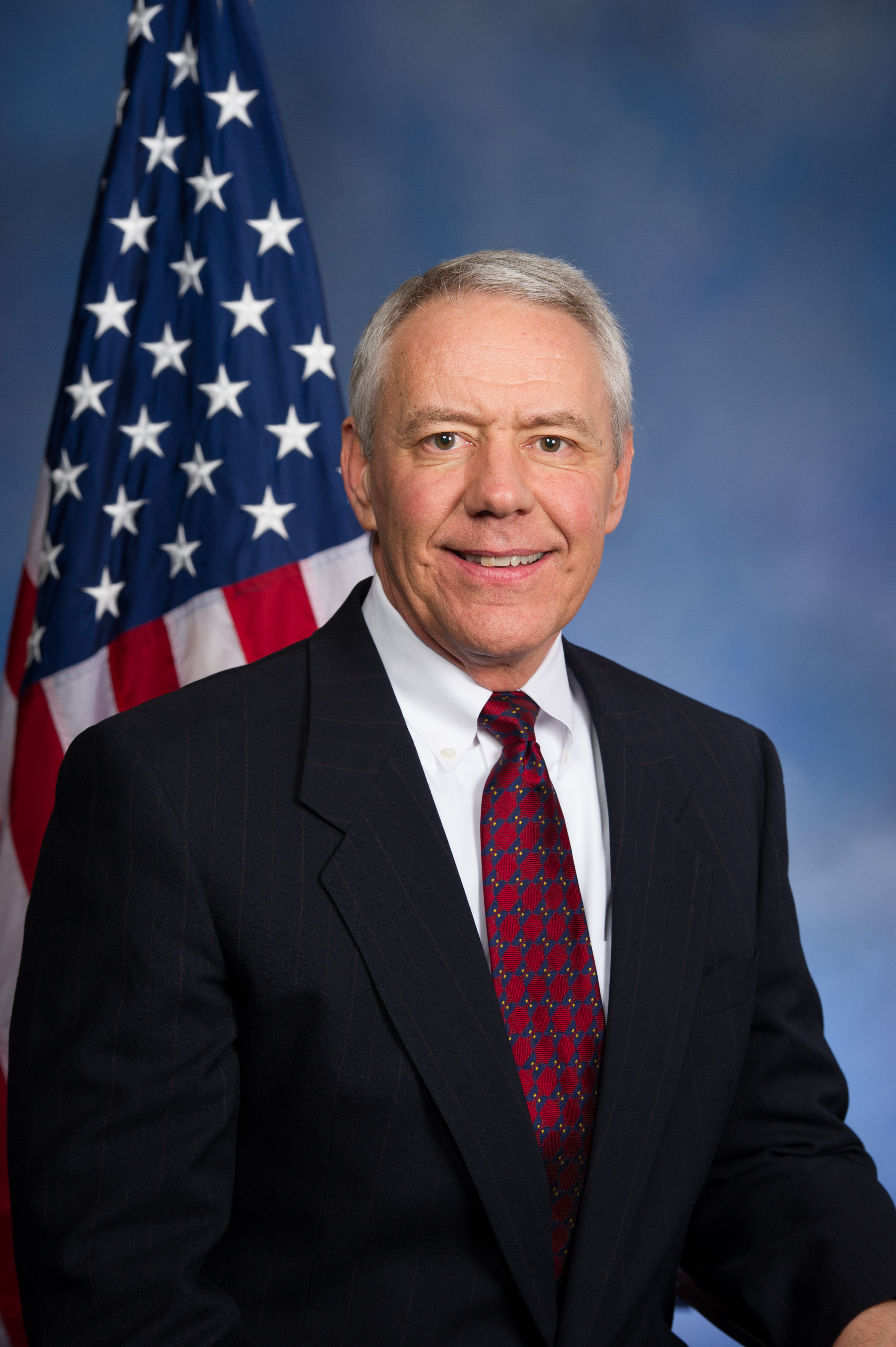
Ken Buck
Lawyer and former United States Representative
27
APPEARANCES
10
PODCASTS
Oct 15, 2026


Jake NicholsHOST
They're getting more and more in debt, and it looks a lot like us, and we look a lot like them, and none of it's good.

Ken BuckGUEST
But, uh, I have to tell you, uh, what's happening in France is a sign of what is gonna be happening here.
Ken BuckGUEST
We are worse off than France when it comes to the percentage of our GDP that, that we have, uh, you know, debt to GDP ratio and, and annual deficits to D- GDP ratio.
Ken BuckGUEST
Um, and France now is having riots because they're trying to make some cuts, and those cuts are painful, and people don't like the pain, and so they are expressing themselves in, in violent and, and dangerous ways.
Jake NicholsHOST
70, 80% of us say we should be talking more about national debt 'cause it's a, it's a problem.
Ken BuckGUEST
Um, Marx, uh, sort of the, you know, the founder or the, or the thought leader in, in, uh, Marxism, communism, socialism, uh, w- was really, had strong objections to religion because people would believe in something other than government.
Ken BuckGUEST
But on a practical level also, I, I just think that, uh, most of us, uh, have a faith, and the faith drives our thinking, not the government.
Ken BuckGUEST
And, and so there, there's a big- There's a big gap, um, in America between people of faith and, and, and socialists.


Ken BuckGUEST
Um, really felt strongly about representing blue collar workers in their districts and unions and other groups.
Ken BuckGUEST
Not necessarily with the same policies that I wanted, but I knew they were sincere, uh, about helping people within the American, uh, structure that we have, our, our government.
Ken BuckGUEST
His dad, Leon Panetta, um, uh, served in a number of positions in, in the executive branch for the Democrats.
7 MINS LATER

Ken BuckGUEST
Both parties have, have gotten us to this point, but the socialists want to spend at an even higher rate, and, and the programs that they're spending on are, are not programs that, uh, invigorate the economy.
Ken BuckGUEST
And so, we've got to be very careful when we look at, uh, electing socialists to office and just how, uh, we can reduce spending.
Jake NicholsHOST
Have we run out of Band-Aids? Have we run out of small temporary things, uh, to get debt reigned in? Are we now to the point where we've tried everything, it, it's now gonna have to be rip off the Band-Aid?
Ken BuckGUEST
But the bottom line is in, in 2032, the Social Security Trust Fund runs out of money.
Ken BuckGUEST
And the way that most people will try to fix that is to say, well, we'll just go into the general fund and pull more money out of the general fund to pay for the Social Security, uh, deficit.
Ken BuckGUEST
And so, uh, Social Security, Medicare are gonna be the big drivers in the near future.
Jake NicholsHOST
You know, they can afford to go to college, but guess who's paying for all that? Do you think that that looks attractive to some of these people falling for this narrative? You know, when we look at Norway, Sweden, Denmark?
Ken BuckGUEST
Well, when you look at those countries and they have 60, 70 percent tax rates between all their different taxes and you talk about a young person who's making, you know, very little compared to what they will be making later in life, it may look attractive.
Ken BuckGUEST
When they start to get into their 40s and 50s, their peak earning years, losing 60%, 70% of your income doesn't look so attractive anymore.
Ken BuckGUEST
And one of the realities in Sweden, I haven't really looked at Norway as – even though that's where my roots are.
Ken BuckGUEST
They could not keep going with their equivalent, their federal pension fund, because it was going bankrupt.

Ken BuckGUEST
I- it is a conservative state that is now being, uh, governed by a liberal, and I can't believe the legislature went also.
Rob CarsonHOST
So do you see maybe common sense Democrats beginning to, uh, separate from this? What, what do you suppose?
Ken BuckGUEST
You know, if, if you go back 40 years, uh, or more, you see the Democrat Party was a, a blue collar union-led party.


Clay HowertonHOST
How do you account for the rising support of such a tyrannical system that is completely incompatible with the United States Constitution, even with liberty itself?
Ken BuckGUEST
Very few students are being taught about the fall of the Soviet Union, about the tyranny in the Eastern Bloc countries as well as Russia, about what happened to Cuba under Castro and Venezuela under Chavez and Maduro.
Ken BuckGUEST
uh so it's really a lack of education about the real world impact of socialism and then uh secondly i think it uh you know we are as a result of the socialist policies that we already have in place we certainly don't have a a socialist economic system in this country But we have had a lot of socialist policies in place.
Ken BuckGUEST
And one of the ones that is certain at the forefront, there are a few, Social Security, Medicare.
Ken BuckGUEST
But when you look at Obamacare, we are draining a lot of resources and we need to borrow money for that.
17 MINS LATER
Clay HowertonHOST
in my home state of kentucky there are other examples as well of course how do democrats leftists continue to shackle families to failing schools where the only goal is to keep tenured union teachers on the payroll rather than training up a generation of well-educated citizens how do we break that

Sean ThompsonHOST
How do you feel about it today, now that you're out of it and you're back, you're back writing books warning America? How could we ever tackle this problem if we have these sequestered gods among us who are supposed to be representing us?
9 MINS LATER
Sean ThompsonHOST
Are you still amazed at how Americans, the principle of our country, the right to your own opinion and the right to say it out loud, the kind of censorship we went through and how many of us are not mad the way I am?


Steve GruberHOST
But what's the biggest threat to America? Is it China? Is it open borders? Is it debt? Is it Islam? Is it socialism? Or is it all of it?


Erin BurnettHOST
Do you think that that's how many voters see a congressman, that this is their chance?
Ken BuckGUEST
do think that i think this is their chance i think if uh vice president vance had those words to take back he would probably take those words back he undoubtedly went off script in that situation i think what the price president should be talking about is the success at the border i think he should be talking about other successes that president trump can point to let the democrats talk about the failures but the bottom line is the people in congress voted for tax cuts they voted to support the president on the border Those are the things Republicans need to stand up and talk about, not a second chance or not another chance.
Ken BuckGUEST
You've got two years of record, and that's what the voters are going to be making their decision based on.
Ken BuckGUEST
One, it means that Europe has to step up and start spending money and start protecting itself.
Ken BuckGUEST
It also means that we have troops that may not be in Europe but can react very quickly to support Europe.
Ken BuckGUEST
I think it's a bad message in some ways because it empowers President Putin and it may even embolden President Putin.
Ken BuckGUEST
Yeah, the significance of that number, the fact that we are now spending more to service our debt than we are to defend our country, is that every great country in the history of the world has started going down rapidly once that happens.
Ken BuckGUEST
And so we have to recognize that we're at an inflection point, and if we don't turn this around, we're going to have real problems.
Ken BuckGUEST
I smirk a little bit when you talk about the importance of spending on national defense, and it is important, but the Department of Defense is just as wasteful as all the rest of these agencies out there.
Ken BuckGUEST
The answer to me, and I wish that President Trump would say this and just come right out and say this, is we need to cut to the bone all the waste in the Department of Defense and use that for new weapons systems, use that for training, use that to make sure that we are giving our men and women the very best in the military.
Jake NicholsHOST
Is that still a thing? Are we still examining how we're spending money and finding places where we're wasting it?

Ken BuckGUEST
Well, first of all, I'm not sure I agree with that completely because the bottom line is in order to win and show that it has crippled economies in the past, Soviet Union, Cuba, Venezuela, and others, you've got to have an educated electorate that understand all those coincidences, more than coincidences that have occurred.
Ken BuckGUEST
My home state, the congresswoman from Denver lost her race to a Democrat socialist, and it took a lot of people by surprise.
Ken BuckGUEST
The best way to do it is to talk about what happens in party politics, where the extreme has enough votes to force those in the middle to do what the extreme wants.

Matt GaetzHOST
Is this a system that can be fixed? And if so, what is the type of shock to the system that works?
Ken BuckGUEST
Yeah, and one of the real problems with bond rates going up is that our national debt goes up even faster.
Ken BuckGUEST
And that's when you know you're in the death spiral, because when you have to pay more to borrow money, You are paying not just the amount for salaries for the military and, you know, Social Security and all the other programs that we have.
Jake NicholsHOST
Was it that way when you were in the State House of Representatives in 2015 through 2024? Yeah.
Ken BuckGUEST
Pretty soon it'll be $2.9 trillion or $2.9 billion and then $3 billion, and it'll keep going up.
Ken BuckGUEST
And as we're seeing in Minnesota and California and so many other states, a lot of this money is just wasted.
Ken BuckGUEST
And a lot of the money goes to Social Security, Medicare, Medicaid, what the Congress likes to call You know, mandatory spending.
Ken BuckGUEST
And the advantage goes to the incumbent, clearly, because there's a ton of money.
Ken BuckGUEST
The incumbent is in office and people, lobbyists and others who need to raise or who need a vote are going to donate to the incumbent.
Ken BuckGUEST
So sometimes you get a self-funder that is challenging an incumbent and the money doesn't matter as much.
Ken BuckGUEST
If people are happy with the direction of the country, with the direction of the state, with the direction of their community, they are going with the incumbent.
6 MINS LATER
Jake NicholsHOST
Um, there were efforts made by, uh, President Biden regarding healthcare, and I don't think they panned out either.
Ken BuckGUEST
Um, and, and the reality is, uh, and everybody knew this, everybody knew this at the time, but Obamacare is a fiscal failure, an absolute fiscal failure.
Ken BuckGUEST
You cannot have, um, middle-class people subsidizing the healthcare of less, lower middle-class people.
Ken BuckGUEST
Obamacare work without a huge, and I'm talking hundreds of billions of dollars a year, in subsidies from the federal government.
Jake NicholsHOST
The old president will say, "Well, that was my policies finally working." And the new guys'll say, "No, beginning in January things got better." There's gotta be some lag time in the numbers.
Ken BuckGUEST
They have all their, uh, uh, really anti-capitalist and, uh, anti-common sense programs that, that reduce the amount of housing that is affordable for people, and in the long run it creates more homelessness and, and the way they treat homelessness, much different.
Ken BuckGUEST
You see cities that actually have, uh, homeless shelters and people can live there.
JeffHOST
How do we slip these into bills without public debate?
Ken BuckGUEST
You know, they'll hold appropriations hearings and they'll invite agency heads to come in and testify about what they need.
Ken BuckGUEST
But the appropriations bill is often a 3000 page bill that That is dropped on members of Congress the night before the vote.
Ken BuckGUEST
And, you know, we're expected to read the 3000 pages before a vote on the bill at 930, 10 o'clock in the morning.
6 MINS LATER
JeffHOST
I mean, we go round and round, we hear it all the time, the deficit, deficit, deficit, but are we ever going to do anything about the deficit? Can we ever lower it? I mean, it's what, 30-some
Ken BuckGUEST
Yeah, but yeah, I think what's really sad is in order to prevent fraud, you need to have higher standards for the people to qualify so that the fraudsters can't just apply for a student loan from a foreign country when they're not going to college in the U.S., or... apply for Medicaid benefits when they're not in the U.S. And so the Democrats are voting against those tougher standards to get in more identification.
Ken BuckGUEST
We've got billions, over $9 billion has been identified in blue Minnesota and over $160 billion in California as the result of fraud just in the years 2020 to 2025.
Ken BuckGUEST
When I heard about Doge, I was really excited, and I thought it was a great idea.

Ken BuckGUEST
We don't know what the agreement is, and we don't know whether either side is gonna live up to the agreement down the road.
Ken BuckGUEST
So I, I think it's very difficult at this point to say that, uh, there, there even is an agreement.
Ken BuckGUEST
You know, is, is Iran going to let inspectors have, uh, access to all their facilities? All these questions are unanswered.

Laura CoatesHOST
Do, do you think that these terms are acceptable and distinct from what you called delusional, the 2015 JCPOA?
Ken BuckGUEST
But more and more, the Trump brand is important, and so you don't want to cross the president.
Ken BuckGUEST
Well, the whole way the country was set up is that there would be a tension between the legislative branch and the executive branch, and there would be oversight.
Ken BuckGUEST
And that, in this instance, is real tough because when you have the opposing party in power— then there's oversight, then there's tension.
9 MINS LATER
Jake NicholsHOST
Give us, build the background, tell us what it is, what's going on, and why we should be concerned.
Ken BuckGUEST
You know, Thomas is a strong defender of the Constitution, and, uh, the president has a different view of executive power, an expanded view of executive power.
Ken BuckGUEST
Uh, this president is all about making America broke again, and, and Thomas Massie is a fiscal conservative and wants to make sure that we don't overspend and that we make sure we live within our means.
Ken BuckGUEST
And that is something that, uh, ha- has caused a lot of friction with this president, dating back to the first, uh, term that the president had.
Laura CoatesHOST
Is the president prioritizing loyalty at the literal expense and figurative expense of winning?
Scroll for more appearances