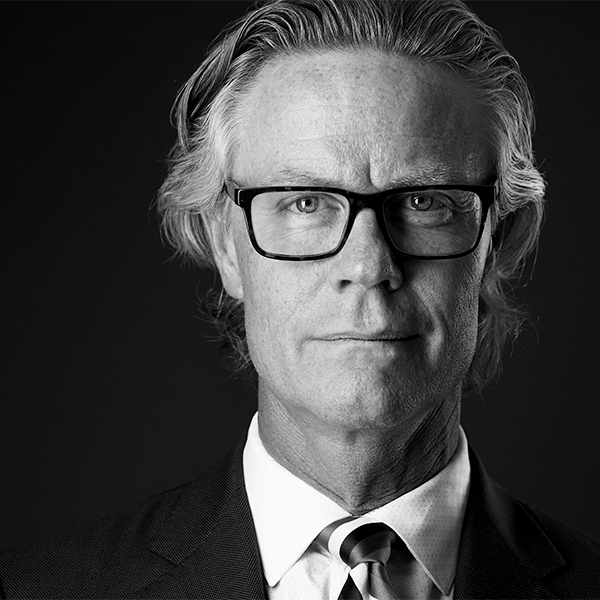
Ken Boessenkool
Author
9
APPEARANCES
6
PODCASTS
Sep 18, 2026


Shaye GanamHOST
I don't know if the government would get in on it, but what are you envisioning possibly happening around that 5% GST?

Ken BoessenkoolGUEST
I've got a couple more pieces coming out with some other co-authors on this thing.
Ken BoessenkoolGUEST
But if you look, I just looked at the 5% GST that the federal government collects in Alberta, and that's about $7.1 billion.
Ken BoessenkoolGUEST
$7.1 billion just happens to be the amount the federal government sends to Alberta in health care transfers.
Ken BoessenkoolGUEST
And, you know, we've got to fight over the federal government over whether we can do some health reforms or not do other health reforms.
Shaye GanamHOST
I don't know if the government would get in on it, but what are you envisioning possibly happening around that 5% GST?
Ken BoessenkoolGUEST
I've got a couple more pieces coming out with some other co-authors on this thing.
Ken BoessenkoolGUEST
And look, $7.1 billion just happens to be the amount the federal government sends to Alberta in health care transfers.


Rob BreakenridgeHOST
How do you assess where things are at here, first of all, as you know, we're about a month out?
Ken BoessenkoolGUEST
I mean, there's a danger sign in this referendum, to be honest, which is that, you know, the turnout was really low.
Ken BoessenkoolGUEST
I suspect the turnout among conservatives was lower than the lower turnout.
Ken BoessenkoolGUEST
Sorry, the staying home instead of voting was lower among conservatives and among progressives.
Ken BoessenkoolGUEST
You made the point earlier that progressives are walking across glass to vote these days, and I hope they do for the referendum.
Ken BoessenkoolGUEST
But the danger from this by-election for the referendum is that conservatives may also stay home and not vote in this referendum because, you know, there's no secret.
Rob BreakenridgeHOST
What else are you watching for in the weeks ahead? What are you hoping to see in the weeks ahead?


Ken BoessenkoolGUEST
And I just think in the current context of what's going on with the trade talks, there's just a, there's just a bubbling pro-Canada sentiment that's happening across the country.
Ken BoessenkoolGUEST
And, you know, The Line wrote a pretty aggressive piece last week about defending ourselves and all this stuff, and wherever you come down on what Carney should do, shouldn't do, concessions, no concessions, my sense is that there's a, there's a real pro-Canada feeling across the land, if I can be biblical about it for a moment.
Ken BoessenkoolGUEST
And in the context of Alberta, I mean, you said this in your introduction, uh, Jen, just a moment ago, that there's a feeling like things are down.
Ken BoessenkoolGUEST
And I think one of the reasons for this is this broader pro-Canada sentiment, this feeling like we gotta pull together.
Ken BoessenkoolGUEST
Uh, and I keep quoting what Stephen Harper said at the beginning of this whole thing, which was, "There's no price I wouldn't be willing to pay to make sure Canada doesn't become a 51st state." And so I think there is an interplay between this trade stuff that's going on with Trump and what's happening in Alberta, because if you're a soft separatist, as opposed to a hard separatist, two things are true about you.
Ken BoessenkoolGUEST
Number one, as I always like to remember, those, those places where they were collecting signatures at the side of the highway on Highway 2, there was always a couple of lawn chairs that had, like, Canada flags on them.
23 MINS LATER
Jared WesleyGUEST
And again, I, I think the focus should be on making sure that we don't go back to the way things were the past 10 years, and I think we have a willing federal government, um, in place that, that will actually try to put some guardrails up against that.


Kathleen PettyHOST
But it was seen radical coming from Alberta is essentially what you're saying.
Ken BoessenkoolGUEST
I think what we could say was a surprise to us what the hostility was toward it because, again, I'm now repeating what Ted said.
Ken BoessenkoolGUEST
I remember when I presented the pension plan idea to Stephen, he's like – I thought that's how they created the Canada Pension Plan with Quebec outside it.
21 MINS LATER
Ken BoessenkoolGUEST
The equalization program is sort of an ongoing, and it's averaged over three years, and the payments sort of move slowly, and there's caps and a bunch of other things.
Ken BoessenkoolGUEST
And basically, it's, you know, provinces that collect less in sales taxes, for example, than other provinces, they get compensated for that.
Ken BoessenkoolGUEST
So they're able to deliver programs at the same sort of tax rates as the national average.
Ken BoessenkoolGUEST
We also have what's called a stabilization program, and that's when provinces, you know, like Alberta, face these massive decreases in their provincial revenues over a certain amount, Ottawa will step in and say, look, you've lost a huge amount of resources revenue in one year, and if it's over a certain amount, we'll compensate you for a portion of that.
Rob BreakenridgeHOST
So how much of this conversation should be about addressing those legitimate frustrations?
Ken BoessenkoolGUEST
Look, I think, I think there's a core group of separatists, I think it's somewhere between seven and 12% of Albertans, that would separate no matter what, and they're gonna do it no matter what.
Ken BoessenkoolGUEST
I, I think what our group is hoping is that we can speak to whatever the gap between that 12 or 15, you know, seven to 12% is, and a, a dangerous result in the, in the referendum, that, that there's some frustrated federalists that need to have or should have or we're hoping to give them some ideas or some pathways to a better Alberta and a better Canada.
Ken BoessenkoolGUEST
And, you know, there are people who are frustrated and say we need to move forward.
10 MINS LATER
Rob BreakenridgeHOST
So tell us a bit more about what Lead Not Leave is going to be involved in.


Ken BoessenkoolGUEST
But look, as, as I was looking around the landscape over the last number of months, I kept hearing that there were a bunch of people that were gonna launch political campaigns, uh, campaigns to make public arguments, campaigns to spend money on advertising.
Ken BoessenkoolGUEST
And what seemed to me was a potential gap was a group of people that would get together and do s- uh, you know, three things.
Ken BoessenkoolGUEST
Number one, propose things that Alberta can do to make Alberta stronger on its own.
Ken BoessenkoolGUEST
Uh, what can Alberta do in f- three years, five years, 10 years to make Alberta a stronger province on its own? Number two, what are some of the things that we can propose that would make Canada better, and, but Canada better through the lens of that also making Alberta stronger within Canada? And number three, uh, some of the arguments coming from the separatists need to have a substantive, fact-based, non-emotional response, and, uh, that's gonna be necessary.
Ken BoessenkoolGUEST
And as I talk to some of the people organizing the other groups, they were encouraged that I was gonna gather a bunch of, uh, a bunch of nerds and, uh, convene some policy discussions.
Ken BoessenkoolGUEST
We had some long meetings yesterday with our group, and we came up with a whole bunch of, I think, about 30 or 40, uh, potential ideas that we're gonna sort of work on internally and put forward.
10 MINS LATER

Ryan JespersenHOST
Get the number on the scoreboard, get it over with, give the people what they want, and then we can just shut the hell up about it, you know?


Stacey BrotzelHOST
Okay, so, uh, 'cause a lot of people are saying, "Well, of course the, the numbers completely lie out, and we're gonna, we're going to be so prosperous if we, uh, leave Canada and we become our own country." Is that the sort of thing you're going to try to combat? Where, where you're just like, "Well, no, let's take a look at the numbers, and have you thought of this, this, this, this, this, this, and this line item?"
Ken BoessenkoolGUEST
I mean, we have a bunch of academics in our group who have been asked by various other folks to, to, to, to take a look at the numbers.
Ken BoessenkoolGUEST
You know, we've got, uh, Trevor Tombe, a noted economist, who's made some comments around these, around these issues.
Stacey BrotzelHOST
That's a high, that's the, the highest separation number that I have seen in, in the last number of months.