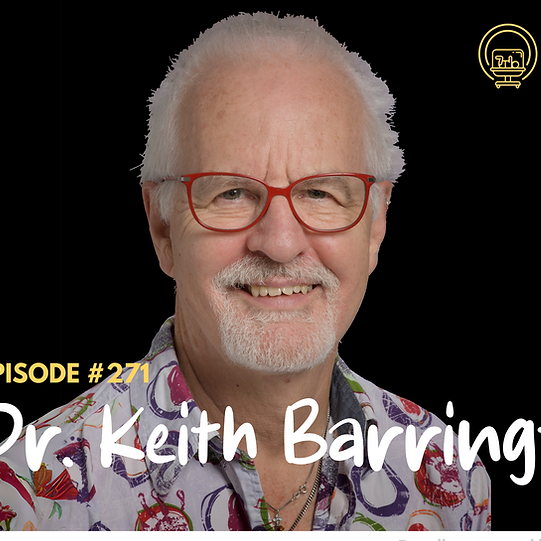
Keith Barrington
Neonatologist and clinical researcher at CHU Sainte-Justine in Montréal, Professor of Paediatrics at Université de Montréal, and author of the Neonatal Research blog.
1
APPEARANCES
1
PODCASTS
Sep 11, 2026


Robert KrulwichHOST
Well, could you remember if the doctor in you was surprised at the father in you?

Keith BarringtonGUEST
Yeah, I think if I'd have been more evidence-based and rational and scientific, um, I, I could have gone either way.
16 MINS LATER

Keith BarringtonGUEST
In evolutionary history, newborn babies very frequently died, and most parents who have, uh, any significant number of children had lost one or two or three or more.
Keith BarringtonGUEST
And in order to be able to carry on with your life and to provide for the rest of your family, we had to be able to adapt to the death of babies.
Keith BarringtonGUEST
And now that it's become much less common to lose a baby, even, you know, miscarriages and, and stillbirths, so now we're realizing how much that hurts.