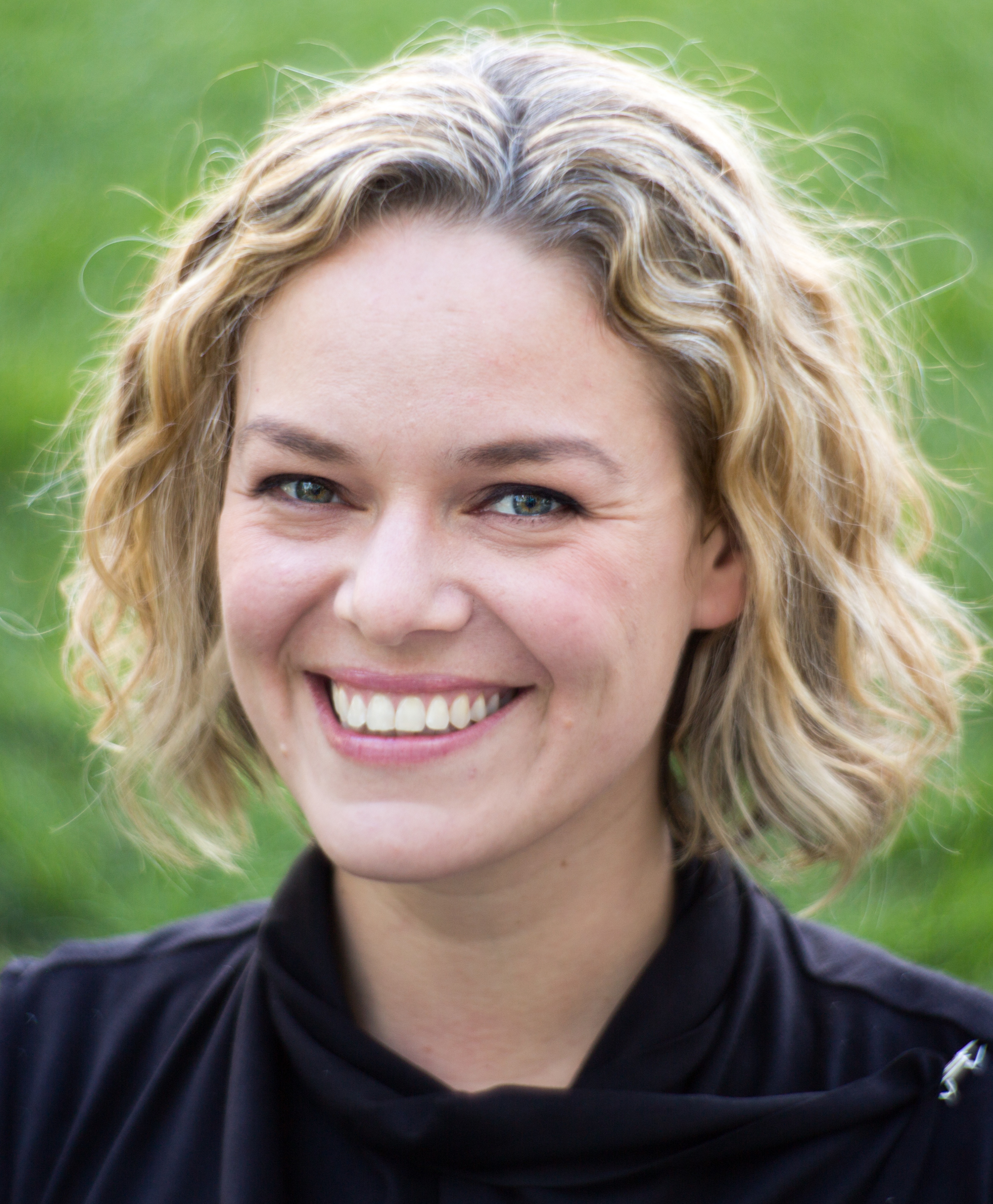
Katherine Maher
CEO of NPR
17
APPEARANCES
16
PODCASTS
Oct 1, 2026


Katherine MaherGUEST
Well, the beauty of public radio is that it can be a little bit like stone soup, if we're going to continue this kitchen metaphor, which is that, you know, we bring to it what we bring to it, and some of our stations with lots of resources are able to bring to it the ability to produce shows that can then get aired across the network, um, by other stations.
Katherine MaherGUEST
And then some of our stations with fewer resources are able to really focus on what matters the most to their communities, um, whether that's local reporting.
Katherine MaherGUEST
I'm a big fan of the public affairs call-in show like we're doing right here today.
Katherine MaherGUEST
I think that that is sort of the most uniquely public media, uh, thing that we are able to do as organizations.
Katherine MaherGUEST
But the, what we've been hearing is that it's really different out there for everyone.
Katherine MaherGUEST
So we had this year, uh, post-federal defunding, where we received an upsurge of donations across the network, and that was massively appreciated.
7 MINS LATER

Brian MackeyHOST
Um, how are you thinking about that? How is NPR thinking about trying to, uh, expand its, its audience, uh, since it's now more reliant than ever on its audience for its, uh, fiscal future?

speaker_0HOST
What message does that send, do you think, to the White House?
Catherine MaherGUEST
I think it sends the message really to any administration because you have to think that as Fox is making their determination on this, they're also looking to future administrations and what may be yet to come to pass.
speaker_0HOST
How does this current situation between the press pool and the president, how does this fit into the context of the broader relationship between the White House and media outlets during this second Trump presidency?

Katherine MaherGUEST
There's such a great deal of understanding now about how important local media is in healthy communities.
Katherine MaherGUEST
Across the United States over the course of the last 30 years, we have lost a extraordinary number of local newspapers and local media outlets, things that when I was growing up, we...
15 MINS LATER

Hala HannaHOST
I'm wondering also what have you learned about whether, uh, and how a mission-driven institution can out-compete the market for trust and attention, uh, and not just fight for survival alongside it?

Ed LudlowHOST
You know, how do I consume some NPR content like on YouTube, for example? But that isn't necessarily a big income generator for you, is that right?

Caroline HydeHOST
I'm interested as to how, in this moment of belt tightening, your technological savvy comes into all of it.
Ed LudlowHOST
You know, how do I consume some NPR content, like on YouTube, for example? But that isn't necessarily a big income generator for you, is that right?
Caroline HydeHOST
I'm interested as to how in this moment of belt tightening, your technological savvy comes into all of it.


Katherine MaherGUEST
So the most important thing for everyone watching to know is that these cuts are not about NPR.
Katherine MaherGUEST
70% of all of the funds that are at risk right now go directly to local stations.
Katherine MaherGUEST
Last night, while the Senate was on the floor n- uh, debating this exact package, we saw a 7.3, uh, uh, register earthquake hit off the coast of Alaska.
Katherine MaherGUEST
The local sirens in their hometown told residents to tune in to their local radio station.


Katherine MaherGUEST
Um, here, what I’d say on the sort of response and mobilization is I wasn’t there for some of the things that, eh, that, uh, um, are referenced around Me Too, around racial bias or discrimination.
Katherine MaherGUEST
Um, I’m aware of the stories, and I can’t speak for my predecessors as to why something was handled one way or another.
Katherine MaherGUEST
My view is that were those things brought to my attention, we would move with similar alacrity.
Katherine MaherGUEST
There’s – I have very low tolerance for any sort of abuse in the workplace or any sort of inequities in the workplace.
12 MINS LATER


Katherine MaherGUEST
So, it's really important for folks to have the understanding that we chose not to do this over the funding issue.
Katherine MaherGUEST
Its funding is very important for local stations, and I'm happy to talk about that.
Katherine MaherGUEST
And what I mean by that is, the executive order very clearly engages in what is called viewpoint discrimination, which is to say that the president has stated that NPR and PBS should not receive federal funding because he disagrees with our programming and our editorial choices in terms of the story selection that we cover or the way that we cover the news, and therefore has said that federal funding shouldn't go to us because he accuses us of being unfair and biased.

speaker_14HOST
So how precisely does President Trump's executive order against NPR and PBS violate the First Amendment? What's the case that you're making against the Trump White House?
Katherine MaherGUEST
Well, it's interesting, because the executive order is very specific in that it accuses NPR and PBS of not airing fair or unbiased news.
Katherine MaherGUEST
And so it is a textbook example of viewpoint discrimination from a First Amendment standpoint.
Katherine MaherGUEST
Essentially, by blocking funding to NPR and PBS, it is a form of retaliation against our organizations for airing editorial programming that the president might disagree with.
Katherine MaherGUEST
It was one of Congress's sort of paramount in, objectives was to ensure that public media was independent from government influence.
speaker_14HOST
Uh, how do you respond to that?

8:04

Can you explain in plain English what that means, what the thrust of this lawsuit is?
Katherine MaherGUEST
So NPR is a private organization, and we have the right as a media organization to make our own e- editorial choices about what it is that we cover and how we cover it, and what we found in the executive order was that the order discusses the need to end federal funding based on the accusation that we are not presenting fair, unbiased news.
Katherine MaherGUEST
So from our perspective, what that means is that the order implies that edit- NPR needs to change its editorial posture if we are to receive federal funding.
Katherine MaherGUEST
It's very clear from the Public Broadcasting Act that public media is meant to be an in- independent source of information and, in fact, it is protected in the statute that established the Corporation for Public Broadcasting.
Katherine MaherGUEST
Uh, we believe that this is an infringement on NPR's First Amendment rights, but it is also an infringement on those rights of our station, both their editorial First Amendment rights and their rights to associate with NPR if they are unable to use their funds to choose to air our programming.
12:00
Are you speaking with leaders of other news organizations about how to navigate this moment? Are you getting support from other news organizations?
Katherine MaherGUEST
It's, I've had a number of conversations with leaders of larger media organizations, even than NPR, and I do believe that many of us feel as though this is a very difficult moment for this profession.


Catherine MaherGUEST
In a similar fashion, if we were to see a clawback of these funds, which we know is part of the conversation from a recession standpoint, or if we were to see that stations were no longer able to participate in their membership dues, that would be damaging.
Catherine MaherGUEST
But I think that Paula's point is the one that really people need to hear, the immediate damages to local stations.
Catherine MaherGUEST
And with NPR, we have stations in more than 246 stations with newsrooms, more than 200 newsrooms in every state in the country.
Catherine MaherGUEST
And that includes journalists who are out there covering their local communities.
Catherine MaherGUEST
especially in a time where we're seeing an advance of news deserts across the nation.


Katherine MaherGUEST
I think that Americans need to be aware that it is going to be harmful to the system, right? So a lot of us probably grew up on kids' television, PBS Kids.
Katherine MaherGUEST
It's in- I mean, it's, it is a crown jewel of American public broadcasting programming.
Katherine MaherGUEST
And whether you think about, you know, your history with Mr. Rogers, whether you're thinking about Sesame Street, whether you're thinking about more contemporary programming, that is so important and that is at threat, under threat.
Katherine MaherGUEST
Um, when you think about your local radio stations, those may not be able to provide the same sorts of services and the first thing that's gonna go, I have to tell you, is going to be local reporters' jobs.


Katherine MaherGUEST
Um, I think I was probably reflecting on what it was to be, to grow up in an e- environment where I had lots of advantages.
8 MINS LATER

William TimmonsGUEST
So, I mean, h- how does that work to give us the perception that you're doing your job of actually delivering unbiased information?
Katherine MaherGUEST
Well, I would agree with you that that number is a concern if it is accurate.
Katherine MaherGUEST
I do believe that we need to have journalists who represent the full breadth of the American society so that we can report well for all Americans.

speaker_13UNKNOWN
This week, 82 years ago, Kristallnacht happened, and in that tower of burning books, it led to an attack on fact, knowledge, history, and truth.
Katherine MaherGUEST
truth.After four years of a modern-day assault on those same values by Donald Trump-
speaker_15UNKNOWN
Wuhan.
Katherine MaherGUEST
Uh, we recognize that... we were reporting at the time, but we acknowledge that the new CIA evidence is worthy of coverage and have covered it.


Jim JordanGUEST
You guys were oh for three on, on the three, the three of the biggest stories in the last five years, you guys were oh for three, and yet you maintain that NPR is not biased?
Katherine MaherGUEST
Uh, sir, I believe that there was a message that went out earlier today letting people know we were coming in, yes.


Bob SafianHOST
What would the practical impact of losing that funding be? I mean, I, I can imagine you've been preparing for this possibility even well before this hearing came up.
Katherine MaherGUEST
The thing that I would want everyone to know about federal funding is the impacts that loss of federal funding would have on local stations.
Katherine MaherGUEST
Again, of the $121.5 million, that's it, $121.5 million that goes to public radio on an annual basis, it's a lot of money.
Katherine MaherGUEST
I want to acknowledge that, and it's also not a ton of money relative to the total size of the American public budget, right? The federal budget.
Katherine MaherGUEST
100 million of that goes direct to local stations, and disproportionately, the, the percentage of those funds goes to support stations that have— that serve rural communities, that serve less affluent communities, that serve communities with really large areas of service where the infrastructure investment and making sure that broadcast airwaves reach the country is significant.
Katherine MaherGUEST
So, I think about my c- my colleagues in Eastern Kentucky who have to put, you know, repeaters in hollers in order for Eastern Kentuckians to be able to hear those radio broadcasts.
Bob SafianHOST
You're for all Americans, but you had, you know, an editor at NPR say, like, "No, the news has been biased, the way you talk about COVID or, you know, the Mueller report or whatever." There is this impression from certain people in America that NPR is not for all Americans, and obviously that's what the hearing's about tomorrow.

Bob SafianHOST
What would the practical impact of losing that funding be? I mean, I can imagine you've been preparing for this possibility even well before this hearing came up.
Katherine MaherGUEST
The thing that I would want everyone to know about federal funding is the impact that loss of federal funding would have on local stations.
Katherine MaherGUEST
Again, of the 121.5 million, that's it, 121.5 million that goes to public radio on an annual basis.
Katherine MaherGUEST
And it's also not a ton of money relative to the total size of the American public budget, right, the federal budget.
6 MINS LATER