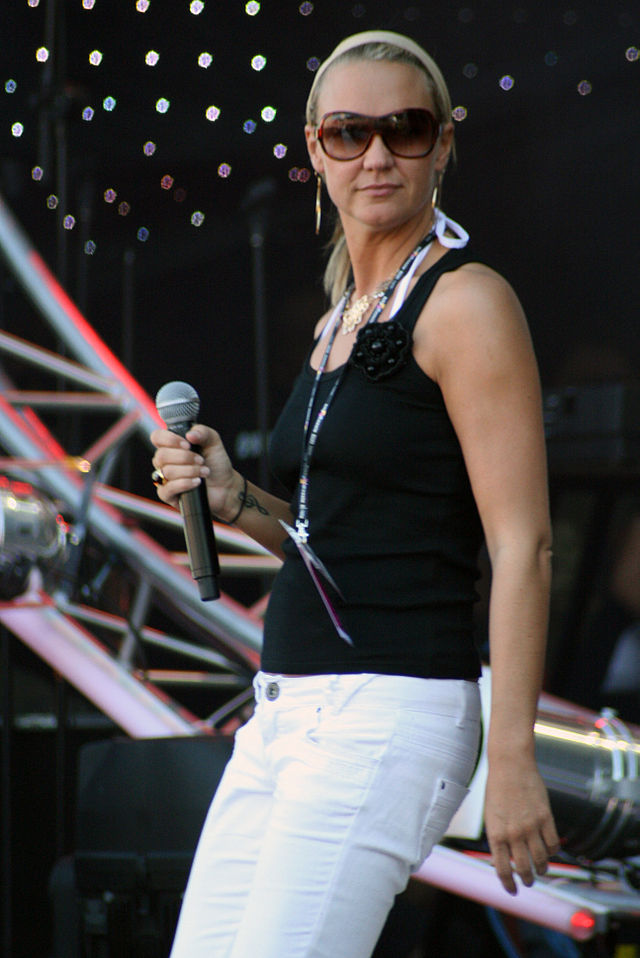
Kate Ryan
Belgian singer-songwriter
10
APPEARANCES
9
PODCASTS
Oct 6, 2026


Kate RyanGUEST
Yeah, I mean, it's a really interesting thought and I think Yeah, the spectre, I suppose, of drawing blood from living animals is, for our eyes today, as you rightly say, very, very visceral.
Kate RyanGUEST
Will it ever come back? I've been musing on this for quite some time, actually, and I don't think it will in Ireland because I think the skills are long gone, unfortunately.
Kate RyanGUEST
But yeah, I suppose from the African context to the European context to the Irish context, yeah, live bleeding was something that was quite a widespread practice, but it was very seasonal as well.
15 MINS LATER

Thomas DinasHOST
But nowadays everybody's kind of that kind of shrunk, right? We have less farmers now.


Max SussmanHOST
So from there, um, how did your path lead you to writing about black pudding? Where did the inspiration come from, and was that something that you grew up eating? Was it part of your life in West Cork or in Bristol?
Kate RyanGUEST
Yeah, I suppose black pudding is as, uh, you know, is as popular on the breakfast table in the UK as it is in, in Ireland, you know? And that would be, to be fair, in, in, back in England, if you were going to eat black pudding, you'd only really encounter it on, on your morning fry, you know? And a morning fry would be a treat.
26 MINS LATER
Kate McCabeHOST
But in addition to talking about what we lose when these traditions stop being passed down, what can we do to make sure that that doesn't happen?


Sean MoncrieffHOST
And now, I mean, we can get to, I suppose... blood recipes in a minute, but the practice of consuming blood straight from an animal, that seems to have been a very ancient practice and was continued well into the 20th century at least.
Kate RyanGUEST
So I suppose the reference that I find in the Tombo Kulina is about, you know, it's a post-battle.
Kate RyanGUEST
We've got weary warriors sat on the banks of a river looking for something to eat.
Kate RyanGUEST
And rather than kill the cattle, what they decide to do is take some of the blood from the animals themselves.
Kate RyanGUEST
that are still alive so these are cows and then they just drink it like that as a raw kind of blood product almost like as a drink and you know they are said to be instantly revived by this practice you know um so that's kind of like the the most simplest way that you can consume it um and then there are sort of other ways as well but yeah there is this practice of live bleeding which was a very skilled thing to be able to do And I suppose in the way we look at it now, it might kind of feel quite gruesome, you know, but actually there was a huge amount of care taken by the human towards the animal in how to take the blood.
7 MINS LATER
Sean MoncrieffHOST
Why is it more difficult to get fresh blood? Because I imagine the same amount of animals are still being slaughtered in Ireland.

Sean MoncrieffHOST
And now, I mean, we can get to, I suppose... blood recipes in a minute, but the practice of consuming blood straight from an animal, that seems to have been a very ancient practice and was continued well into the 20th century at least.
Kate RyanGUEST
So I suppose the reference that I find in the Tombo Kulina is about, you know, it's a post-battle.
Kate RyanGUEST
We've got weary warriors sat on the banks of a river looking for something to eat.
Kate RyanGUEST
And rather than kill the cattle, what they decide to do is take some of the blood from the animals themselves.
Kate RyanGUEST
that are still alive so these are cows and then they just drink it like that as a raw kind of blood product almost like as a drink and you know they are said to be instantly revived by this practice you know um so that's kind of like the the most simplest way that you can consume it um and then there are sort of other ways as well but yeah there is this practice of live bleeding which was a very skilled thing to be able to do And I suppose in the way we look at it now, it might kind of feel quite gruesome, you know, but actually there was a huge amount of care taken by the human towards the animal in how to take the blood.


Belinda VigorsHOST
So, yeah, can you tell us a bit more about that in terms of that sort of, hidden diversity, I guess, and the contribution of women in the making of black pudding and almost in a way that designing of a, I don't even know if I can call it a genre of food, but it seems so particular in a way, you know, it's
Kate RyanGUEST
So as I mentioned there earlier on, I suppose black pudding was always a homespun food.
Kate RyanGUEST
And there would be particular times of the years when animals would be slaughtered and their blood caught at the point of slaughter.
Kate RyanGUEST
And so in the main, I suppose you would get your most amount of blood when you slaughter either a pig or a cow.
Kate RyanGUEST
And the main slaughtering season for them was at the end of... sort of around October time, we'll say, when the weather had cooled off enough and it was safer then to handle the blood.
34 MINS LATER
Belinda VigorsHOST
So could you maybe tell us a little bit about the colonial impact on blood as food?


PJ CooganHOST
Like, t- tell my listeners what boinne clabber was, and then ask were any of them uses.
Kate RyanGUEST
So that's kind of in the, in the context of what I'm talking about, um, a kind of savory porridge that used to be made, uh, called a stirabout.
Kate RyanGUEST
So a stirabout is, as you would imagine, things in a pot that you stir around over a fire until it cooks and thickens.
Kate RyanGUEST
So, um, sometimes, um- I suppose we think of blood in terms of black pudding, but in times gone by, there, in the, in the summer season, there would've been quite a widespread practice of something called living blood.
Kate RyanGUEST
So where you would take a small amount of, ah, blood from a living animal, just a little bit, you know, not...
PJ CooganHOST
I think a lot of people wouldn't realize that black pudding is made with bl- although it's kind of more s- more, more sort of dried blood, powdered blood these days, isn't it, than the original, than the original's formulas.

EmmaHOST
So it brought people together, didn't it?
Kate RyanGUEST
So going back through time, I suppose, you know, a lot of people were subsistence living and self-sufficient.
Kate RyanGUEST
So they would raise animals, they'd grow a few crops, all the rest of it on their sort of homestead or farmstead.
Kate RyanGUEST
And so a big part of the food year was, and a trigger warning for any listeners, but it was killing the animal, you know, whether that was a pig or the cow or The cow, when it would come to the end of its useful life, i.e. it was most valued for its what they call the white meats, which was the milk that was turned into butter and various different types of cheese.
EmmaHOST
So what makes them different to black pudding? So, yeah, this is

Kate RyanGUEST
So right away when we went in, I went through several fertility specialists and an RE and all of this, mostly because I was of the mindset like, I should have to do more here.
Kate RyanGUEST
So pretty soon, right away, they said, you know, you're a little bit of the, you know, geriatric pregnancy age.
10 MINS LATER
Kate RyanGUEST
So they're completely versatile, whether that's during the summer, during the wintertime, even in autumn time.
Kate RyanGUEST
They can change through the seasons if you just kind of apply a few basic rules, I guess, around how you build your flavor in the bowl.
PJ CooganHOST
Like nothing should be overpowered by the rest of what's in there, I would have thought.


Tegan TaylorHOST
Talk to me about what it's like when you start coming off them, because I've heard that f- for long-term users, sometimes the withdrawal symptoms feel like relapsing, which would be really scary.
Kate RyanGUEST
So I can tell, like, if I forget to take one of my pills, I can feel it in the afternoon.
7 MINS LATER
Tegan TaylorHOST
Did you feel like you were being made aware of the alternatives before you were being gi- given medication? 'Cause you were so young.