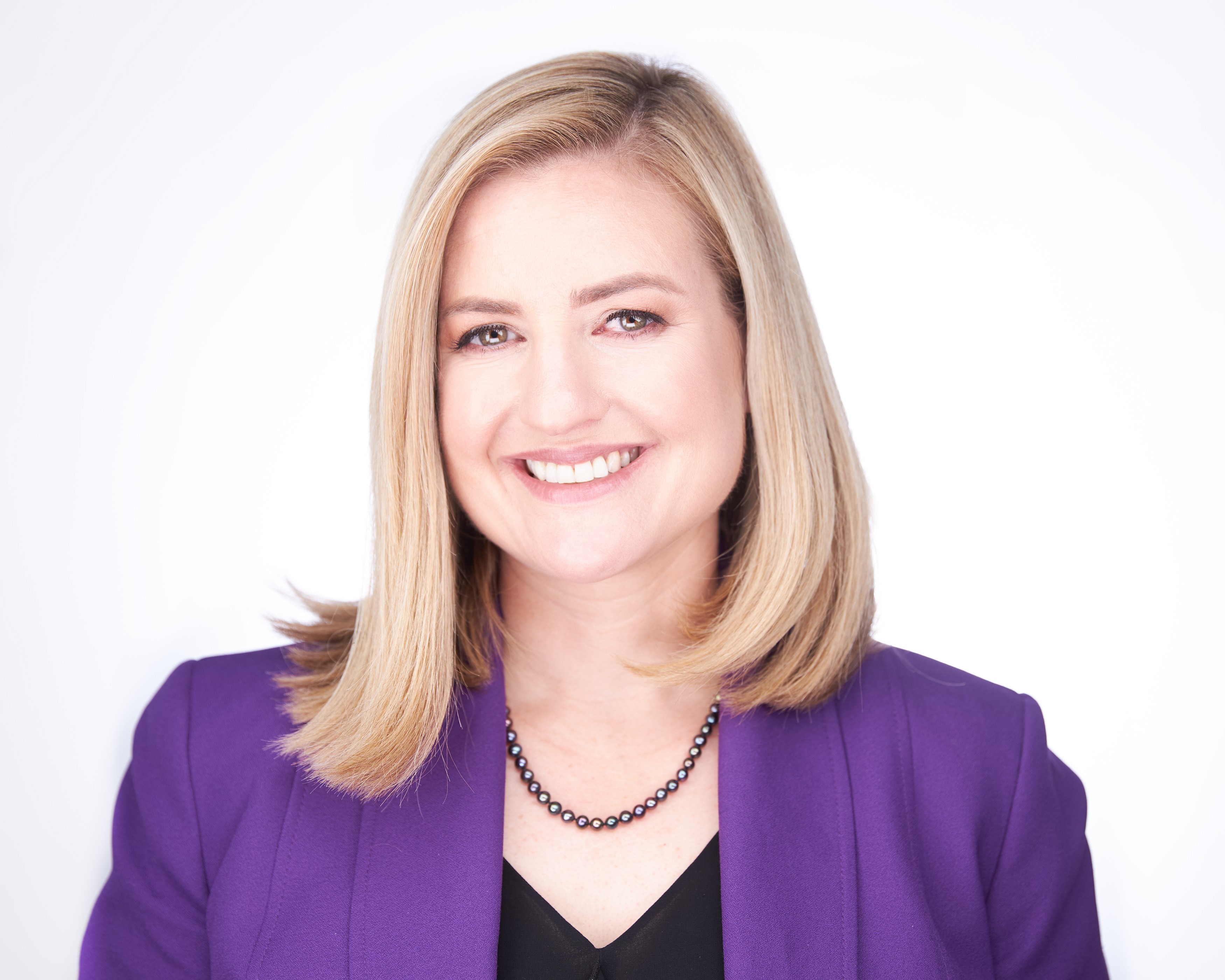
Kate Gallego
Mayor of Phoenix
9
APPEARANCES
7
PODCASTS
Nov 19, 2026

speaker_0HOST
So what are you dealing with there in Phoenix? And maybe how are you approaching, you know, trying to make Phoenix more resilient?

Kate GallegoGUEST
One of Phoenix's greatest assets and biggest challenges is that we are almost always sunny.
Kate GallegoGUEST
So that means we need advanced building materials that make sense and can keep our residents cool.


Kate GallegoGUEST
I'm a graduate of the University of Pennsylvania Wharton School of Business, where I received my MBA.
Kate GallegoGUEST
I actually worked for about a decade at one of our power and utility providers in the Phoenix area before running for office.
Kate GallegoGUEST
And so I worked with data centers in my utility capacity and now in a big way as mayor.
37 MINS LATER


Kate GallegoGUEST
We have seen more on the data center side, just an enormous amount of demand for new electricity.
Kate GallegoGUEST
Our utilities are now saying, "You have to pay for those power plants yourself, so if you need 300 megawatts, you have to pay ahead so that that capital cost does not get spread across the entire rate base," and the companies that are coming in pay ahead.
Kate GallegoGUEST
That also puts less risk on the rate payers, but the demand is quite, quite large.
Kate GallegoGUEST
Sometimes we see six different sites in Phoenix that are chasing the same data center deal and, and we're not clear, are all of these gonna get built out or not? With TSMC, we see the demand, and we have the, the firm contracts.

Contessa BrewerHOST
When you have a business of this scale in a city like Phoenix, what is the responsibility and the, and, uh, just the opportunity for you to have to navigate geopolitical concerns as well? I mean, and to pay attention to tensions between Taiwan and China and what President Trump says about tariffs.

Kate GallegoGUEST
We wanna make sure that as data centers come on, they are responsible water users, and that particularly with the amount of power they use, they think about everything from emissions to the water used to generate power.
Kate GallegoGUEST
The utility that services us at City Hall had committed to taking coal out of their portfolio, and because of the huge demand in energy, particularly driven by data centers, they're delaying that.
Kate GallegoGUEST
We have one of the biggest concentrations of data centers anywhere in the world, and I'm trying to make sure that as data centers come on, they do it in a way that minimizes impacts to our community and to our environment and maximizes benefits.
8 MINS LATER
Ariana BrociousHOST
Yeah, and beyond local government, what's the political strategy for maintaining momentum on climate action when the government at the federal level is working so hard to roll back climate advances, climate policy?

Ariana BrociousHOST
How do you reconcile things like that, the economic development that brings, with the water and energy demands of big tech?
Kate GallegoGUEST
So we are trying to prioritize the areas that will have the most benefits for our community, including creating quality jobs.
Kate GallegoGUEST
And so we want to make sure that we are a diverse economy that has a bunch of different options.
Kate GallegoGUEST
We know every sector goes up and down, and so the cities that have the most diverse economies tend to be able to weather single events more effectively.
Ariana BrociousHOST
Apart from data centers, which Phoenix innovations do you think are most transferable to other hot and arid cities in the U.S. and globally?


Karen FinermanHOST
Her main concerns, how she would be received and how, if she won, she would make it all work.
Kate GallegoGUEST
I felt like everywhere I went, people were sort of looking at me and judging and interested.
Kate GallegoGUEST
As time went on and I started sleeping through the night with the baby, I got a little bit more perspective.
Kate GallegoGUEST
And there were a group of wonderful individuals, mostly women, who said, we want to help you.

Ariana BrociousHOST
How do you reconcile things like that, the economic development that brings, with the water and energy demands of big tech?
Kate GallegoGUEST
So we are trying to prioritize the areas that will have the most benefits for our community, including creating quality jobs.
Kate GallegoGUEST
And so we want to make sure that we are diverse economy that has a bunch of different options.
Kate GallegoGUEST
We know every sector goes up and down and so the cities that have the most diverse economies tend to be able to weather single events more effectively.
Ariana BrociousHOST
Apart from data centers, which Phoenix innovations do you think are most transferable to other hot and arid cities in the U.S. and globally?


Julia BoorstinHOST
Do you feel like your vision for the city and what you've been trying to accomplish in your multiple terms as mayor has been shaped by your perspective as both a mom, a working mom and also a daughter trying to trying to help out?
Kate GallegoGUEST
And Phoenix, you know, people often say in New York, your career is really... defining for you.
Kate GallegoGUEST
In some cities, maybe it's like how much money you're making or in D.C., maybe your connection to politics is defining.
Julia BoorstinHOST
How did you get these chip deals? How did you convince these chip companies that they should come build in the desert?
Karen FinermanHOST
Can you explain why that is so critical and what that means for Phoenix? but also what it means for national security and the scale of this project.
Kate GallegoGUEST
So semiconductors are the brains in our smartwatches, our cell phones, but they're also the technology that powers defense systems, airplanes, cars.
Kate GallegoGUEST
A few years ago, we didn't make any of the most advanced chips in the United States.
Kate GallegoGUEST
Today, the most advanced chips are made in Phoenix, Arizona, and that is a really big deal for our country's safety.
10 MINS LATER