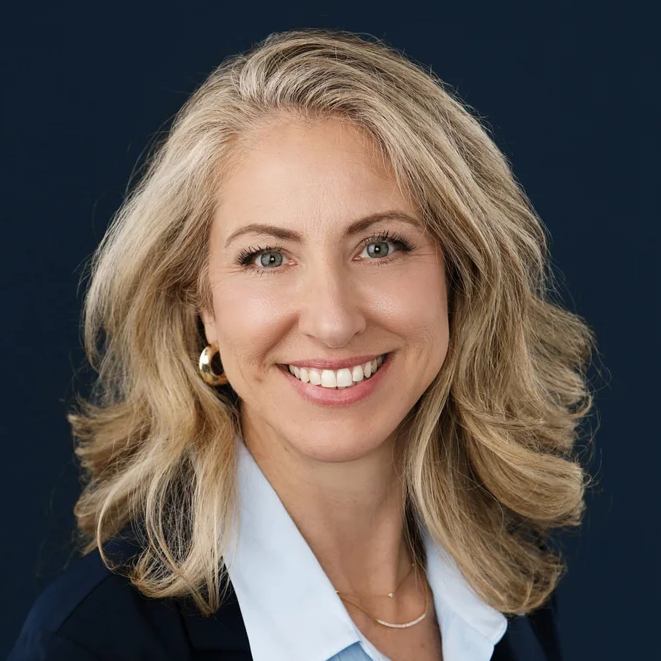
Kate Ackerman
Sports medicine physician and endocrinologist, co-founder/director of the Women's Health, Sports & Performance Institute and founder of the Female Athlete Program at Boston Children's Hospital; former US national team rower.
7
APPEARANCES
7
PODCASTS
Nov 12, 2026


Chris CaseHOST
Could you take us through a hypothetical scenario of how you identify reds and confirm it in someone?

Kate AckermanGUEST
I just did a talk yesterday, in fact, with the Endocrine Society talking about the kind of people that I might see.
Kate AckermanGUEST
And so we are doing red screening in our athletes, especially when they come into the system.
28 MINS LATER


Kate AckermanGUEST
Well, having worked at a pediatric hospital for 19 years, you know, I would see this young, where we would see these adolescents not getting their periods, and we would do a bone density on them, and their bone density was not where you would expect for their age, um, their chronologic age, their biologic age.
Kate AckermanGUEST
And because they don't hit that peak bone mass, we basically build our bone density, um, and have this really abrupt increase during adolescence.
Kate AckermanGUEST
Then we hit menopause, there's an abrupt drop, and then it sort of trickles down.
Kate AckermanGUEST
So you wanna get people up to that big peak really high because no matter what, they're gonna have a bit of a drop later in life.
5 MINS LATER

Kelly StarrettHOST
I mean, I wanna celebrate this and talk about this, 'cause I think it'll frame our next conversation.

Kate AckermanGUEST
I've been really lucky that in 2020, Claire Wu, who is a philanthropist and the owner of the New York Liberty and the Brooklyn Nets, she had put together this human performance alliance.
Kate AckermanGUEST
She was trying to gather leaders from around the country at major institutions and saying, what can we do to enhance human performance? And wouldn't it be cool to study it from a health state instead of a disease state? So she and her husband had given a lot of money towards cancer research and neurobiology, but she was interested in the athlete perspective now that she was getting into sports.
Kate AckermanGUEST
And so she thought, if you're studying the fittest, most robust people, what can we learn from that and how can that trickle down to inform care for normal, regular society? And so it was an interesting angle and she brought me in as the person to help push the female athlete agenda.
Kate AckermanGUEST
And so when we're talking about ACL tears or we're talking about osteoarthritis or we're talking about any kind of injuries.
Kate AckermanGUEST
So much of it had been studied in men that she, as we got to know each other, realized, well, there really needs to be more done in women.
Kate AckermanGUEST
And she wanted to close the data gap and she wanted to improve the clinical care.
20 MINS LATER

Sharon ChirbanHOST
What's the reality of how much you can actually execute on some of these these recommendations that


Kate AckermanGUEST
I think, you know, when we talk about just the general woman who's wondering if she's in menopause, um, if she is not an athlete, typically the Menopause Society, other people, other societies don't recommend a huge lab workup.
Kate AckermanGUEST
I know a lot of people say, "Check my FSH level, check this, ch- check that." But really, if someone hasn't had their period, their weight has stayed about the same, they have all these different mood swings, they're not over-exercising or exercising much at all, sometimes it can be an open-and-shut case, and we don't need to chase after their FSH level or check a lot of other things.
Kate AckermanGUEST
But in other people, um, it could be if they're a little bit younger, we need to see, "Hey, are you pregnant?" So we have to do a pregnancy test.
Kate AckermanGUEST
Uh, "Hey, have you d- have you a family history of hypothyroidism or some sort of thyroid issue? Let's check thyroid tests." So there needs to be that differential diagnosis when people are a bit younger.
Kate AckermanGUEST
Um, if they are in the typical range of age for menopause and they're not big athletes, then it's pretty open-and-shut.
14 MINS LATER


Trenni CaseyHOST
How long will it take? How much research do you have to do before you start to figure out the differences between the sexes and start to get some answers to the questions that we've long had about female athletes?
Kate AckermanGUEST
One of the little bit depressing statistics is that it takes about 17 years for a research result to get into the mainstream, and that's part of why we started WISP.
Kate AckermanGUEST
But I think with having a website that talks about what we do know and where the gaps are, but really explaining this is what's been done in women, this is what hasn't been done in women, and just being really honest and transparent.
Trenni CaseyHOST
If you were a 49-year-old woman who still runs and cycles and is learning to golf and likes to be very active, and I wanted to come to the Institute, what is it like? What would my experience be like?


Tony BoutagyHOST
Tell us about this new institute and when you realized it needed-- the problem was so big that it needed its own institute.
Kate AckermanGUEST
So I was lucky to be able to start a female athlete program at Boston Children's back in twenty twelve.
Kate AckermanGUEST
Because of I was trained in internal medicine, it always felt a little bit off that I was at a pediatric hospital, but we took care of adults there as well.
Kate AckermanGUEST
And then when we built this program, we wanted to have this interdisciplinary care where we had sports nutrition and sports psych and different subspecialties of sports medicine.
Kate AckermanGUEST
And so we had this program within this hospital, but then along came in twenty twenty, Clara Wu as part of the Wu Tsai Human Performance Alliance, and so her scientific advisor contacted me and said, "Hey, we wanna give you a lot of funding and be part of this alliance to study human performance." And I was selected as part of the six-person leadership group at different universities to lead the female athlete component.
Kate AckermanGUEST
So with Clara's funding, I knew that we needed more research space to be able to do some in-depth work on menstrual cycle and performance and postpartum and exercise, and more work on RED-S.
Kate AckermanGUEST
And we were outgrowing our physical space at Children's in addition to our age group.
13 MINS LATER
Tony BoutagyHOST
Could you talk to us about what this CT scan is and, and what it offers us that DEXA doesn't?

Steve GonserHOST
Um, I'm just curious on, I've read, I've read some background, but going from medical school to getting into things, is there, that a strong athletic background that brings you forward? Like, how did you get from where you are right now, and what was that lead-up like that got you so interested in, in women's sports and women's health and wellness really?
Kate AckermanGUEST
You know, I have men in my life too, but I had strong women in my life, and I just wasn't raised in a way to think that I was any less than by being female.
Kate AckermanGUEST
And so as I went forward and got into college, um, I tell this story a lot, where I was a musical theater person in high school.
Kate AckermanGUEST
So when I got to college, I tried out for a couple a cappella groups, didn't get in.
8 MINS LATER
Steve GonserHOST
When did that transition and why did that transition happen from f- from what I understand, female athlete triad to RED-s? What was the, when was that transition and what was the, the cause for that?