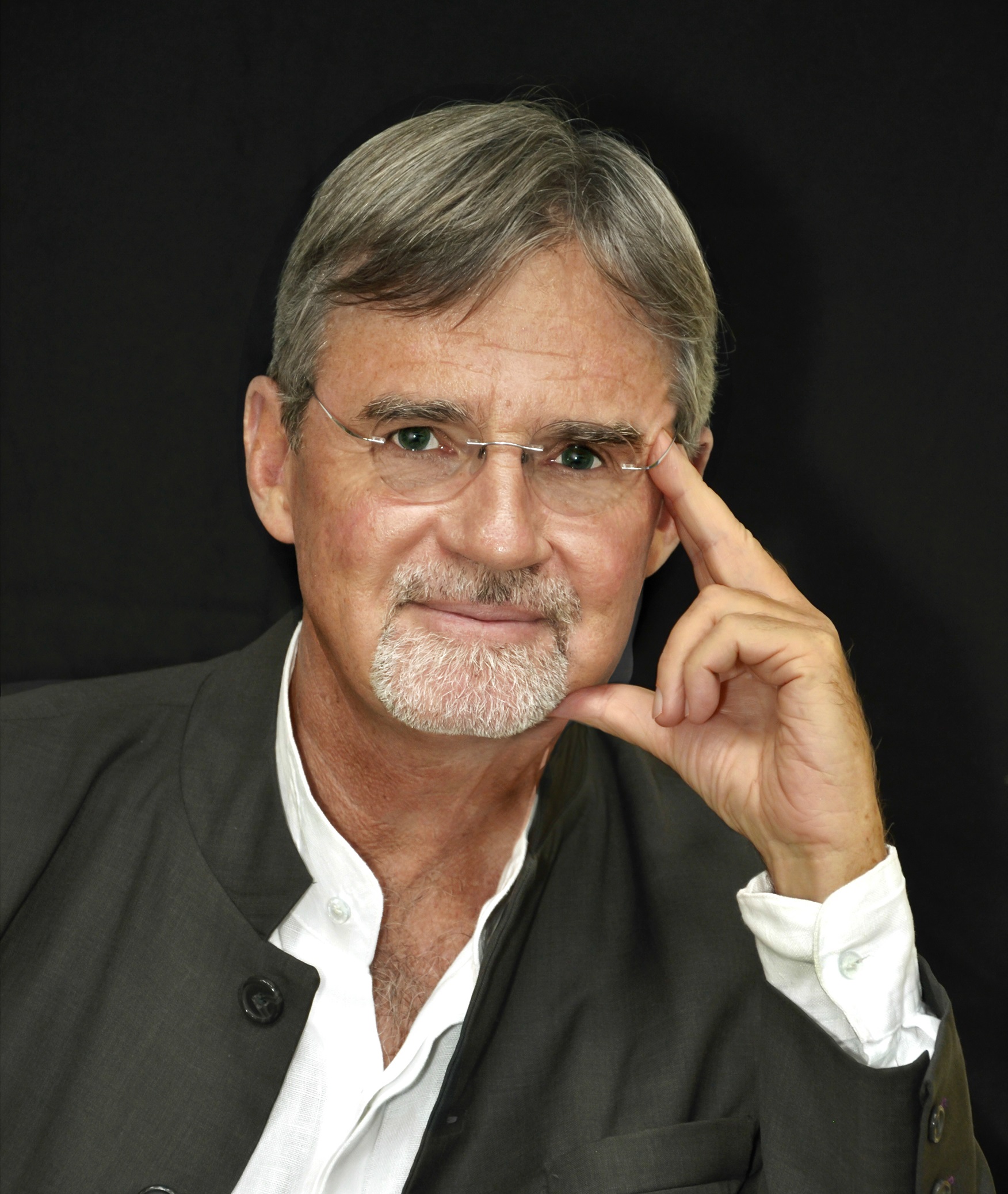
Kai Bird
American author and columnist
28
APPEARANCES
23
PODCASTS
Sep 18, 2026


Dan RavivHOST
not admitting any problems at all like we expected the high price of oil uh the other day he was asked by a reporter do you have any regrets about the iran war and he said none i guess that's true to form and and tell me kybert he learned some of it from roy cone
Kai BirdGUEST
he learned all of it from roy cone Roy was, as the title says, he was a scoundrel, a villain, but a very charming villain.
Kai BirdGUEST
He was raised by his mother, Dora, in the Bronx and in New York City and the Upper East Side.
5 MINS LATER
Dan RavivHOST
That fits into the early Trump in New York, under the tutelage of Roy Coe? Oh, absolutely.


Kai BirdGUEST
in housing in Queens, in their apartments owned by the Trump Organization, and it was very blatant.
Kai BirdGUEST
And of course, Roy famously said, "Oh, you should fight it." You know, "You should sue the, the feds.
Kai BirdGUEST
Let's hold a press conference and announce a $100 million defamation suit against the federal government." You know, it was a nonsense suit, and it was dismissed within two months.
6 MINS LATER

Terry GrossHOST
How did the relationship between, uh, Donald Trump and Roy Cohn change as Trump became more famous and more powerful?


Kai BirdGUEST
You know, when I started out as a historian and biographer almost 40 years ago now, I decided I wanted to figure out how power works in America.
Kai BirdGUEST
So I started writing about establishment figures, John McCloy, the powerful Wall Street lawyer, Mac Bundy, the Harvard dean and national security advisor to Kennedy and Johnson, Robert Oppenheimer, the atomic physicist.
Kai BirdGUEST
And I thought that that would be helpful for explaining how power works in a complicated democracy like this.
Kai BirdGUEST
Now, in all of those books, I wrote a little bit about Roy Cohn, a sort of festering, nasty little lawyer who caused problems.
10 MINS LATER
Kai BirdGUEST
You know, H.L. Mencken used to say, uh, "What a dull world this place would be for ho- us honest men if it weren't for the sinners."
Kai BirdGUEST
And Roy Cohn was a seasoned 40-year-old, uh, lawyer who, who knew everyone and was a lawyer to all five mob families in New York City.
Kai BirdGUEST
And he, he was a famous guy, and he, he helped Donald Trump get the tax abatements he needed for the first big deal, the, uh, renovation of the Commodore and then the building of Trump Tower, uh, which was all, w- which was built with concrete.
Kai BirdGUEST
Well, Roy Cohn was the lawyer to Fat Tony Salerno, who controlled the concrete business and the unions that poured the concrete, and Donald Trump needed the-


Eugene DanielsHOST
Is it the environment that we are currently living in, the ability for misinformation and disinformation to spread as quickly? Conspiracy theories being a cottage industry for a lot of people, especially online, that makes this era worse than when Joel McCarthy was there?


Matt CooperHOST
Tell us about how he was the prosecutor who sent a couple, Julius and Ethel Rosenberg, to the electric chair.
Kai BirdGUEST
He was in his early 20s, and he became an assistant prosecutor on this famous Rosenberg atomic spy case, and he was relentless.
Kai BirdGUEST
So, uh, during the Rosenberg case, he had ex parte conversations with Judge Irving Kaufman, who was pr- the presiding judge.
Kai BirdGUEST
And Roy just, you know, uh, he, [clears throat] he guided the judge and, uh, was relentless in, in bringing a prosecution and, and persuading the judge to inflict the death penalty, sending not only Julius, but also Ethel, the do- the mother of two young boys, to the electric chair.
Kai BirdGUEST
And that wa- that gave his first sort of, that, his first sort of public renown was coming from that Rosenberg case.
8 MINS LATER
Matt CooperHOST
... regardless of the position that they have, always used the legal approach as a weapon, always accuse the accuser?


Kai BirdGUEST
You know, I don't think you can understand the last 10 years of the Trump era unless you understand Roy Cohn's life.
16 MINS LATER


Jeffrey BrownCORRESPONDENT
What jumped out at you? What stood out, uh, especially vis-a-vis Roy Cohn's involvement?
Kai BirdGUEST
Roy was a gay, closeted man then, but he went after gay civil servants in the State Department r- ruthlessly.
Kai BirdGUEST
He had this private life, and yet he was, uh, shamelessly going after fellow gays.
Kai BirdGUEST
But it's his values, his, uh, resentment of the establishment, uh, that now prevails in our politics.
Kai BirdGUEST
He is the architect of this politics of resentment, resentment against the establishment of the elites, this sort of right-wing populism, this suspicion of immigrants.

Kai BirdGUEST
observation that the world would be a very dull place for us honest men if it were not for the sinners.

Kai BirdGUEST
observation that the world would be a very dull place for us honest men if it were not for the sinners.


Kai BirdGUEST
They were sort of the next generation of the establishment that McCloy represented.
25 MINS LATER

Kai BirdGUEST
They were sort of the next generation of the establishment that McCloy represented.
23 MINS LATER


Kai BirdGUEST
At one point, in court, he accuses a deputy prosecutor named Donna Goldstein of fraud, legal fraud.
Kai BirdGUEST
He claims that she was calling up Trump organization employees and tenants in the Trump apartments in Queens and threatening them if they didn't testify against Trump.
Kai BirdGUEST
But the judge had to take it seriously and halted the proceedings for two weeks and then reconvened.
29 MINS LATER


Miwa MesserHOST
Arthur Schlesinger was not lying to us when he said the cycles of American history are doing their thing.
Kai BirdGUEST
You know, when I started out becoming, teaching myself to become a historian, on my first biography of John McCloy, I had to write about the McCarthy era and Roy Cohn, and I regarded it as sort of a defining low point in the American story.
Kai BirdGUEST
something that we had recovered from, something, you know, the witch hunts had been defeated.
35 MINS LATER

Kai BirdGUEST
itWell, it was their first encounter and, uh, it, it- you know, Donald Trump at tw- age 27 really liked this advice.
Kai BirdGUEST
Uh, you know, he w- Roy was teaching him that he, he should flout the rules, ignore the federal judiciary, and, uh, just declare victory in a public forum.
Kai BirdGUEST
So, you know, what was most important to Roy was just the, the public fight, and his rule was always deny, deny, deny, never apologize, and attack, attack, attack.
Kai BirdGUEST
And, you know, he, he had an opportunity for 13 years as Donald Trump's main lawyer to sort of mold this young man-
43:41
Um, you quote a New York Times reporter in the 1970s who said, and this is gets to what you were just talking about, "Roy Cohn worked with a three-dimensional strategy, which was one: Never settle, never surrender; two: Counterattack, countersue immediately; three: No matter what happens, no matter how deeply into the muck you get, claim victory and never admit defeat." Thu- th- those would appear to be the exact lessons that Trump is employing now, aren't they?

10:22

What happened to him? Did he go into sort of self-imposed exile? How long between that and meeting Donald Trump?
Kai BirdGUEST
Well, you'd think he'd go hide, go into exile, as you say, but no, that's not what happened.
Kai BirdGUEST
You know, he left Washington when he was fired as chief counsel in the wake of the Army McCarthy televised hearings, which were very controversial, and he was perceived as a scoundrel on national television, seen by 20 million people.
Kai BirdGUEST
And that very month, he's fetid and celebrated at a dinner at the Hotel Astor in Times Square.
Kai BirdGUEST
And he makes his way in New York society initially as a high-priced divorce lawyer.
13:02
And obviously, it's important now for me to ask you, what was the meeting between Roy Cohn and Donald Trump and the case that bound them together when Trump was still a developer?


Willie GeistHOST
What did he see in a young Donald Trump that made him think he could shake this person?
Kai BirdGUEST
They met in October of 73 at Le Club, a private dining establishment here in midtown Manhattan.
Kai BirdGUEST
Trump went over, the young 27-year-old Trump went over to Roy Cohn and introduced himself.
Kai BirdGUEST
He was being sued by the feds for racial discrimination in the Trump organization's apartments in Queens.

Jonathan LemirePANELIST
And he taught those lessons that Trump seems to have learned really, really well.

Kai BirdGUEST
uh quite literally uh you know one of the sources for our book which it goes in is deeply biographical one of the sources is peter mantiso the late journalist who sat roy cone down for uh months at a time for hours and hours of interviews and we obtained from his widow the a thousand pages of transcripts of these interviews and uh peter manso says that when Roy Cohn died in August of 86.

Ari MelberHOST
You seem to think people like Oppenheimer, Cohn, obviously what Trump became, shapes our world.

Kai BirdGUEST
back in 1993 by the Irish journalist Anthony Summers in a biography of J. Edgar Hoover.
26 MINS LATER


Emily MaitlisHOST
But the legacy that he left is really America today and Trump today because for anyone who's seen The Apprentice, you know, the film, Trump is the apprentice to Roy Cohn's school of political thought, right? Or maybe we should just say political bullying.
Kai BirdGUEST
But by then, you know, Roy was an, a man, a powerful lawyer fixer in his, i- i- in his 40s.
Kai BirdGUEST
And, uh, Roy Cohn had come on the American political landscape in 1952, '53 as one of the prosecutors of the Rosenberg atomic spy case, famous, uh, uh, spy case in America.
6 MINS LATER

Jon SopelHOST
It was just bullying either side of the law, wasn't it? I mean, do you think, do you think he was actually a talented lawyer?

Andrew HarrisonHOST
What did they see in each other? Because you seem to see Trump as a person who wishes he was, you know, tall, good looking, blonde, moneyed, not Jewish, you know, the power guy of New York that he was too small, ugly and an outsider to be.
Kai BirdGUEST
Well, it was a mutual beneficial partnership, right? Roy saw this up-and-coming young entrepreneur who had big ambitions for real estate in Manhattan.
Kai BirdGUEST
And Roy could open the doors for him, and he could get him the zoning permits he needed.
Kai BirdGUEST
I mean, he was responsible for the Trump Tower zoning permits that allowed Trump to build this landmark in midtown Manhattan.
Kai BirdGUEST
And they became so close that they were on the phone, you know, a dozen times a day.
Andrew HarrisonHOST
Do you feel differently about that generation of people now that we're kind of, the whole world is living under a man who lives by Roy Cohn's values and by that kind of Studio 54 ethic that nothing matters but the velvet rope, nothing matters but the beautiful people, rules are for the losers, rules are for the little people?


Kai BirdGUEST
And he would, you know, take on famous clients like Ronald Perlman, the cosmetic... entrepreneur.
Kai BirdGUEST
In his first divorce case, he hired Roy Cohn at the suggestion of Andrew Stein, the Manhattan borough president.
Kai BirdGUEST
They go into court on the big day, and Roy walks in alone with his client, Ron Perlman.
17 MINS LATER

Kai BirdGUEST
I try not to psychobabble in biography, but you do have to understand his childhood.
20 MINS LATER

David RemnickHOST
And how did you find Kerr? And what made you believe that this was a story that you could use in your book? Because you have a very high standard of evidence.


Kai BirdGUEST
Well, he claims that two FBI agents gave him a briefing on how Alger Hiss and many other liberal Democrats associated with Dean Acheson were actually secret communists and had infiltrated the State Department.
Kai BirdGUEST
I think what happened was when Roy Cohn was 8, 9, 10 years old, his mother Dora, who was an enabling mother, she raised Roy with no guardrails, she was taking him up to Singh Prison every weekend to visit his beloved Uncle Bernie, who was the only banker who was imprisoned for bank fraud coming out of the 1929 crash.
Kai BirdGUEST
And Dora, the mother, told Roy that poor Uncle Bernie was a victim of a conspiracy of Jewish communists.
Scroll for more appearances