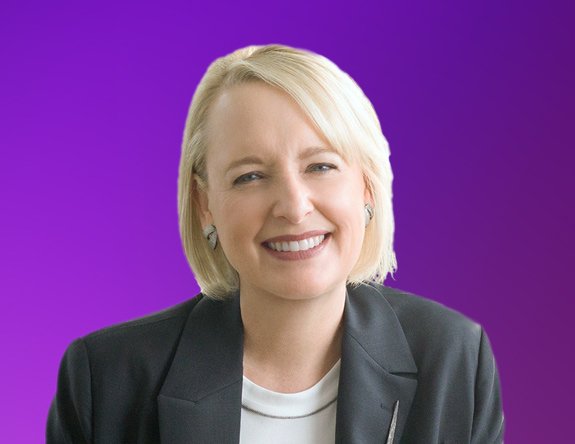
Julie Sweet
CEO of Accenture
18
APPEARANCES
11
PODCASTS
Oct 1, 2026


Sara EisenHOST
What sort of... safety issues are you on the lookout for? Is it cyber? Is it the self-recursive improvement of these models? Is it danger that AI could wipe out civilization? We've heard all of this stuff in the last few weeks.

Julie SweetGUEST
Look, safety covers kind of all of the above, right? Sort of how it's being trained, how it's being used, what its capabilities are.
Julie SweetGUEST
We're working with many of our other tech companies for safety when you actually use it.
Julie SweetGUEST
When generative AI first started, a big focus of ours was how do you build the guardrails around AI? And again, this is why not only do we talk about our safety, like working with the labs and directly on AI, but you also have to have safety and cybersecurity, which is one of the businesses that is just really booming.


Adi IgnatiusHOST
Can you talk a little bit more about that? Like, like, you know, are there specific examples of where skills in one area actually translate into preparation for something else that we might not have thought about without, without AI showing the way?
Julie SweetGUEST
Well, the easy examples are really, um, examples that are around technical skills.
Julie SweetGUEST
So certain kinds of programming enable you to, you know, move more easily into other kinds of programming.
Julie SweetGUEST
Uh, certain platforms, so for example, uh, if you're, you know, working on one kind of a cloud-based, uh, platform, moving to another cloud-based platform are, are easier.
Julie SweetGUEST
So for example, in security, uh, you know, the skills around security are very akin to what our professionals might be doing in risk and compliance because there's some deep analytical skills.
Julie SweetGUEST
And so those are the kinds of things where you might not have first looked at people doing risk or compliance for our clients to say, "Oh yeah, they could easily become a security professional," because of course security was at, another area that was triggered, um, high demand, uh, when the pandemic hit.
14 MINS LATER
Adi IgnatiusHOST
... what are people doing? What are they seeing? How are they interacting in ways that they wouldn't be just by, let's say, the conversation that, that we're having like this?

David FaberHOST
Somewhat discordant from what I'm hearing from you, and I'm just curious as to how you can acknowledge that or whether you acknowledge that and kind of thinking about your Investor Day coming up in October, what you're gonna communicate to try to turn this thing around on the stock front.
Julie SweetGUEST
Absolutely, David, and of course, we take that very, uh, very seriously, and we continue to communicate about what we're doing, and we continue to post the numbers.
Julie SweetGUEST
When you think about OT security, the play that we just meant, building on our cybersecurity, the entire physical world is getting connected.
Julie SweetGUEST
And you cannot have an AI revolution unless you have critical infrastructure like pipelines, grids, manufacturing plants, and you can't keep them unless you secure them.
Sara EisenHOST
Yeah, a- and speaking of the investments, Julie, I wanted to ask you about the announcements today, the cybersecurity acquisitions, and how that fits in with the overall strategy and where you're going.
Mike SantoliHOST
We teased the segment, uh, talking about some of the work you had done a while ago actually on the Iranian cyber threat, and I wonder can you refresh our memories on that and maybe talk about how it might be relevant today?
Julie SweetGUEST
Look, it is absolutely clear that there's another, uh, sort of surge and threat due to the conflict, but I would really think about this more as a trend because, you know, we saw the same in the Ukrainian war.
Julie SweetGUEST
You know, as companies, they're really not thinking, wow, like, there's something new.
Julie SweetGUEST
We just invested in a major acquisition in Australia because the demand for cyber resilience is so strong, and we're really working closely with our clients right now, just continuing to, you know, like, make them stronger and more resilient.


Julie SweetGUEST
the models don't know how to change the company, right? And if you spend money on your current structure just replacing it, you're, you're at best gonna get incremental value, and the real value is actually reinvent everything you do.
Julie SweetGUEST
And that reinvention doesn't start just with the advanced AI, but a lot of really basic lessons where companies haven't had the will to fix it.
Julie SweetGUEST
I, I tell this to CEOs every day, like, in three years, you should be able to tell what did I use AI to make the impossible possible? Because if the only thing you're doing is sort of incrementally improving how you're operating, right, you're not gonna get the biggest value.
Julie SweetGUEST
The biggest is in the core operations of a company, like things you can-- you're gonna be able to do with asset management and, um, and you know, any industrial company, things you're gonna be able to do the-- with the grid and the utilities.
16 MINS LATER

Bob SafianHOST
And, and these, these differences that people bring, I mean, that can, that could bring conflict, but what you're saying is that conflict a-as long as it doesn't get personal is good, right? That it sort of helps to illuminate options, ideas, and possibilities.

Julie SweetGUEST
The reality is as a CEO, you can't bake anything into your plan simply because it is so unknown.
Julie SweetGUEST
And that's where transparency really matters is being able to say, here's what we know, here's what we don't know.
Julie SweetGUEST
And then we're making our action plan with those things in mind, right? And so when you think about like, when do you know to act or not act? In my view, you're always acting.
Julie SweetGUEST
One of the biggest risks right now is even less around the impact on the economy from what's going on in the Strait of Hormuz and energy.
18 MINS LATER
Bob SafianHOST
Like, is gender in business something you like talking about? Or does the focus on you as a quote-unquote woman leader frustrate you? You
Julie SweetGUEST
I think the most important insight from that report is that 78% of C-suite leaders believe that AI is going to be most important in growth.
Julie SweetGUEST
And why does that matter? The whole dialogue about is it hype? What does it do to jobs? It all comes down to, will AI help companies and countries grow? And if you just think about how it's going to affect us, the LLM is going to become the mall.
Julie SweetGUEST
When you go to your doctor or the hospital, they're going to be using AI so that you're having real conversations with your nurses that are not about, did they find the thing in your electronic medical record? The way that you do banking, it is going to change how we all live day to day.
Julie SweetGUEST
And that's before you get into how it's going to change, you know, the changing diseases, new kinds of materials.
Julie SweetGUEST
So growth is the number one thing out of that survey, and it is what we're seeing most excitement about for CEOs.

Becky QuickCORRESPONDENT
But is there enough? The question's always who's going to pay for that?


Mat HonanHOST
And I'm curious, since last year, what would you say has changed the most in how Accenture and the large organizations that you work with are deploying AI at scale?
Julie SweetGUEST
Well, you know, there's a lot of insights actually in what Amin just said in terms of, you know, where are we now in terms of scaling? Because there's scaling projects, like an individual one, and then there's scale really across the enterprise.
Julie SweetGUEST
And so Aramco is a great example of being able to scale across the company, not only just, you know, a few projects.
Julie SweetGUEST
And if you think about what Amin just said, and you sort of extract that to industries, what we're helping clients do, and I've got to see a lot of this firsthand with Aramco in terms of the discipline and what they do, is that first of all, they have the right technology stack.
Julie SweetGUEST
And so AI has been a catalyst for companies to really look at their technology Aramco couldn't do what they did if they hadn't been investing for years.
Julie SweetGUEST
And so the ability to look at the tech stack and say, what do I really have to do? And to do that at scale.
Julie SweetGUEST
Data has been something that's super expensive that for years people haven't wanted to do.
16 MINS LATER
Sara EisenHOST
And how much of the business now is driven by AI versus the traditional consulting, which is a little more cyclical?
Julie SweetGUEST
Well, what I would say is that advanced AI now is really in nearly everything we do because either clients are using it as a catalyst to get ready, which is where most companies are, or those of our clients that have already done a lot with us are asking us to help them now leapfrog.
Julie SweetGUEST
Technology is at the center of what clients need to do, but enterprise AI is hard.
Julie SweetGUEST
It takes not just technology expertise, you have to understand the industry, you have to understand the function.
Sara EisenHOST
How do you convince the street that you are necessary when it comes to implementing their enterprise changes through those companies like an Anthropic or a Palantir?

speaker_2HOST
Talk a little bit about how these two coexist under the Accenture umbrella.
Julie SweetGUEST
Our clients expect us to be the number one partner for every technology company that matters.
Julie SweetGUEST
And Anthropic, this partnership that we've announced today, is very important to our clients.
speaker_5HOST
And I'm curious whether you're seeing AI slow down hiring for entry-level jobs over at Accenture, for example.


Jim CramerHOST
And then you change the way they do things in every single one of their verticals.
Julie SweetGUEST
So you go to the pump and you want to buy gas, right? So that energy company operates stations across the country.
Julie SweetGUEST
They want to sell you more gas, but they also want you to sell the things that they're selling, you know, in the little retail store that they have.
Julie SweetGUEST
So now we help them figure out like what are the best offers to get the people to come How can we use the data that that customer has given us to say, wait, they really like, you know, they like to buy it this time of day.
Jim CramerHOST
At what point do the bookings right now, five point nine, go into, let's say, an inflection where we begin to see it in earnings?
David FaberHOST
But when do you believe, given you have a somewhat unique perspective, we are going to start to be able to measure a return on invested capital for these companies? When is that day going to arrive?
Julie SweetGUEST
Well, what I can say is that we're starting to see what feels like an inflection point where companies are moving from trying out and talking to us about how do I truly get enterprise wide? You need that inflection point in order to start to think about what does that mean about when scale at the level that you're talking about is happening.
Julie SweetGUEST
So I'm personally doing workshops myself, like in the next few weeks, which are very different than where I was talking to the same companies a year ago, where they want to hone in on how do we actually do this across the enterprise.
Julie SweetGUEST
And it is driving those large-scale transformations that you're seeing from Accenture.
Julie SweetGUEST
Because to get to that inflection point, you have to have the data, the security.
Sara EisenHOST
But then at that point, once they do that, do they need as much consultant services? In other words, does AI itself just increase their productivity so much that they'll demand less of what you have to offer?


Caroline HydeHOST
Can you respond to that, Julie? Because you must have seen that story and been rankled by it.
Julie SweetGUEST
Look, when you think about the new ways of technology and why Accenture has been successful for the last decades is because we have the ability to reinvent, train people.
Julie SweetGUEST
So we went from 30 people trained in Gen AI in November 2022 to over 500,000 trained today.
Julie SweetGUEST
By definition, every new wave of technology has a time for where you've got to train and retool, and Accenture's core competency is being able to do that at scale to help all of our clients.
Julie SweetGUEST
Our clients can't possibly build all of that expertise that they need without without an Accenture to be able to help them scale.


Alyson ShontellHOST
How did you decide this is something I have to do? And then how do you start planning something so massive it touches the whole workforce that you have?
Julie SweetGUEST
Well, first of all, I think we're a good lesson in something that I'm advising CEOs all about is that in order to capture the opportunity with AI, you really have to be willing to rewire your company.
Julie SweetGUEST
And many times when clients are saying we're not getting a lot out of AI, it's because they're trying to apply it to like how they operate today.
Julie SweetGUEST
And so I say things like, look, cross-functional steering committees, big red flag.
7 MINS LATER
Sara EisenHOST
So what is driving that? And also, how should investors think about some of the changes that you're implementing, combining strategy, consulting, technology, and operations services into a single unit, it sounds like?
Julie SweetGUEST
So the bookings are being driven by the fact that we're really starting to see clients scale and embed Gen AI in almost everything we do.
Julie SweetGUEST
And so, you know, shipbuilding, Fincantieri, we're helping them with their connected ships.
Julie SweetGUEST
So imagine a ship that is able to predict its maintenance, manage its energy use on its own, and talk to the doc before it goes there.
Mike SantoliHOST
What specifically is making it a tough market environment right now? Is it just kind of the CEO confidence shock that we got or just the uncertainty around policy?
Sara EisenHOST
What about in the federal business, given the Department of Government efficiency cuts and targeting, I think, firms like yours? How much do you expect?
Julie SweetGUEST
Well, you know, I think one of the things I get a lot of question is, is what do you do for the federal government, which I think really sets the table for what we think the opportunity is.
Julie SweetGUEST
Our technologists digitize the GI Bill, so we're getting veterans their benefits faster, right? We're modernizing the supply chain for our war fighters.
Julie SweetGUEST
So we're a company of technologists who believe that there's a lot of opportunity to modernize, consolidate, and reinvent the federal government, which is the exact agenda of the new administration.
Julie SweetGUEST
And what we're seeing right now is as the new administration comes in and they're getting the balance of initial cost cutting and setting their broader priorities, we're seeing an impact on our business.
Julie SweetGUEST
But we're very unique in the federal market because federal is 8% of our business.
David FaberHOST
So is it your expectation that a lot of these new procurement actions that have slowed will be reinstated at some point? How do you see this going?


Andrew Ross SorkinCORRESPONDENT
I imagine they're calling you up saying, is there something that we can do? Meaning, is there something we should be going to meet with the president about? Is there something we should say? Is there a way we're going to get a carve out? I mean, what are those conversations like?
Julie SweetGUEST
Those conversations are actually not happening mostly right now because it's pretty unclear what are the tariffs going to be on what products they're going to be.
Julie SweetGUEST
It's a lot more about how do we reset the conversation in terms of engagement? What do we need to do as Europe? And a lot of investment in the U.S.
Julie SweetGUEST
And so I think you're going to see a lot of different reactions in terms of do I need to invest more? Do we need to in Europe think differently about our competitiveness? And of course, there's a lot of open questions on, you know, how best to engage.
Andrew Ross SorkinCORRESPONDENT
It's almost that we need to be downskilled, meaning actually that the higher level skills of the white collar worker are the are the jobs that will go first.


Nicolai TangenHOST
Now, I read somewhere that you have a plaque at home which says, if your dreams don't scare you, they are not big enough.
Julie SweetGUEST
So roughly two years before I became the global CEO, when I knew I was up for being the CEO, my husband comes home one day with three plaques.
Julie SweetGUEST
And after a bit of a tussle, I said, finally, you can hang them at the back of a house in our mudroom.