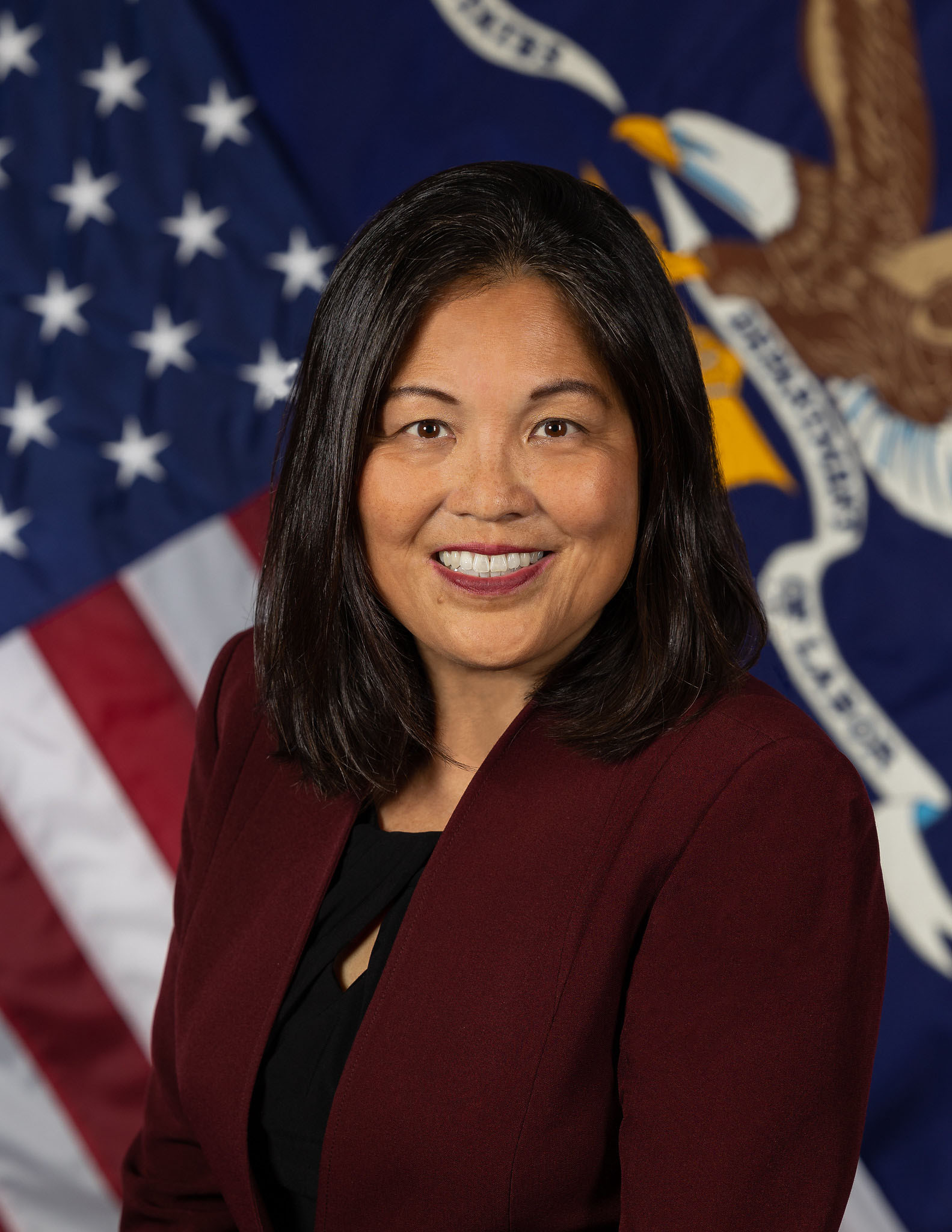
Julie Su
Deputy Mayor of New York City for Economic Justice
3
APPEARANCES
3
PODCASTS
Sep 10, 2026


Brian LehrerHOST
What can this office do to support people who maybe lost their jobs in retaliation for trying to unionize? And I guess, Deputy Mayor, I would throw into that or prevent retaliation before it happens.

Julie SuGUEST
yeah right um yes thank you for that question too uh you know this is exactly what i'm referring to when i say that there are so many workers in the city in the state and across the nation who say you know they would love to be in a union they would love to be organized they would love to have the kinds of benefits that come from being able to determine some of the conditions of your own work but are afraid to do so precisely because of this kind of, you know, retaliation, intimidation, you know, captive audience meetings are part of that, right? When employers force their workers to come into a room and hear about all the reasons why a union is bad for them.
Julie SuGUEST
And in the face of federal rollback of enforcement against those kinds of actions, right? The enforcement for that really falls under the federal government, under the National Labor Relations Board, right? it's become even more difficult.
Julie SuGUEST
We are seeing workers continue to organize in the face of all that, which really just tells you how important it is for working people to be able to have that voice.
Julie SuGUEST
And we're seeing it across sectors where maybe it's relatively new organizing in cultural organizations, in universities and institutions of higher learning.
Julie SuGUEST
in retail stores where the first unionized Barnes & Noble exists right here in this city.
11 MINS LATER
Brian LehrerHOST
Do you think the city can resuscitate the deal? And what happens to the federal and state grants earmarked for that project, if not?


Julie SuGUEST
And we're, you know, enforcing all of the investigative tools we have, too, right? Sometimes, you know, when you w- when you end up with a, a, a, a climate in which, um, investigations are considered optional, right, in which the targets of those investigations don't comply or, you know, or, or try to find ways around it, I think that's also terribly damaging.
Julie SuGUEST
And so when workers come forward, and they report violations, and, uh, and they can't get their rights enforced, that also compromises the credibility of government.
Julie SuGUEST
The other thing that's so exciting, though, Bob, about this role is that there's the enforcement piece, there's also the economic development and growth piece, right? How do we look at growth in the broadest, uh...
Julie SuGUEST
i- in the way that's the most broadly beneficial, and we measure our growth by how well working people are doing.
6 MINS LATER


Emma VigelandHOST
So, this, if this goes on longer, this means that basically any deliberations about unionization are frozen.
Julie SuGUEST
I think what's clear is that all of the rules that we've been relying on to protect workers, protect the right to organize, as inadequate as those rules were to date, all of that is, uh, you know, it, it's a whole new, it's a whole new world in which none of those rules matter.
Julie SuGUEST
And so, um, th- again, the analogy to Reagan is apt because when Ronald Reagan did that, it really opened up a, um, it, you know, I call it open season because it really was a declaration of war on workers and on unions that private sector employers picked up their weapons and, and continued to fight, and that resulted in a large decline in unionization, right? It really, i- uh, we see the effects of it today.
Julie SuGUEST
And, um, and so this president is doing it again but with absolutely no holds barred.
Julie SuGUEST
And so, y- you know, taking away the institutions that protect workers' rights to organize but also the message, right? That, that there's all kinds of ways that employers, um, bust unions but hide it under the guise of, of, you know, th- they were fired for different reasons.
Julie SuGUEST
"We actually had to make cuts there because we, y- you know, r- you know, right? Like y- y- this, it was a cost cutting effort.
12 MINS LATER
Emma VigelandHOST
Can you give, uh, our audience a, a sense of first, your work on this in the administration, and secondly, also the scale of this level of, of theft and how pervasive this problem is in the US?