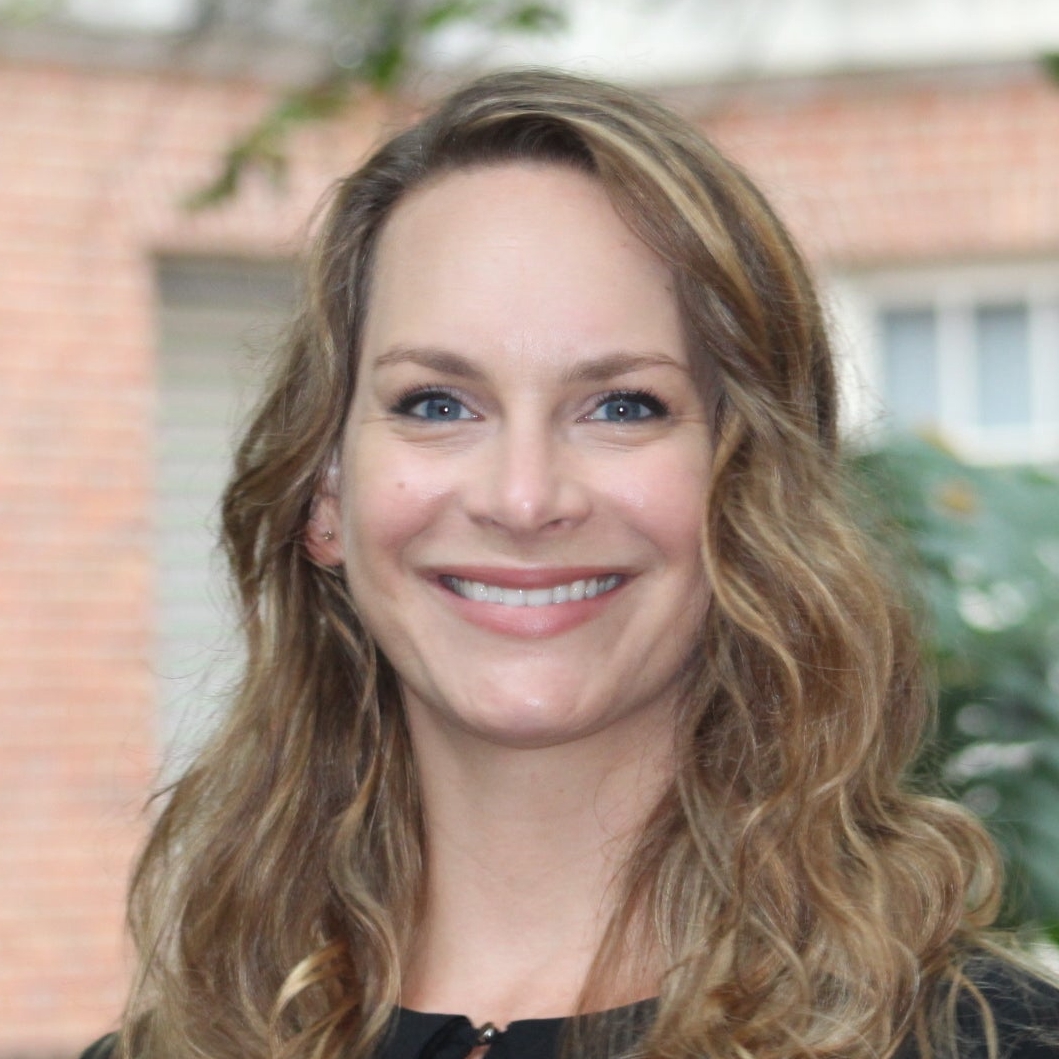
Julie Golding
Dr. Julie J. Golding is a Holocaust educator and museum professional, Assistant Professor and Deputy Chair of the Master's in Holocaust Education at Touro University, and author of "Unseen Scars."
3
APPEARANCES
3
PODCASTS
Oct 6, 2026

Ziva HassenfeldMODERATOR
Julie, let's start with you.

Julie GoldingGUEST
It is a study that was done on, uh, 30 museum visitors to the Museum of, uh, American Jewish History, as it was called at the time, also known as NMAJ.
Julie GoldingGUEST
And the museum is in Philadelphia, and the site was identified because it is a tourist attraction with an explicit educational mission to it.
Julie GoldingGUEST
Um, and as the authors noted, this study was done right before COVID in June and July of 2019.

Nachi WeinsteinHOST
So how do you approach that, and how do you- In your own teaching and throughout the book
Julie GoldingGUEST
I think, um, you zoomed in on the word difficulty, and that's an important word because what we're talking about here is difficult histories.
Julie GoldingGUEST
Um, the Holocaust falls into the genre of difficult histories, not controversial histories, but difficult because they sit at this, at this juncture, they sit at this point of knowing too much and not quite knowing enough.
Julie GoldingGUEST
And what happens is that that information is overwhelming rather than empowering.
Julie GoldingGUEST
Um, [lips smack] Holocaust studies also sits in an area of what we call dark tourism, which is visiting sites that are related to death, to suffering, to mass atrocities.
Julie GoldingGUEST
And interestingly enough, there is a rise in dark tourism in the last, um, several years.


Waitman BeornHOST
So how, what is the calculus or w-how would you comment on sort of this, this algebra of like how do we choose something that is going to be, you know, emotionally impactful, but also not sort of voyeuristic or sort of excessive?
Julie GoldingGUEST
So you mentioned the United States Holocaust Memorial Museum, you mentioned the Auschwitz Museum, and the museums in these different places look very different.
Julie GoldingGUEST
As you said, Auschwitz is the site of, of Auschwitz, where, um, you know, [sighs] the largest Nazi death camp in German-occupied Poland.
Julie GoldingGUEST
And so, um, you're showing up at a grave site, and you're showing up at a place where, um, the s- the impact of the site itself is just so powerful.
49 MINS LATER