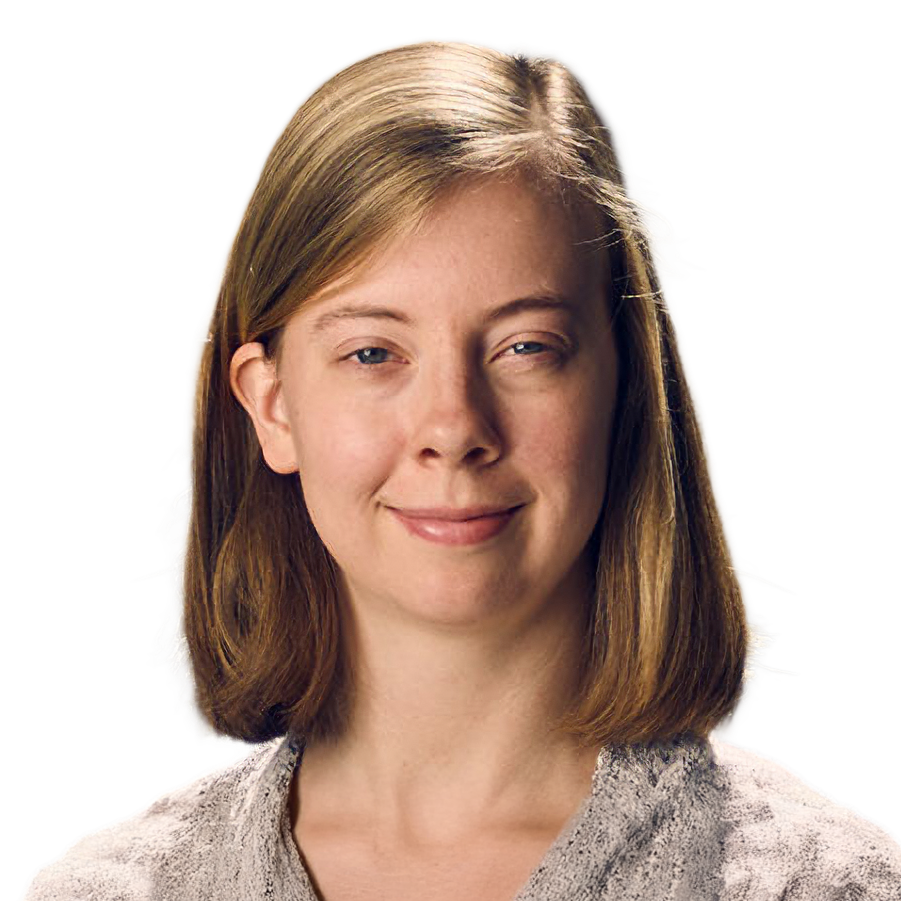
Julia Belk
Immunologist and HHMI Hanna Gray Fellow (Stanford Medicine) whose Nature study showed blood-derived immune cells replace brain microglia during aging.
3
APPEARANCES
3
PODCASTS
Oct 23, 2026


Julia BelkGUEST
And in particular, what caught my eye is they can really be curative in certain cases.
Julia BelkGUEST
And it's also a really exciting time because we've just had this explosion of technologies to actually measure the immune system and human cells more broadly with incredible resolution at incredible scale.
Julia BelkGUEST
So for me, coming as someone with a more quantitative background, I felt it was really perfect timing where my skill set was actually useful and some of the problems were really, really compelling.
22 MINS LATER

Nicholas WeilerHOST
Why do you think those mutant cells, which are generally bad for our health, heart disease, metabolic syndrome, cancer, why might those mutations be protective against Alzheimer's?

Julia BelkGUEST
So there are already some, um, or, or one approved therapy that actually is curative in a, in a brain disorder l- uh, by, by using a bone marrow transplant, um, in part to replace defective microglia.
Julia BelkGUEST
So this, this disorder is a rare genetic disease called cerebral adrenoleukodystrophy, cerebral X-linked adrenoleukodystrophy, that's caused by a mutation in a gene on the X chromosome.

Josh HelmanHOST
And, and in, in terms of delivering this new therapy, it's, it's a surgical procedure in humans, it sounds like? Or-

Julia BelkGUEST
And similar to Nathan, I'm super excited that these two completely different approaches from our two teams really converged on the exact same human biology almost at the same time.
Julia BelkGUEST
And so exactly like you set up, we set out to study mutations and use mutations as a lineage tracing approach.
Julia BelkGUEST
And the way we really got into this was actually several years ago, looking at people with this phenomenon called clonal hematopoiesis.
Julia BelkGUEST
And what clonal hematopoiesis is, is these precancerous mutations that are present in the blood.
10 MINS LATER

Eric TopolHOST
And Julia, is this only something that happens in humans and not in primates and other species?