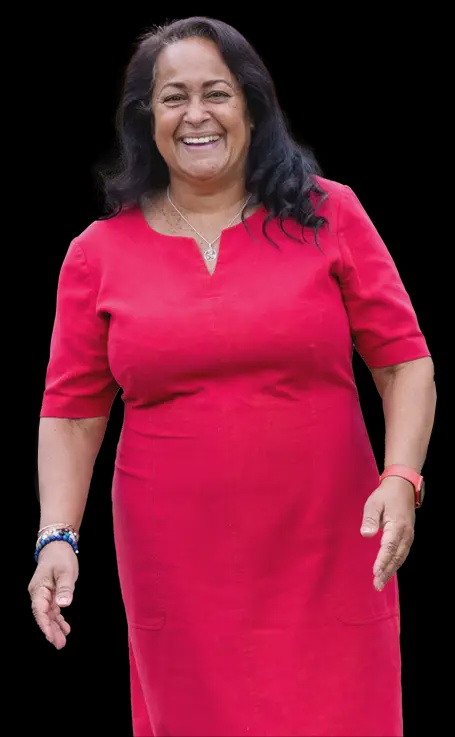
Joyce Harper
Professor
5
APPEARANCES
5
PODCASTS
Oct 14, 2026

GarethHOST
Where did that start?
Joyce HarperGUEST
When, when I was a child, I was brought up a relatively strict Catholic, and I used to sit in the church on Sunday and listen to the sermons and think, "That makes no sense to me whatsoever." I know it's some people's things, and certainly support anyone whatever they believe, but for me as a young child, I just thought, "This does not make any sense." And I started being very inquisitive about how the planet formed and how we formed and how everything else fitted together.
Joyce HarperGUEST
And I then decided I wanted to do a science degree, and I went to do a PhD, and I did, I did all those things.
Joyce HarperGUEST
It was very new then, so this was, um, 1987, and the world's first IVF baby was born in 1978, so it wasn't even 10 years since IVF had started.
GarethHOST
So, uh, I'm assuming they're very well educated, are they, on, uh, on what it's like to be a woman?


Kelly PeggHOST
And then you've got people left, right and centre sort of, you know, with... sharing misinformation so when do we need that education?

Joyce HarperGUEST
I love that scroll hole I'm going to use that that's a great that's a great and just to say before I talk about when we should start education I try to if something's wrong on social media I try to put the facts right and then people loads of people start arguing with me and I've got this very common saying now that I say what do i know i've worked in women's health for 40 years i'm a professor at ucl what do i know don't you don't listen to me i i you know more than me it's fine so a bit sarcastic obviously i get it's a bit frustrating right schools we need to learn this in schools and we are really lucky in the uk we have this in the curriculum in our uk curriculum department for education has said We need to teach about menopause.
Joyce HarperGUEST
We actually need to also talk about puberty and periods and things like endometriosis and how to get pregnant, because at the moment we're not quite there.
Joyce HarperGUEST
It's been in the curriculum and it's been updated recently to have more about difficult periods.
26 MINS LATER
Kelly PeggHOST
Finally, what for our listeners... are the two takeaways that you would give them right now from your latest book, Your Joyful Years? What are the two biggest takeaways from it?


Joyce HarperGUEST
I'm not against engineering a healthier human being, but I am against engineering a better human being.
Joyce HarperGUEST
Now, I've been working in the fields of IVF and preimplantation genetic testing for 40 years.
Joyce HarperGUEST
I have biopsied hundreds of embryos for numerous couples who were at risk of transmitting a particular disease to their children, and I helped them have a healthier child and a healthier family.
Joyce HarperGUEST
But we're debating today the word better, and I've got three points I want to make, and the first is that genetics is not that simple.
1 HR 18 MINS LATER

speaker_1HOST
Yeah.
Joyce HarperGUEST
So I went to join the Hammersmith Hospital team, and then later the UCL team, and did, started doing real lab research, and also started teaching.
Joyce HarperGUEST
So that was 1992 that I started in the Hammersmith, and by 1996 I started my first master's course at UCL, and we're still running loads of courses.
Joyce HarperGUEST
But things do change, and the specific thing that we were doing was something called pre-implantation genetic... testing, it's called now.
51 MINS LATER
speaker_1HOST
Yeah.


Joyce HarperGUEST
So myself and Shima Tarek, my co-worker, we've been researching around menopause and asking thousands of women around the UK what they feel and what they think about menopause and what they know.
Joyce HarperGUEST
When were we ever taught about it? So we have been working for the last couple of years in trying to set up a co-designed evidence-based and very inclusive listening to every woman so that we can run an education and support programme that we hope will be free to everybody.
Joyce HarperGUEST
And as you said, not just women, also people with ovaries that may not identify as women will go through the menopause as well.