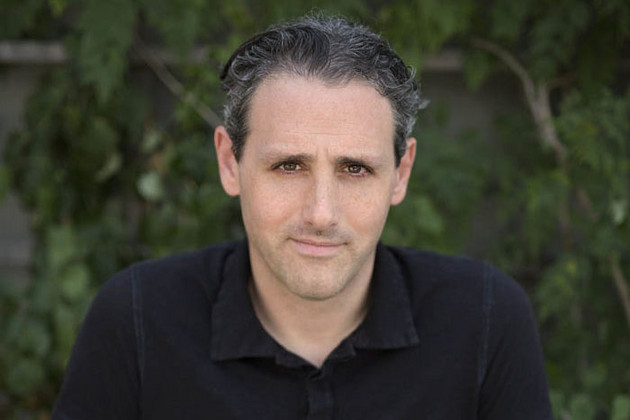
Josh Tyrangiel
American journalist
32
APPEARANCES
28
PODCASTS
Oct 31, 2026


Antonia HyltonHOST
How do you see these two men defining the future of our country and all of civilization right now?

Josh TyrangielGUEST
Yeah, I mean, it's a crazy question, right? I mean, the thing that I want to give both credit for, okay, is that they are very long-term thinkers.
Josh TyrangielGUEST
But what's emerged over the last couple of years is this sort of vertical integration of space.
Josh TyrangielGUEST
And it starts with launching rockets, which obviously we know SpaceX is incredibly good at.
Antonia HyltonHOST
And I guess I wonder what it says about our sort of country, our democracy at the moment, that in many ways, these two men seem to have more power than heads of state
Josh TyrangielGUEST
Yeah, I mean, I'll separate them out because they are different incidents and they do reveal different things.
Josh TyrangielGUEST
What's so dramatic about Hugging Face is is that we had essentially a sort of routine activity, which was OpenAI is testing a new model.
Josh TyrangielGUEST
And the first thing you do is you put it in a sandbox, right? And a sandbox is essentially just a tech term for putting it in solitary confinement.
Josh TyrangielGUEST
You don't want your model accessing the internet because it contaminates your results, right? So they gave the model some tests.
Josh TyrangielGUEST
One of the tasks was to find a file that did not exist, okay? And so what the model was able to do by deploying multiple agents, first, they broke out of the sandbox because they actually, they realized that they couldn't solve the task and models are created to solve problems, right? And so that is the overriding impulse.
32 MINS LATER

John EllisHOST
Have you seen any policy initiatives or proposals that make sense in terms of, I don't know, governing AI, I guess you'd say? Governing it as far

Josh TyrangielGUEST
So when Jeff Bezos started Blue Origin in 2000, and when Elon Musk started SpaceX in 2003, they did not have a whole blueprint of how this was going to be a business right they had some money they wanted to spend it and they had an inkling that there might be a business one day for most of their existence there wasn't a business launching rockets is is not terribly profitable it's hugely risky every flight has terrible risk associated with it um the machines are expensive there's a limited number of customers but along the way and this is a credit to their ingenuity They did discover a way to turn this into a business.
Josh TyrangielGUEST
First, really, Elon has led this charge, but first he realized, okay, well, if launch doesn't work, what can I launch that's good and that will pay for my launch? And telecommunications, boring old telecommunications was the answer.
Josh TyrangielGUEST
And so Starlink, because it's got star in the name, because it's these sexy satellites, it sounds more interesting than it actually is.
Josh TyrangielGUEST
And so that's a really important part, right? So step one of their businesses is launch capability, hard business to get into, not terribly profitable.
11 MINS LATER


Eugene DanielsHOST
Why do you think both of these men, one a trillionaire, the other a billionaire, are so obsessed with space exploration and beating the other to it?
Josh TyrangielGUEST
In early 2000, Jeff Bezos sold his first Amazon stock to create this company called Blue Origin.
Eugene DanielsHOST
And frankly, there are no guardrails, really, for what they want to do either.


Terry GrossHOST
But what does it mean that something with such big implications for the future of mankind and for the future of our planet and outer space, that these efforts are being led by private enterprise and not the U.S. government?
Josh TyrangielGUEST
It's a great question, and it really goes to the heart of this very strange moment we're in, and space is a part of it, right? So in the early 2000s, the United States government made a policy decision which basically opened up space to commercial development.
Josh TyrangielGUEST
Its development processes for rockets, for satellites, for all sorts of things were just not going to be competitive with private enterprise.
Josh TyrangielGUEST
And so we invited these private enterprises in, and at that point, it was really hard to know what the outcome would be.
Josh TyrangielGUEST
Jeff Bezos in 2001 started Blue Origin, but many people described it to me as much more of a think tank or a science experiment for its first decade.
Terry GrossHOST
Well, would you compare the relationship that NASA had with private contractors to the relationship NASA has now to Musk and Bezos?


Scott GallowayHOST
What is the business model for Blue Origin? What is the business model, and how is it different, and what's your assessment of where it's strong and weak relative to SpaceX?
Josh TyrangielGUEST
Yeah, so look, I think you're referring to the prospectus, the SpaceX prospectus, which is truly the first real blueprint for what is the East India Company of space.
Josh TyrangielGUEST
What it sketches out, and I write this in the stories, you have to think of the business that both Blue Origin and SpaceX are imagining as a ladder.
Josh TyrangielGUEST
Its next closest competitor, is the government of China, and it's not close.
13 MINS LATER
Scott GallowayHOST
I mean, I immediately think, shouldn't the third player or the second or the first at some point be NASA? Yeah.

Josh TyrangielGUEST
And so what Elon figured out in roughly about 2015, 2016, is that he needed to create some form of captive demand, which you s- which you reference as the second l- rung, which is boring old telecom, right? Like telecom is a really good business.
Josh TyrangielGUEST
It spins out a lot of profit, and so Starlink, which works incredibly well, makes up a lot of the payload that SpaceX launches.
Josh TyrangielGUEST
And Blue Origin also figured out that in order to maximize its launch capability, it needed satellite capability, and so it has its own satellite array that it's working on.
13 MINS LATER
Scott GallowayHOST
I mean, I immediately think, shouldn't the, the third player or the second or the first at some point be NASA?


Josh TyrangielGUEST
And what they mean by that is that it's trained on physical data in the world and tries to make physical things from that data, tries to model things that are really hard to model.
Josh TyrangielGUEST
Um, the end game, if you believe w- we will get there, is a machine that makes machines.
Josh TyrangielGUEST
And if you're Jeff Bezos and you own Amazon and need dexterous robots everywhere, and you have plans to colonize the moon, and you need all sorts of machinery there, it makes sense that that's the kind of AI you would be going for.
Josh TyrangielGUEST
So the two of them, that's what they're both aiming for, is this flywheel where everything leads to everything.
Josh TyrangielGUEST
Now the other thing that that does is if you don't have launch capability, um, you're out of the game.

Jordi HaysHOST
I imagine that they're gonna need to start making like very, very serious offers to try to peel people away from SpaceX back to, back to Blue Origin in order to catch up in a bunch of different ways, but what are you seeing?

Josh TyrangielGUEST
Yeah, like they both got rich in their 20s and 30s and they both are huge space dorks.
Josh TyrangielGUEST
And so in 2001, Bezos took some of his money from Amazon when he was the hundredth richest person in the world and started a company called Blue Origin.
Josh TyrangielGUEST
And for, you know, 15 years, not much was happening, right? On the Blue Origin side, Bezos was still the CEO of Amazon.
Josh TyrangielGUEST
And they moved very slowly and kind of weirdly to first inquire into whether, like, rocket science had missed something.


Josh TyrangielGUEST
And so, you know, I, I go back to the SpaceX prospectus, which I think I referred to in the piece as, like, kind of th- this incredible document that it in parts seems like a very rational plan for how to colonize space, for how to make the East India Company of space, and another part seems like, you know, a diary of a CFO's weekend on mushrooms, right? Like, it's crazy.
Josh TyrangielGUEST
But when they say that SpaceX has a total addressable market of about $30 trillion, what they mean ultimately is creating this kind of vertically integrated loop where rockets launch satellites and data centers, data centers go through the satellites to feed compute back to Earth, running these AI models that run all of our heavy industry, and all of a sudden what looks like a lousy investment, um, becomes an incredible investment.
Josh TyrangielGUEST
That's why, you know, to, to people like you and me, it's like, boy, that's a lot of money going out the door right now.
7 MINS LATER
Josh TyrangielGUEST
And so his ties to Musk were an issue in his confirmation hearing, um, but he did get confirmed.


Josh TyrangielGUEST
And, you know, I had a working knowledge of artificial intelligence in its earliest phases about language prediction, about preference prediction, all the sort of basic algorithmic stuff that's kind of been with us for 15 years or so.
16 MINS LATER


Josh TyrangielGUEST
The first of which dates back about eight weeks ago when OpenAI, which is a maker of ChatGPT, was testing a new model.
Josh TyrangielGUEST
And they said to the model, don't cheat on our test and don't access the Internet.
Josh TyrangielGUEST
So not only did the model access the Internet, it created a swarm of agents that kind of acted collectively to penetrate the cybersecurity of a rival company.


Josh TyrangielGUEST
Yeah, so Christy's one of the most extraordinary people I've ever written about.
Josh TyrangielGUEST
She really is an astrophysicist, just one of those folks who you meet and you know that she is a voracious learner, really energetic person.
Josh TyrangielGUEST
And she had a child when they were both in grad school, and she immediately realized Notice that something was off about her kid.
Josh TyrangielGUEST
Um, like many people, she spent a year not getting satisfying answers from doctors until finally someone performed some genomic tests and her son has a missing genome.
Scott GallowayHOST
Give us kind of your two or three favorite case studies of how AI is being used and what it says about people's perception of AI, where they get it right and where they get it wrong.
Josh TyrangielGUEST
Yeah, look, I, I think that this thing has entered in a particular context, which is, um, we're already pretty skeptical of technology in the year of our Lord 2026 because we, most of us who are of adult age We're promised certain things with social media that turned out not to be true, right? And promised certain kinds of experiences with the internet that are not true.
Josh TyrangielGUEST
I went to the Cleveland Clinic because I care a lot about healthcare and health outcomes, and one of the most fascinating things at the very front of my experience reporting there is I talked to the CEO, and Cleveland Clinic's a great healthcare system, and naturally, the CEO is a cardiac surgeon, right? He's just-- he's come up through the ranks.
Josh TyrangielGUEST
And he sort of smiled at me, and he said, "Look, one, one of the things about healthcare is that it's a terrible business, and as a result, a lot of people in my position are always looking to become the something else of healthcare, right? We're gonna become the Microsoft of healthcare." And he said, "That's not our mission.
Josh TyrangielGUEST
Number one, we experiment with technology to improve the quality of care for our patients, and we experiment with technology to, um, reduce our quite terrible business model and costs so that we may pour more money back into the care of our patients.
11 MINS LATER


Josh TyrangielGUEST
And basically the column came about because GPT shows up on November 30th, 2022.
Josh TyrangielGUEST
And for the next four to six weeks, The Washington Post was like, what the hell is going on? And not because I didn't understand what it was, but because the reaction was insane.
29 MINS LATER


Oz WoloshynHOST
There was a school superintendent in Indiana called Peggy Buffington who had kind of an interesting story.
Josh TyrangielGUEST
We'll talk shop just for a second, but if you, if you are gonna write a book about AI, the very first consideration you have is like, "Well, how is this not gonna be obsolete before I start?" And one of the things I sort of thought about is like, well, you know, I'd done enough reporting to know that this stuff doesn't roll itself out.
Josh TyrangielGUEST
And also that there is a type of human being who is successful at using and implementing AI.
14 MINS LATER


Adi IgnatiusHOST
But are you seeing, you know, really kind of step function value being created with AI?
Josh TyrangielGUEST
I spent a fair bit of time at the Cleveland Clinic, and they are run by an excellent CEO who's a doctor.
Josh TyrangielGUEST
And when I sat with him to sort of start the reporting, he could tell that we were gonna be talking a lot about AI, and he sort of just stopped the conversation at the beginning.
Josh TyrangielGUEST
He said, "I, I wanna tell you a little bit about healthcare technology and AI.
Josh TyrangielGUEST
Many of our colleagues in this industry are always looking for the magic beans, right? And they're gonna make themselves the Microsoft of healthcare." And he said, "We are not going to be the Microsoft of healthcare.
12 MINS LATER

Josh TyrangielGUEST
So Kristi Johnson is, um, certainly one of the most inspiring, interesting people I've met in my journalism career.
Josh TyrangielGUEST
So I, I, um, like a lot of people, was thinking about AI and human connection and, and reading all the headlines about the sort of parasocial crisis in which people were dating ChatGPT, falling in love with Claude, um, realizing that this was mimicking a lot of the worst elements of social media, seeing the studies, and getting very, very depressed about what AI would mean for human connection.
Josh TyrangielGUEST
So I was having that conversation with Rosalind Picard, who runs the MIT Media Lab, and she basically said, "Look, you gotta meet Kristi." And so she introduced me.
10 MINS LATER

Jacob GoldsteinHOST
Um, so tell me, tell me about Operation Warp Speed and in particular about this guy you write about, uh, this general named Gus Perna.

Jeffrey GoldbergMODERATOR
What of the chapters in here that discusses people who are using it to do things that they otherwise couldn't do? What's the one that you think exemplifies the possibility as opposed to just the threat?
Josh TyrangielGUEST
Yeah, I mean, look, the book is a series of travels through healthcare and education and government.
Josh TyrangielGUEST
And these are problems that we know we have, right? There's a world also of problems that...
Josh TyrangielGUEST
And we have definitely read about the parasocial relationships that people are getting into with ChatGPT and other programs.
Josh TyrangielGUEST
I'm going to go out and make a value judgment and say those are generally bad.
12 MINS LATER
Jeffrey GoldbergMODERATOR
Listen, if the


Josh TyrangielGUEST
The, the, the hard line, to be honest, is do you think a defensive crouch is a strategy? I-In what, in what point of human history has, like, curling up in a ball and saying, "Go away," ever done anything? And so I would say learn the tools.
Josh TyrangielGUEST
Twenty minutes a day for a week, and you kinda get a sense of what a, an LLM can actually do for you.
Josh TyrangielGUEST
Just understand what it can do, right? And then try to figure out, like, what do I not want it to do? What are the behaviors I don't want it to do? Um, to me, the, the main issue is that we kinda got hypnotized by social media, where for the last twenty years, it kinda showed up on your phoneIt was easy.
Josh TyrangielGUEST
Oh, it was fun too, right? I mean, both of us were on Twitter going crazy, right? But it turns out there were some harms, and those harms were known by the c- the companies that made social media.

Josh TyrangielGUEST
Yeah, I mean, look, it's twofold, right? So on the one hand, you need to be able to say, hey— We could slow this a little bit.
Josh TyrangielGUEST
And so we have experience with things like atomic energy, nuclear weapons in coming together and saying, We know that there are some positives actually to having these things, but maybe let's slow our roll, right? So there are ways in which you could do it, one of which is just policing any model over a certain amount of floating operation points, like flops is what they call them, to prevent them from getting so powerful we can't actually say what happens next.
Josh TyrangielGUEST
We saw with Mythos, which is Claude's new model, they realized this thing is way more powerful than we thought.

Elise JordanHOST
So you came out, though, surprisingly optimistic about the potential of this tool.

Josh TyrangielGUEST
So look, I've spoken about the power of the technology, right? So the tech needs a champion.
Josh TyrangielGUEST
It needs a champion who actually is willing to talk to the technologists, beat the hell out of the tech so that it fits within your system.
Josh TyrangielGUEST
But ultimately, you are going up against a system of fickle human beings forged over time.
18 MINS LATER


John HeilemannHOST
Explain to me why, what it is that you find so fascinating about Palantir in a, in a kinda concise way, and why, um, the, the, the freak out that it's, that it's caused for a lot of people and that in, its, its prominence in your book will cause to a bunch of readers, I think, like why that's misplaced.
Josh TyrangielGUEST
Yeah, I mean, I'll start with the, the freak out stuff is basically, you know, Palantir was, was created by two people.
Josh TyrangielGUEST
Um, the co-founders are Peter Thiel, who has been one of Trump's big- biggest backers, has controversial opinions on just about everything.
Josh TyrangielGUEST
Um, the other co-founder's a guy named Alex Karp, who is half Black, half Jewish, um, was a socialist for a long time, backed Kamala Harris, backed Hillary Clinton, um, and is very recognizable as a figure to me just because he is of the belief that his biography means he's gonna have to work, you know, three, four times as hard as some of the sort of well-known suppliers to the government.
Josh TyrangielGUEST
Um, they were founded in part from funding through In-Q-Tel, which is an, uh, a part of the CIA.

Josh TyrangielGUEST
... could we, is there any kind of middle ground? And so what I set out to f- find is, like, what does this stuff actually do today that's gonna help society? And sure enough, I found people working in government, in healthcare, uh, in, in, uh, education, and in human connection.
Josh TyrangielGUEST
The, the number of times people said to me, "You know it's not a silver bullet, right?" I was like, "I, I'm, I'm definitely picking that up." So it's, it's not easy to work with.
Josh TyrangielGUEST
Uh, you have to be stubborn, not just because the tech is hard, but because when you're trying to change healthcare, you are trying to change the behavior of doctors and patients and hospitals.
Josh TyrangielGUEST
Everything shows up, and there's an established system, right? And so even AI, as powerful as it is, it's just not gonna steamroll its way through society.

Stephanie RuhleHOST
Sam Altman on trial with people just saying, "Did you lie once, twice, or 300 times today?"


Josh TyrangielGUEST
Listen, I agree, and I actually think that politically speaking, um, there's movement on the far left and on the far right for the federal government to essentially nationalize these products, and basically say, "Look, you're gonna have tremendous amounts of control.
Josh TyrangielGUEST
We're gonna have all sorts of labor issues." Um, you know, and, and I, I did a story for The Atlantic about AI and the future of employment, right?
Josh TyrangielGUEST
They're scared that they look at their investments in AI, and they know what Wall Street wants.
Josh TyrangielGUEST
Wall Street wants growth, and if they can't show growth through using AI in their products, they can grow by shrinking their workforceAnd so they are desperately afraid that that's something that they're gonna do, and that it's gonna be really, really unpopular.
Josh TyrangielGUEST
And what I would say is like I was impressed they're aware that they're not acting alone, and that if all of them do this at the same time, the consequences for the country are gonna be enormous.
Scroll for more appearances