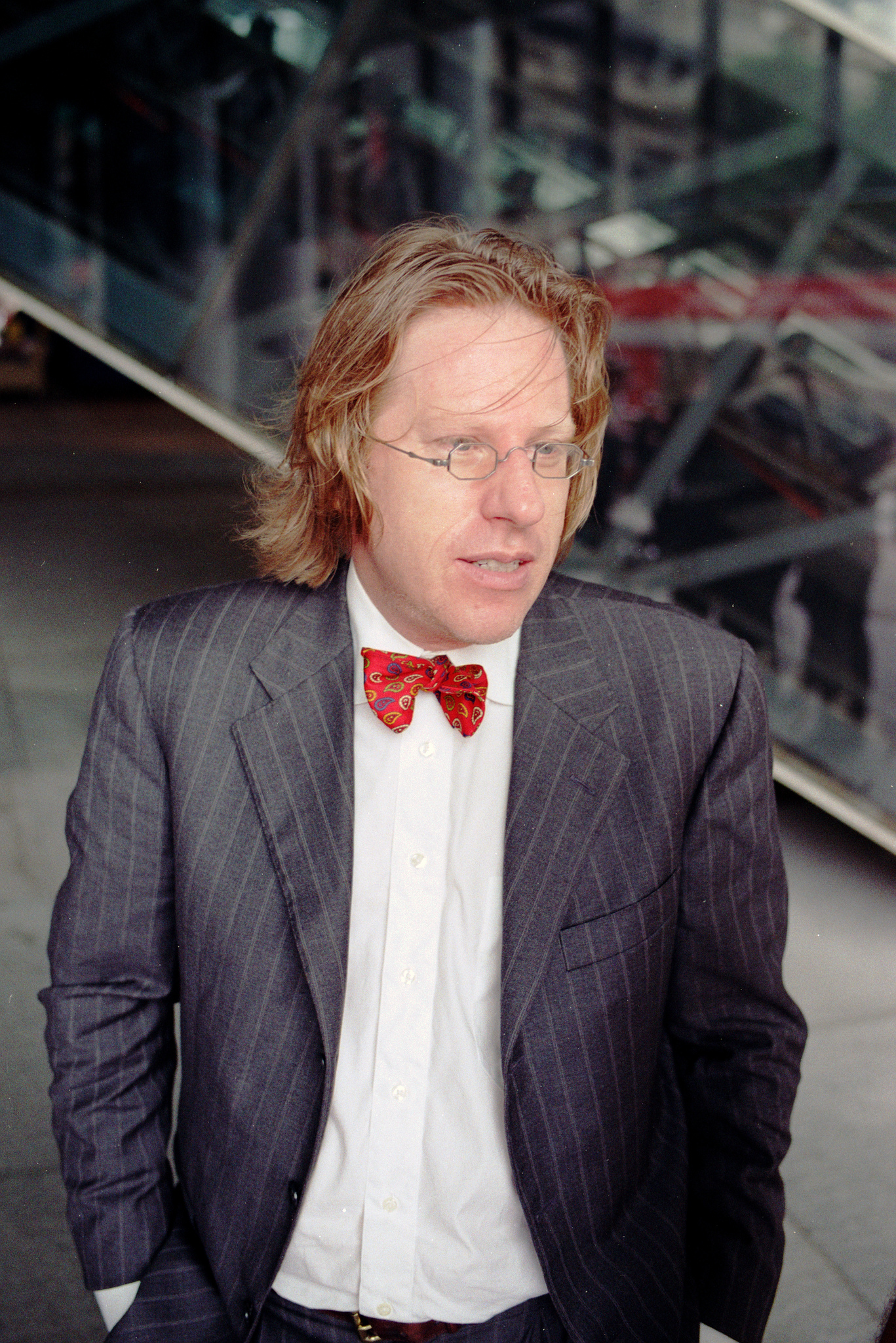
Jonathon Keats
American conceptual artist
4
APPEARANCES
3
PODCASTS
Oct 8, 2026

Andrew WarnerMODERATOR
[audience cheering]

Jonathon KeatsGUEST
I now have to live up to in terms of what I'm going to say to all of you, though we are not on a multi-day trip here.
Jonathon KeatsGUEST
Every year, I travel Highway 50, the loneliest road in America, to visit some of Earth's oldest living beings.
Jonathon KeatsGUEST
Up on Mount Washington in the Great Basin can be found a grove of bristlecone pine trees that have been stewarded by the Long Now Foundation for decades.
21 MINS LATER
Adam CsankGUEST
And when I gave a talk here in two thousand and fifteen, it was very much for me this excitement of being able to come into this room where some of the prototypes are to be found, and to connect in terms of my own practice, which is often looking


Grant SlaterHOST
Tell me what's a bristlecone pine? Where does it live? What does it look like? What does it smell like there? What does it feel like?
Jonathon KeatsGUEST
Well, I don't claim or pretend to be a botanist, but I have spent a lot of time with these trees, and speaking from that experience and also from what I have learned from talking with others, bristlecone pine trees are the longest living complex organisms on Earth, at least to the best of our knowledge.
Jonathon KeatsGUEST
They can live for 5,000 years, sometimes even longer than that potentially, and they tend to live in places that- Humans talk about as being extreme places of adversity, but of course, that's our perspective.
Jonathon KeatsGUEST
I've been in groves in, in eastern Nevada on Mount Washington in the Great Basin, and had the weather turn on me in the summer, where I've gotten a sense of how, how harsh the weather could be throughout the year.
11 MINS LATER


Jonathon KeatsGUEST
Within the next thirty minutes, I'm going to tell you what I will be doing for the next five thousand years.
Jonathon KeatsGUEST
But I want to start with something a little more modest, to tell you about the time that I sat in a chair and thought for twenty-four hours.
Jonathon KeatsGUEST
The year was two thousand, and I had this idea that I wanted to be an artist and didn't really know how to make anything like painting or drawing or the various skills that one is supposed to have, so I figured that perhaps I should get into conceptual art.
Jonathon KeatsGUEST
And as I explored that possibility, the more that I looked into it, the more that I found that conceptual artists seem to be sort of cheating a little bit in terms of there was a concept, but it was also instantiated in all of these things, these objects.
44 MINS LATER
speaker_3UNKNOWN
So what would you wish society would do?


Emily WilsonHOST
Instead, he talked about the redwoods, starting with the rings trees grow every year and how climate conditions affect the thickness.
Jonathan KeatsGUEST
I went to the College of the Redwoods and gave a talk about this calendar that I envisioned, a calendar that would begin with a sapling and that would set markers around it where there would be future dates marked in stones that would take the next 2,000 years or so as a matter of space by which to be able to find out what time it is.
Jonathan KeatsGUEST
In other words, the dates would be spaced based on the average annual growth of the tree historically.
Jonathan KeatsGUEST
And as the tree grew, there would be the indication of the current year, current century, or probably be in 500-year intervals even.
Jonathan KeatsGUEST
It might be ahead of or behind the Gregorian calendar because climate conditions are changing.
Jonathan KeatsGUEST
And as a result of this, there's the likelihood that the tree will grow more quickly or more slowly, probably more quickly given carbon dioxide levels increasing.
Emily WilsonHOST
Jonathan answered the three questions I ask all the guests: when he knew he was an artist, some work that's had an impact on him, and the most creatively inspiring place in the Bay Area.