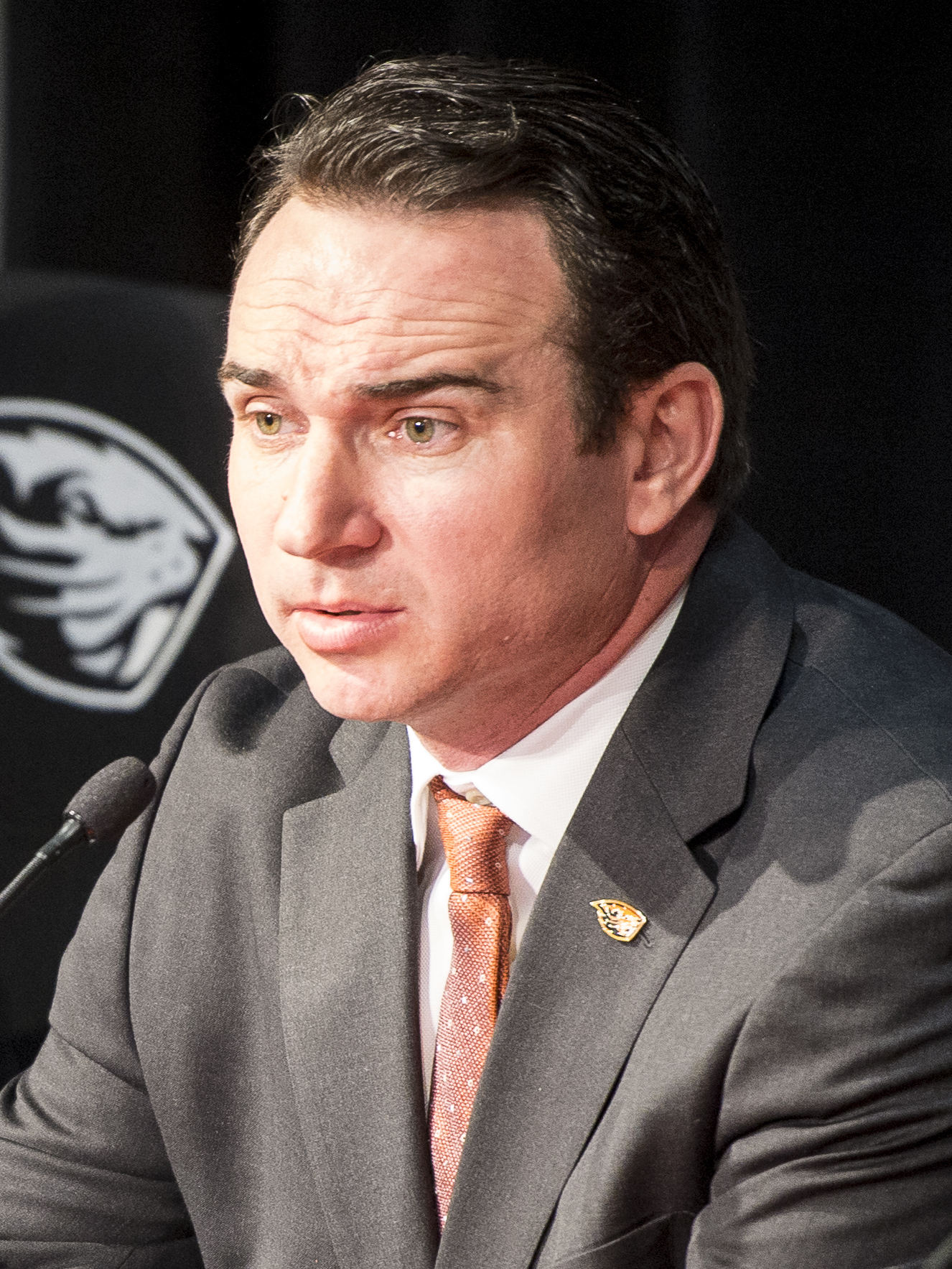
Jonathan Smith
American football coach
17
APPEARANCES
13
PODCASTS
Oct 1, 2026


Jonathan SmithGUEST
And I think it also kind of goes back to what Coach Carlisle said a couple of days ago when he was talking about Kelly Oubre.
14 MINS LATER


Sean BublitzHOST
And I think this is the hardest thing of the three that I listed to change is someone can appear to change their character pretty quickly but real change only shows up over longer periods of time and you can't get inside somebody's heart you can only watch the fruit that comes out of it so that's character jonathan can you explain chemistry and competency for us
Jonathan SmithGUEST
i think too just one of the tests for character is the old saying you don't know what's in someone until they get bumped And so someone could demonstrate change in a moment when it comes to character, but you really only get to measure it when they've been bumped.
16 MINS LATER
Sean BublitzHOST
Jonathan, what advice do you have for other pastors who might be working through this type of evaluation of their people?

SimonHOST
Okay.
Jonathan SmithGUEST
And that flexibility means you're not having to make, you know, repeated investments in, in different functionality within that hardware layer.
Jonathan SmithGUEST
You're using, um, our Open Live Media workflow orchestration to be able to bring that configuration on an event-by-event basis, on a stream-by-stream basis.
Jonathan SmithGUEST
And, you know, as production is getting more and more hybridized and distributed, it becomes very important that you're able to get that return on investment-
SimonHOST
Yeah
Jonathan SmithGUEST
Um, you know, they can deliver sub-200 millisecond glass-to-glass, so the production in Oslo, uh, was able to be, uh, you know, pretty dynamic.

Jonathan SmithGUEST
We wanna make sure, of course, that all the best-known characters, and certainly Batman's greatest allies, like Robin becoming Nightwing, you know, like core ico- iconic, really essential component of the story, like the introduc-duction of Barbara Gordon, char- characters like Catwoman, we want to make sure they were strongly featured in the story.
Jonathan SmithGUEST
But then also really build beyond that with so many different unlockable suits and Easter eggs and surprises.
Jonathan SmithGUEST
Mechanically then, in terms of the design of the game and the gameplay, when we say we want a definitive Batman game, uh, we're trying to do two things at once.
Jonathan SmithGUEST
Uh, and I can say a bit more about, you know, some of the choices we made there and why we made them.
13 MINS LATER
Jonathan SmithGUEST
So the story team is starting by, by bringing all that together, uh, and then going deep.
Jonathan SmithGUEST
I want to press on a third and it kind of piggybacks off what you've just said, because I've used it even as a hiding place at times.
5 MINS LATER

Jonathan SmithGUEST
I was just going to say it's quite a personal thing for me because it was my...
Jonathan SmithGUEST
So he saw some amazing sights and he used to tell us the stories about just talk about it and tell us all about it.
Jonathan SmithGUEST
So he became a builder after he was a final and it was really his stories about making for me that sort of got my interest in what we were doing with architects and I think from about the age of about eight onwards I just told my parents I was going to be an architect and they believed me and I don't think I knew what it was so I just went with it and I think the draw for me is the idea of making something that's not necessarily rote learning or a tangible thing that you know what it's going to be before you finish the process.
18 MINS LATER
Sean BublitzHOST
Jonathan, when you look at your own team through that lens, not the total number, but where people actually sit, how do you decide what a ministry area is worth in staff? Honestly,
Jonathan SmithGUEST
I think when the unstuck report came out and showed the distribution of the staff across those different lanes, we realize that maybe we have a problem.
Jonathan SmithGUEST
I wish I was so strategic, but like most churches, staffing allocation is often a record of who has advocated best in the past often, not a record of what mattered most.
Jonathan SmithGUEST
The loudest speaker gets the position, the ministry with the most visibility weekly gets the position because everybody sees what happens on a Sunday.
Jonathan SmithGUEST
Or sometimes it comes from our tradition, like we're a Pentecostal church, so worship is a big bearing on our church experience.
11 MINS LATER
Sean BublitzHOST
So, Jonathan, anything you'd add or anything you'd tell a pastor not to do at this stage? Well, I

Jonathan SmithGUEST
So let me just start by preaching from the floor this morning because I injured myself yesterday.
Jonathan SmithGUEST
I wish I could say it was from, you know, like playing basketball or doing something important, but I injured myself stepping out of a bus.


Jonathan SmithGUEST
Elizabeth was our oldest sister, and, uh, she, uh, was born with cerebral palsy.
Jonathan SmithGUEST
And, um, she, being the oldest, she was such sort of the center of our, our world and, um, how we grew up, and everything sort of revolved around her and, um, and her needs.
Jonathan SmithGUEST
And, uh, she got, she got very sick last year and she passed away and, you know, we were...
Jonathan SmithGUEST
Uh, that was last June, and we were having her memorial service and had all these friends and family and, um, people all together and, and, you know, one of the...
15 MINS LATER

Jonathan SmithGUEST
So kind of from the racing, like I said, I got to a point where I would have loved to be the race car driver on the yacht, living that life that I dreamed of.
Jonathan SmithGUEST
We all dreamed of being race car drivers, but I needed to go get a job and make some money to pay the bills.
Jonathan SmithGUEST
But one of my best friends, Jason Sherriff, who's still in the industry, he has his own firm.
Ron CallisHOST
Take us through kind of how you went from that introduction to ultimately owning your own business or launching your own business in 22.

Jonathan SmithGUEST
Good teamwork is that we're able to challenge each other, that we're able to work through complicated and difficult questions.
Jonathan SmithGUEST
I think you often hear this phrase around psychological safety, and it's become a bit of a pejorative term now, but it is really, really important that you do create that environment that enables people to check and challenge the decision-making process.
Jonathan SmithGUEST
That is key because if you surround yourself with people who just think like you, who've just got your own worldview, then you're going to make some poor decisions.
Jonathan SmithGUEST
What you need is the broadest breadth of talent around you who may look different to you, may think different, have a different worldview, have a different perspective.
Jonathan SmithGUEST
That is really, really important because it then enables the right decisions to be taken 90% of the time because you are actually putting all the alternative options on the table.
Jonathan SmithGUEST
Ultimately, I've still got to make a decision and the team have got to make a decision.
9 MINS LATER

Sam MacleanHOST
How would you go about making a decision when there isn't an obvious right answer?


Gary FirkinsHOST
This is an issue for golf, and perhaps the challenge is to kind of get together to make
Jonathan SmithGUEST
I think it is one of the most difficult things that golf faces, government relations in general, because as Gina points to, there are so many different issues that governments are accountable for, and they... all seem to relate to golf.
Jonathan SmithGUEST
There's hardly a sustainability issue that doesn't affect golf in some way, shape, or form because it's land and business and all the different things.
Jonathan SmithGUEST
And to tackle some of those issues individually, whether it's biodiversity protection, land use planning, water regulation, pesticide regulation, energy and carbon, That's a lot.
12 MINS LATER
Gary FirkinsHOST
Just tell us a little bit more about that, because that in some ways is kind of the nub of presenting golf as a solution.
20 MINS LATER


Jonathan SmithGUEST
So one borough in London has 200 more high-rises than our next closest comparator in the UK that we have to deal with and we have to manage.
Jonathan SmithGUEST
So it's, it's an urban scale unlike anywhere else in the UK, which is why when we talk about comparing London Fire Brigade to other fire and rescue services, you have to look at places like New York, like Paris, like Tokyo, like Dubai, like Beijing, you know, these big global cities.
Jonathan SmithGUEST
That's our comparator, and we have to make sure the fire and rescue service here is able to deal with the risks and challenges that London will continue to throw at us over the course of the next, sort of, 5 to 10 to 15 years.
Jonathan SmithGUEST
Which is a real challenge now because risk just evolves so quickly, you know? And the-
Jonathan SmithGUEST
I've worked with, like, 150 entrepreneurial businesses to help them grow their business.
Jonathan SmithGUEST
You're gonna be like, "Well, but I- so and so's been with me for five years, so we have to find a seat for them." I'm like, "No, no, no.
Jonathan SmithGUEST
Structure first, people second." What got you to where you are, those folks are not gonna get you where you wanna go.
speaker_1HOST
What makes us a good listener? How do we listen better?

15:21

So how do CEOs, for example, when it comes to understanding decisions and whether they have to negotiate, fight less or win more, do they base decisions also on, on data? And if so, what, what are those data sets that they'd look at?
Jonathan SmithGUEST
When I do negotiations training, like let's say with a private equity firm or investment management firm, or kind of...
Jonathan SmithGUEST
I haven't worked with people like Peter at this point, but if I were to work with those folks, a lot of times, like the Harvard Business School, Wharton Business School folks start with data.
Jonathan SmithGUEST
We're gonna tell them how it is, and this is how it works." And I'm like, "Well, first of all, they have to feel heard, and if they don't feel heard and they don't f- feel an emotional connection to what's going on, you will not have trust-based vulnerability and you will not be able to get to the deal and explain to the, the, your counterpart your position." So we say when you're explaining too early, you're losing.
Jonathan SmithGUEST
And a lot of folks who have learned to just talk with data and not deal with the emotional aspects of the negotiation fail-
5 MINS LATER

Josh SteinHOST
Oh, collect enough studs and you get this, or, or just buy this from, like, a local vendor." This one looked a little bit more, like, level based almost, like you upgrade through your playthrough.
Jonathan SmithGUEST
There are the Waynetech chips that you'll collect both through the story as rewards and are, are scattered in puzzles and challenge rooms across the whole of the city.
Jonathan SmithGUEST
So your batarangs, you can give yourself, uh, we show in the video a concussive batarang, or you could summon a swarm of bats to take on a group of enemies.
Jonathan SmithGUEST
Uh, you could enhance your focus abilities, which is something you earn through, through the combat to pull off some really spectacular moves with your batclaw or with some of the other gadgets as well.
Jonathan SmithGUEST
Then separately you can upgrade your skills in combat and traversal as well.