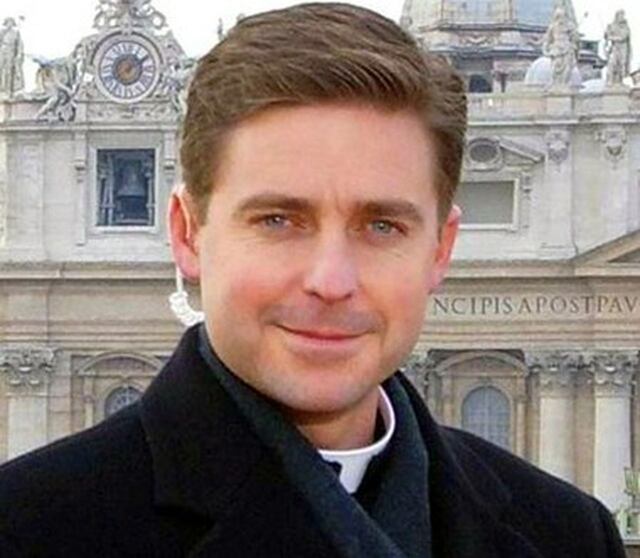
Jonathan Morris
American author
9
APPEARANCES
6
PODCASTS
Jul 17, 2026

Jonathan MorrisGUEST
So obviously in that foundation, we're going to talk about tech platforms and setting up Travify, how you want to be portrayed to your customers and your reminders and stuff like that.
Jonathan MorrisGUEST
But the question then should prompt, what reminders? What do I care about? Do I care about contacting my customers on their birthdays and wishing them happy birthday? Or as I learn things online, Like maybe their anniversaries or when their kids graduate and just send them a little a little note saying congrats or happy anniversary.
Jonathan MorrisGUEST
Putting those systems in place, even if in the beginning it's a spreadsheet and you're just keeping track of John Doe birthday, anniversary, whatever, until you can get those systems built again.
15 MINS LATER

Stephanie GriceHOST
Let's integrate with someone like Travify that can help support this? Like what did that whole process look like and what's the importance of it for your agents?


Jonathan MorrisGUEST
So we're a host agency that is, and we actually own our product from top to bottom.
Jonathan MorrisGUEST
And what I mean by that is, you know, we've used industry technology in the past and just said, nope, we're done.
Unknown podcast
What’s Behind The Firing Of Attorney General Pam Bondi?
Apr 3 · 34m
Grenell ScottCORRESPONDENT
Is this a reality check saying, "I wanna get away from that phone and, and all that technology and have a place to go where there's real meaning in what's being said to me"?

Jonathan MorrisGUEST
What we're seeing with the data is that young people who are told there are no good, rational reasons for believing, for example, right now we're in Holy Week, in the, the life, in the preaching, in the witness of Jesus Christ and his, his public ministry, in his persecution, in his death, in his crucifixion, and in his resurrection, if there's no reason for believing it, if there's no rational reason, well then, just forget it.
Jonathan MorrisGUEST
People have believed this for thousands and thousands of years, and modern culture is not giving us any good reason or purpose or mission."For life.
Jonathan MorrisGUEST
Let's go back and visit that history and that's why w-we are seeing this major uptick.

Granal ScottCORRESPONDENT
Is this a reality check saying, "I want to get away from that phone and, and all that technology and have a place to go where there's real meaning in what's being said to me"?
Jonathan MorrisGUEST
me"?What we're seeing with the data is that young people who are told there are no good rational reasons for believing, for example, right now we're in Holy Week in the, the life, in the preaching, in the witness of Jesus Christ, in his, his public ministry, in his persecution, in his death, in his crucifixion, and in his resurrection if there's no reason for believing it, if there's no rational reason, well, then just forget it.
Jonathan MorrisGUEST
People have believed this for thousands and thousands of years, and modern culture is not giving us any good reason or purpose or mission for life.
Jonathan MorrisGUEST
Let's go back and visit that history." And that's why w-we are seeing this major uptick.


Will CainHOST
Um, but I just kinda thought about that for a minute, and most the time, Jonathan, when I see something as the first and the precursor is almost half a millennia, I go, "Hmm, wow, that's a pretty drastic change." And I'm forced to just think like, what does that drastic change actually mean? Is it always all good?
Jonathan MorrisGUEST
Well, I think it was very good, um, that John Paul II was elected, uh, Karol Woy- Wojtyla, right, from Poland.
Jonathan MorrisGUEST
Uh, remember that John Paul I was elected just 30 days before John Paul II was elected, and he died after 30 days, um, in, uh, uh, along his pontificate.
Jonathan MorrisGUEST
He was Italian, um, but it seems like during the conclave prior to John Paul II's election, when they elected John Paul I, um, they got to know this guy named Karol Wojtyla, uh, in his 50s, from Poland, a incredibly, um, impressive intellectual, but also a humble man and an amazing communicator.
7 MINS LATER
Jonathan MorrisGUEST
I'm not a big fan of making people, of the church making people saints too quickly (laughs) because, uh, uh, life is complex and we know so much about people nowadays through social media, et cetera, that it's like, "Hey, let's, let's give this, like, 20, 30, 40, 50 years before and t- to have a deep knowledge of these people." Nevertheless, yes, Carlo Acutis, it's, um, he is a millennial, um, in the sense that, you know, obviously born, uh, during, during those years, but also because as a young man, he very much lived a millennial lifestyle.
Jonathan MorrisGUEST
And he, he decided to use that as, not for purposes, selfish purposes like we can all fall into, but rather to evangelize, to spread the faith.
Jonathan MorrisGUEST
And, you know, one very fascinating part that's a- actually very convincing to me of his holiness of life is that his parents were not very spiritual, not very religious.
7 MINS LATER

Jonathan MorrisGUEST
Uh, he's e- but yes, I think he will enter into the debate, and I think it will be in a interesting way.
Jonathan MorrisGUEST
Uh, the fact that you have a, a, a right to immigrate, meaning a human right to leave one's country, doesn't necessarily mean, this is according to church teaching, social doctrine, which he has, uh, a licentiate in.
Jonathan MorrisGUEST
And not only that, Catholic social teaching would say politicians have not only a right, but an obligation to, to s- uh, to have sustainable-

Brian KilmeadeHOST
But, but ultimately, do you think he's, is he the type of guy that will decide something radical like letting ch- uh, letting priests marry or letting women play a bigger role in the church? Does he carry, does he profile that way?
Chris FosterHOST
but, but, but the pope did, Pope Francis did, he talked about climate change, he talked about poverty, inequality and social justice, and LGBTQ rights, and bringing the wib- and bringing women more into the church, and that was seen as a breath of fresh air for a lot of Catholics and seen as not great for, um, some more conservative Catholics, including here in America.
Jonathan MorrisGUEST
In a lot of those issues, you know, we'd have to parse e- parse each one, but a lot of those are just kind of Catholic issues.
Jonathan MorrisGUEST
Like, taking care of creation is a very Catholic, um, principle and value, right? We now call it environmentalism.
Jonathan MorrisGUEST
So, yes, you're, you're exactly right to say there's liberal liberal from, basically from a, an American political perspective, and then there's Catholic liberal.
Jonathan MorrisGUEST
So, there's always going to be a liberalism within Catholic theology that says that we take care of the most vulnerable, right? That we take care of creation, that it's not about just making the most money, or a free market capitalism that has no boundaries whatsoever.
7 MINS LATER
Chris FosterHOST
Could the church change in order to grow, or does it allow itself to become slightly more niche to stay what it is?
Chris FosterHOST
How does experience there, and as a Jesuit priest, shape his approach to the papacy?
Jonathan MorrisGUEST
Um, you know, Jesuits, um, I th- I think would be considered to be on the more liberal side of the Catholic Church, um, over the last 30, 40 years.
Jonathan MorrisGUEST
Um, it wasn't always that way, but Pope, uh, Francis, Jorge Bergoglio, was considered to be an outlier of the Jesuit, um, order at the time that he was elected.
Jonathan MorrisGUEST
In other words, a lot of conservatives within the Catholic Church, including most American cardinals who were in the conclave, voted for him as a conservative Jesuit.
Jonathan MorrisGUEST
It's turned out that he's been a more liberal, I would say, um, pope, um, that we've had at, at least, um, in, in, in my memory.
Jonathan MorrisGUEST
Uh, so yes, uh, his, his background as being the first American pope certainly has affected, uh, hi- the way he has managed the Catholic Church, but he's done so as a, uh, uh, a rather liberal pope who had the experience of Latin America, in- including, um, the Marxist ideology of Latin America that has been prevalent over the last 50 years that he lived in, uh, in Argentina.
Chris FosterHOST
Um, now, Jonathan, look, the pope did, Pope Francis, did, he talked about climate change, he talked about poverty, inequality and social justice and LGBTQ rights and bringing the wib- and bringing women more into the church, and that was seen as a breath of fresh air for a lot of Catholics, and seen as not great for some more conservative Catholics, including here in America.