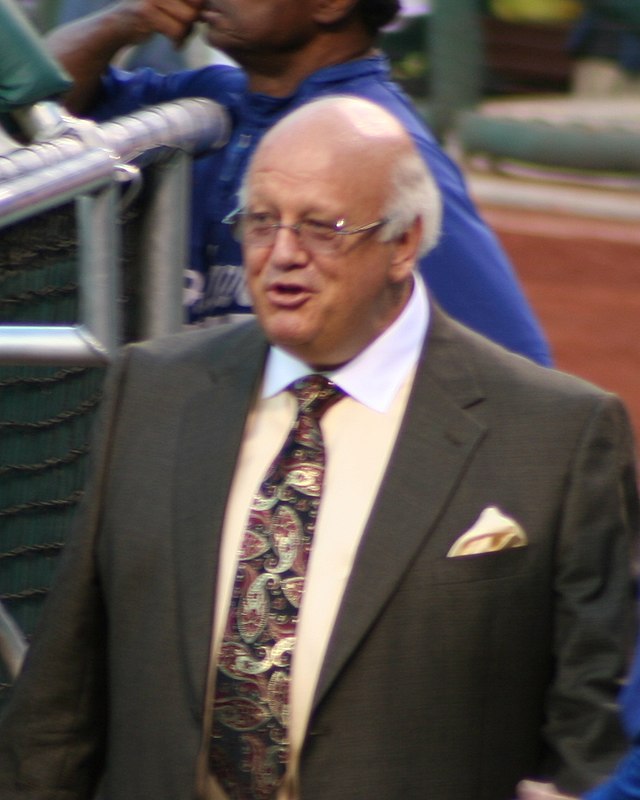
Jon Miller
American sports commentator
8
APPEARANCES
7
PODCASTS
Jul 7, 2026


Jon MillerGUEST
And, you know, you can be very honest but not be transparent, and you can be, you know, transparent and not fully honest.
Jon MillerGUEST
So the combination of the two is really the, the, the power, and you and I both know and have both run into situations where we kind of have half the story or two-thirds of the story.
Jon MillerGUEST
We give recommendations based on our best thinking, and the recommendations aren't right because we frankly didn't know the full story.
10 MINS LATER


Carolyn DilksHOST
Why, why is leadership, why is the industry still so obsessed, you know, with this notion of MQLs?
Jon MillerGUEST
So I mean, again, I think it's worth starting by thinking about, like, what marketing was like fifteen, twenty years ago when we started using the MQL.
Jon MillerGUEST
Because for, before that happened, uh, you know, I would say marketing was really seen as a cost center.
Jon MillerGUEST
Uh, it was seen as the group that threw the parties and made the color brochures, and it wasn't part of the function that drove revenue.
Jon MillerGUEST
Part of what was so exciting about demand generation coming around and the rise of the MQL was because, you know, marketing was able to actually, you know, really for the first time, you know, say, "Look, I'm gonna generate these MQLs, and that's gonna turn into this much pipeline and this much revenue." And, and, you know, the, the, the li- the idea was a really good one [laughs] right? Which is marketing being able to generally prove that it was actually having an impact on revenue.
9 MINS LATER
Carolyn DilksHOST
Can you tell the audience, John, what, what that means and how we've conditioned leadership to think about marketing as a gumball machine?


Mike KrukowGUEST
I'm, I mean, I get what Mike is saying, but I really thought after you seen him in less than a week, you're gonna do a lot better against him, but I don't know.


Jon MillerGUEST
We have been here before, and, you know, and as I said, a lot of people have kind of written us off, which I think is always a mistakeUm, I, I think that the streamers have a different set of priorities and strategic objectives, quite honestly, than we do.
Jon MillerGUEST
They do have very deep pockets, but they can't offer a lot of what broadcast can offer.
Jon MillerGUEST
Certainly, they can't offer the production expertise that both NBC and CBS and Fox and, and ABC and Disney can offer, uh, to partners.
Jon MillerGUEST
I mean, the in- the investment that NBC Universal has made over the last several decades, not only in broadcast rights but in production infrastructure and data analytics and in being able to provide 1080 HDR or 4K, uh, to our, our broadcast affiliates, I think all of those things are key factors.
Jon MillerGUEST
Uh, and it's the, it's the biggest way to reach the largest reach that you can get out there.
17 MINS LATER

John OurandHOST
Like, what are you looking for in the baseball deal? It has to be certainly more than just TV viewership or, or, or ratings.


Anderson CooperHOST
Is it more ideological as opposed to actual en- or- an organized organization?
Jon MillerGUEST
organization?Well, I mean, the comparisons of Antifa to, uh, Hezbollah or, or MS-13 are just wrong.
Jon MillerGUEST
Um, these are organizations that have organizational structures, that have chains of command, that have massive amounts of funding from foreign governments, um, in the case of Hezbollah.
Jon MillerGUEST
Calling it an organization would be like calling white supremacy an organization.
Jon MillerGUEST
It's an ideology, repugnant as it may be, um, and it brings together a collective of groups.
Anderson CooperHOST
So if Antifa's more of an ideology than an actual organization with a headquarters and a leader, w- for law enforcement, if they're gonna investigate, what do they do? Uh, do they follow a money trail? Would, would, yeah, what would they do?


Jon MillerGUEST
And really, the credit for the Ryder Cup coming to NBC belongs with Ken Shanzer, who was the executive vice president of NBC Sports and was my boss at the time.
Jon MillerGUEST
And the Ryder Cup up until that point had been on tape, on cable, and on a one-week delay.
Jon MillerGUEST
You were lucky if you saw highlights on ABC's Wide World of Sports of it taking place at Muirfield or the Belfry or whatever.
20 MINS LATER
Anderson CooperHOST
So I understand, Jon, you have some new reporting about, uh, his visit, actually, to this church.
Jon MillerGUEST
Um, they believe that, um, she, in that conversation, said, "I was thinking of getting back to the church, getting back to the religion.
Jon MillerGUEST
That's why I'm here." But she also writes, um, in some of the diaries that are being decoded about going there on a day for a mass, um, finding, you know, the doors unlocked, access.
Jon MillerGUEST
All of this is building towards an investigative theory, um, that police are... are working on, that the shooter wanted to be inside that church with those weapons, shooting in an open, free field of fire, um, at those children in the service.
Jon MillerGUEST
Except, um, when the service started, they locked the doors on the outside and the shooter found herself on the street and improvised by shooting in the blind.
Anderson CooperHOST
And... and apparently, Jon, one of the, or at least... at... at least a... a gun jammed, uh, during this.

MishkyHOST
He wasn't going to be a great major league ballplayer, but you do make the argument that his dream of playing baseball on a major league field could have and maybe should have been realized, but something happened.
Jon MillerGUEST
So there's this joke about Earl that his players told when he was a manager later on in Baltimore that the only thing that Earl Weaver knows about pitching is that he could never hit it.
Jon MillerGUEST
Um, when he was 15, he hit a home run at Sportsman's Park in a youth league all-star game with a wooden bat.
Jon MillerGUEST
And I, I coach high school baseball now, and I don't think many of my players could hit a home run in a major league park with a wooden bat.
18 MINS LATER