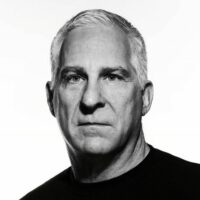
John Sipher
Internet personality
11
APPEARANCES
7
PODCASTS
Sep 18, 2026


Julia CurleeGUEST
But if they're willing to fire officers in public and humiliate them and send a wor- a lesson to the rest of the workforce that no one will protect you, that's enough.

John SipherGUEST
Mike, t- I'm glad you brought up sort of the, the change based on the reforms, 'cause it, it impacted the FBI, too, and we can talk about that.
John SipherGUEST
But, you know, the CIA as it was created in 1947 out of World War II, often out of a paramilitary intelligence organization out of World War II, at a time when...
John SipherGUEST
In 1949, when the Soviets got the bomb and the, the Red Scare and this whole thing that th- many of the people who came out of World War II in an existential war thought that this new CIA had to fight like the other side did.
John SipherGUEST
We had to be, you know, black arts and do what the Soviets were doing and what we'd seen the Nazis do and this kind of stuff.
John SipherGUEST
And for a number of years, the CIA was, you know, it didn't really have oversight from Congress, just a few key people in Congress.
26 MINS LATER
Julia CurleeGUEST
That's gonna be really hard to pick apart because you're holding them accountable for things that they thought, that they were assured were, were legal, even if these things to, to our eyes would, would, would seem like they're definitely not.


Brian WhitmoreHOST
What message does it send when the CIA director travels to the capital of an adversary to meet his counterpart? Is that a show of strength? Is it a flex? Or is it a sign of weakness and desperation? And what are the advantages of deploying the director like this?
John SipherGUEST
I mean, different presidents have used directors sometimes to send messages that they think, you know, it's a different way to send messages.
31 MINS LATER
Brian WhitmoreHOST
How do you interpret what we're seeing now, and what should we be doing about it?


David RothkopfHOST
And to have the agency politicized in that way must be really infuriating to the rank and file.
John SipherGUEST
I mean, we take great pride in the fact that we're supposed to tell truth to power.
John SipherGUEST
Like you said, we understand that there's times when, you know, policymakers don't wanna hear it.
John SipherGUEST
We used to have that saying is, you can bring intelligence to a policymaker, but you can't make them think.
14 MINS LATER
David RothkopfHOST
How do you, how do you deal with this pattern of be- not individual acts, but the pattern of behavior?


Boris SanchezHOST
Uh, and Pulte asking for the name of every employee to see whether to potentially fire hundreds of them, I mean, Trump clearly wants to, uh, alter the way that the ODNI functions.
John SipherGUEST
Yeah, I don't know how a list of people can show anybody who's loyal or not loyal, or what party they belong to.
John SipherGUEST
Uh, as you know, public servants are, you know, work for all different... for Republicans and Democrats, different presidents.
John SipherGUEST
Um, a- and in no way does anybody in, in the intelligence community show their partisan support, or is it written down or it, in their thing.
John SipherGUEST
And if his job is just to fire everybody in the Director of National Intelligence, it goes to the question of, do we really need a Director of National Intelligence? The thing was created in 2004 to coordinate between intelligence agencies.
John SipherGUEST
It's sort of a process job to try to create standards and make sure regulations across the community work.
John SipherGUEST
Well, you know, frankly, this whole thing is not very complicated, you know? We've seen with the Trump administration, personnel is policy, and this guy is hol- wholly unqualified.
John SipherGUEST
Secondly, if, it sends a disastrous message to a large and professional workforce that does really important work.
John SipherGUEST
But the bigger issue really is this, this, this is weakening national security.
John SipherGUEST
He's not interes- interested in a intelligence community that tells truth to power.
John SipherGUEST
He wants them to just, uh, cherry-pick information so they can create, uh, conspiracy theories or he can use it to go after his enemies.

Erin BurnettHOST
Uh, to, to cite that as, "Well, this is why this guy should be DNI," what do you say to that?
David RothkopfHOST
And the question is: Do you sense that there is pushback there? Do you sense there are people there that will stand up?
John SipherGUEST
And I, and I'm seeing two kinds of leaks from the intelligence community, and both of them are bad.
John SipherGUEST
And there's the one you mentioned that it looks like, yeah, there's people strategically leaking to say, you know, "When Trump says this stuff, we wanna make it clear that we in the CIA are not telling him that stuff, no matter what he says." Then there's other leaks we just saw recently with this when the, when they found this downed flyer that was in Iran.
John SipherGUEST
Clearly the leadership of CIA was bragging and leaking that, "Oh, the CIA played a key role in this, and our special equipment caught him, and our...
John SipherGUEST
They couldn't have done it without us." So the leadership is bragging about secret things that they shouldn't do for...
18 MINS LATER


David McCloskeyHOST
Because I think the mental models we've discussed for an intelligence service and its relationship to assets or agents that we have with the West is really, it's not really useful in the Russian context, is it?
John SipherGUEST
These Western figures like Epstein, and I think you're going to end up talking about Donald Trump too, they don't map neatly into our classic Western model of spy handling.
John SipherGUEST
And so I'll talk a little bit about how the West looks at and uses its intelligence services and Russia might.
John SipherGUEST
But the first thing to understand is that since the Bolshevik era, the Russian intelligence security service have played a much larger role and much more important to the regime than they are in the West.
John SipherGUEST
So for an authoritarian government or a government that came from revolutionary roots, it's all about regime security rather than what we think of as national security.
John SipherGUEST
So the job of security services are to keep the leadership in power at any cost.
15 MINS LATER
John SipherGUEST
The Five Eyes relationship is largely a SIGINT, signals intelligence relationship between, you know, the NSA and GCSQ and Britain and Australia and others, and a lot of those things are really integrated, and it's gonna be hard to, it'll be hard to pull them apart But on things like human intelligence sharing, which is quite robust inside the Five Eyes, um, it's something that would be very easy for a country to, that trust to be lost, and us never know what we won't be receiving, right? So the, the Brits may, we still may go with them and drink and befriend and smoke cigars and talk upstairs, downstairs and stuff, but they're gonna have to make a, a, a calculus, are we going to give these people our more sensitive information now than we, when we worry about that they might use it publicly or might use it in, in terms of some diplomacy with the Russians.
John SipherGUEST
And so, yeah, I think the damage is already done, um, and we will never know because they're certainly not gonna tell us what they don't share with us.
John SipherGUEST
Um, there will continue to be those relationships, but they're, you know, they are slowly being drained away.
John SipherGUEST
And, and the, and the unexplainable relationship with Putin, that's the one thing Trump changes his mind on everything.
14 MINS LATER
David RothkopfHOST
We're not gonna do what we did in the past 'cause Trump's doing all this, and so we're friends now"?


Jonathan FinkHOST
Do you think that the lying here is also a strategy that has emerged from, you know, your ambitions are up here, but your capabilities and resources are down here, and it's a way of trying to square that circle?
John SipherGUEST
Yeah, it's, you know, your ambitions are such and your ability to get them are different.
John SipherGUEST
And so instead of just counting on whatever it is, your foreign policy or your military, you have to use these other forms of keeping the embassy, excuse me, keeping the enemies at bay or off on their back foot.
John SipherGUEST
And you mentioned from the beginning, like people forget, you know, the Bolshevik Revolution, the creation of the Soviet state, was done by terrorists.
17 MINS LATER


Ari MelberHOST
Yeah, you're reminding people of, of something that, uh, President Obama discussed, uh, which was trying to have diplomacy, uh, with sometimes even very difficult actors, and they even had the reset button. Uh, but your point I take it is that that was an invitation to try, um, but not giving away the store in the name of a reset to Russia and g- and g- and becoming a, what at times looked like an arm of their aggression, because when he kept saying to Zelenskyy, "You don't have any cards," uh, it seemed to be saying, well, Russia's aggression and them being the larger nuclear power means sooner or later they are mightier, and we should just as, potentially give in to that.
John SipherGUEST
(laughs) Yeah, the, the, the thing about the cards is, is sorta silly as well. I mean, I think Russia was actually playing a very weak hand here, and it's not, it's surprising to me why the Trump Administration thinks they should be, you know, giving in to them. I mean, I would argue that, you know, previous presidents too have been sort of miswrung on Russia and weak on Russia. So there's a long history here. So Putin has, there's been a number of ceasefires with Ukraine, and Putin is one, is the one that's always broken them. There's been a number of efforts to have agreements, and Putin's always broken them. There's been a number of times we've tried to research and work with the Russians and they've consens- consistently lied and then attacked, tried to get involved in our elections, tried to destroy our allies, tried to destroy NATO. So, you know, Russia is the problem here, and if we try to pretend as if they are, y- you know, the ones that are gonna help us, I think that's very, very, uh, you know, a w- a weak and wrong way to look at this.
Ari MelberHOST
Um, for our understanding, how unusual is it for a sitting president, uh, to invoke so many partisan points? I mean, he may have a certain hardline view about foreign policy. He may, uh, be from the more real politics school that says you might not like how various countries got power, but...... China's China and you gotta deal with them, right? As a- as opposed to a more activist school. That's fine. But it- but it- uh, I mean, it's fine in that it's debatable. But how unusual was it for him to talk about everything through a lens of anything he did was great, uh, anything in the history that happened was he wasn't there, he said, "I wasn't there in '14. Democrats are bad." Um, how unusual is that? And- and does that work for foreign policy?
John SipherGUEST
Well, I think, you know, i- it's sorta sad as an American to watch this, I think these foreign leaders are coming here and a- as they come, you know, th- you realize the discussion is, "Oh, be careful, Trump could blow up," you know, "He doesn't understand these issues. It's all about playing to his personality. He's like a child. You can't push these kinda things." You know, and frankly when someone like Zelensky who's leading a country that's been invaded, people are getting bombed, you know, killed in the streets and to come over and get harangued about whether you're wearing a suit or not, I mean that's not serious diplomacy. And you know, w- the- the obstacle to peace here is Vladimir Putin not Zelensky. Beating up the weaker power is not serious diplomacy. It's- it makes us look like we're- we're not serious players. And so, um, you know, I- I find this very frustrating and I think we're by- by treating Putin like, you know, we need to go to him to get things done, I think we're gonna find, you know, a peace treaty is gonna be something that is, uh, it may be a ceasefire but it's not a long-term interest of us or Europe and we're gonna find ourselves having to spend a lot more money on defense and maybe even, you know, get ourselves into World War III that they worry about.

John SipherGUEST
... money from 'em, you know, maybe get mineral deal or what have you. But I mean, I was, as an American, I was embarrassed. I mean, it was, I thought it was one of the most appalling things I've ever seen from a leader of our, our country. And, and, you know, my, I can't come up with words strong enough to explain how that is d- You know, I, like Ambassador McFaul, I lived my career overseas working with foreigners and, you know, we, we work, you know, with people around the world trying to get the way for America, but if you're gonna treat everybody like you're a predator and they are prey, you're not gonna get anybody to work for you. And frankly, countries when they, they're not gonna want to become vassals. So if, you know, Russia, China, and America become the predators in the world, more countries are gonna have to, like, arm themselves and even consider nuclear weapons, and that's a dangerous world, when in fact, we had a great world where we had more friends than any of our enemies did.
John SipherGUEST
I mean, I think L- I think, excuse me, I think Donald Trump is showing exactly who he is. I think he's hated Zelenskyy for a long time. He's created this false political narrative that somehow Zelenskyy's worked against him, and he likes, um, Putin and, and the Kremlin. But I have to say, uh, you know, a- as an American who's worked overseas, Russia is not our friend, and frankly, Russia is weak, and now is the time where we should be putting more pressure on Russia, not less. I think in many ways they're losing this war. They're losing more people at the front every day almost than we lo- lost in 20 years in Afghanistan. They're using donkeys at the front. They're using World War II-era, uh, cars and things and tanks to try to d- do their people. It's not clear that their economy is, is, you know, it's overheating. They're having f- high inflation, um, they're having to dip into reserves and things s- like this. You know, this is a time we should be putting pressure on Russia rather than treating them like they're some wonderful superpower that we have to, you know, bow to. It's just frankly not the case. You c- if Russia was that strong, they would, they would be able to move the front lines in the last two years-