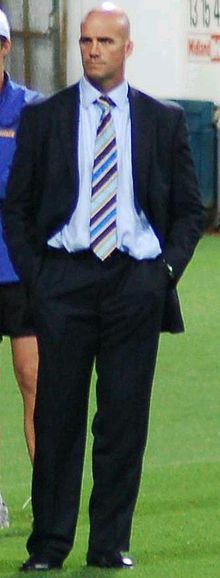
John Mitchell
New Zealand rugby union coach
3
APPEARANCES
3
PODCASTS
Aug 27, 2026

Terry GraedonHOST
Can you tell us about that? And just to begin with, just make sure we understand where it comes from, what it's attached to, et cetera.
John MitchellGUEST
So, um, it's attached to a larger study, the, the MTA, the Multimodal Treatment Study of ADHD, and that was a study that began, um, in the nineties and, uh, took place in the nineties, uh, largely the treatment phase of it, and it took place in seven different sites in the United States and in Canada.
John MitchellGUEST
And the MTA was focused on, uh, comparing the effects of medication and behavior therapy, and, uh, so they included over five hundred children with ADHD.
John MitchellGUEST
And, uh, and it was a study where the intervention lasted for about f- for fourteen months, and then, uh, after the intervention ended and different people in the different treatment conditions then were free to pursue whatever kind of treatment that they wanted, the, the effects of the treatment largely fell away, and then at that point, and which is what we'd would expect, and then at that point it went from a treatment study to a long-term observational study.
John MitchellGUEST
And so the MTA followed these children up until their mid-twenties, uh, mid to late twenties, and it had eight assessments over a sixteen-year period, so this is a very well-characterized sample.
John MitchellGUEST
And the qualitative interview study was something that began when they were in their, uh, early to mid-twenties, and I was lucky to be a part of that.
15 MINS LATER


Jane YanagawaHOST
Um, it would be really great if you could maybe even start by giving us a little bit of the history of the ABTS and the structure and, for example, how to g- how to get involved, how you got involved.
John MitchellGUEST
So, uh, the ABTS was formed in nineteen forty-eight, uh, from a group of surgeons that represented the AATS and the ABS.
John MitchellGUEST
But in nineteen seventy-one, uh, it became its own standalone board, joined the, uh, uh, uh, cadre of full-fledged boards, uh, and out from under the ABS, uh, umbrella.
27 MINS LATER
Jane YanagawaHOST
Um, uh, can you let us know about some of the other projects that, that you're working on?


Rachael EnglishHOST
I've been talking to Dr John Mitchell from University College London, who's the study's lead author.
John MitchellGUEST
Our research is funded by Cancer Research UK and co-designed by the public to ask which behavioral changes in our day could we theoretically perform in order to try and mitigate risk of cancer.
John MitchellGUEST
So we utilize a very large data set called the UK Biobank, which is around 60,000 individuals who all wore a smartwatch essentially on their wrist for about a week.
John MitchellGUEST
And then we followed them up for about eight years to see which cancer sites individuals got or those individuals who did not get cancer diagnosis.
John MitchellGUEST
And what we really saw was that we corroborate findings, the evidence which suggests that moving more at any speed is very favourable and reduces risk of cancer, regardless of the intensity.
Rachael EnglishHOST
So people then who, say, have a job that involves a lot of movement or maybe some lifting, they're at an advantage here?