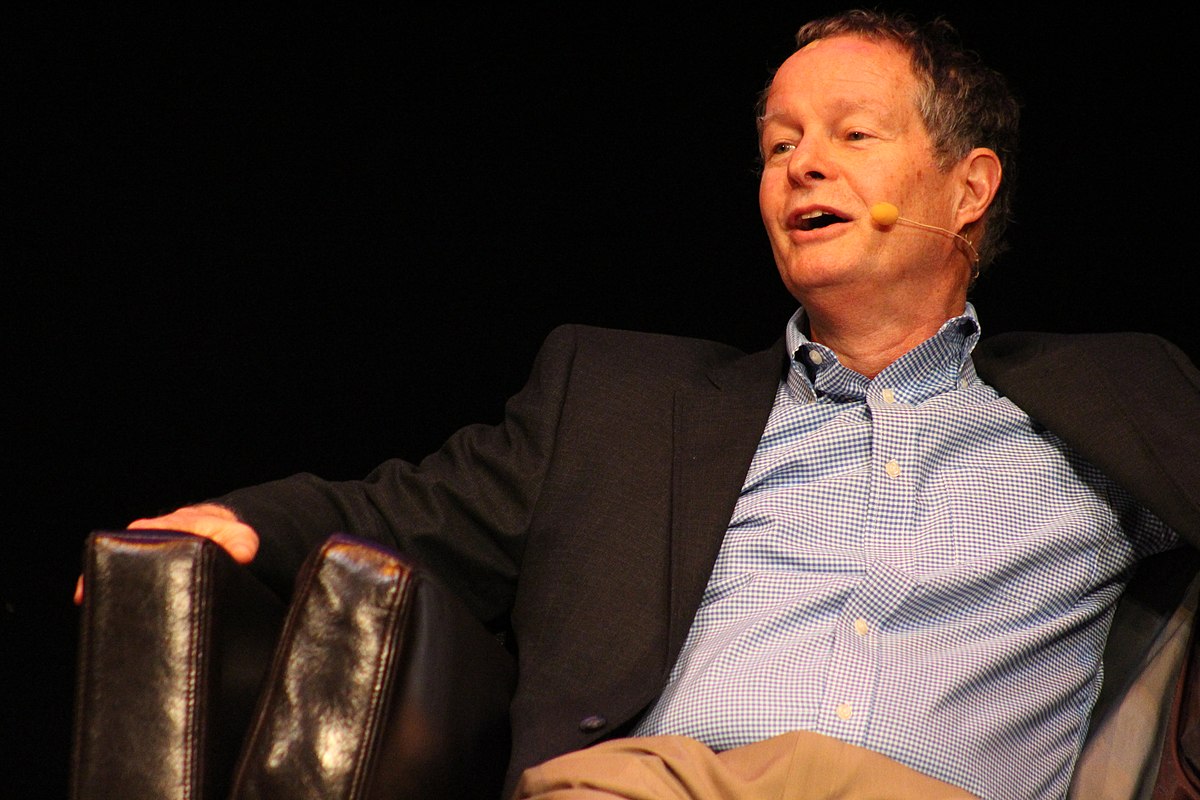
John Mackey
American businessman and former CEO of Whole Foods Market
9
APPEARANCES
9
PODCASTS
Nov 3, 2026

Sean ThemeaHOST
So tell us more about the distinguishing factors between what most people understand capitalism, free markets, profit mode to be, and the brand of conscious capitalism that you've championed throughout your career.

John MackeyGUEST
A lot of people, when they finally understand conscious capitalism, have told me, says, I don't really understand why you call this conscious capitalism.
John MackeyGUEST
But we put it in a framework that fewer people are gonna hate because We're seeing that business can be and frequently is driven by a higher purpose.
John MackeyGUEST
And the higher purpose is to create value for customers and creating values in a way that makes the world a better place.
7 MINS LATER


Evan CarmichaelHOST
As far as that type of a person that obviously doesn't have a Whole Foods level of success, what do you think they should be thinking about as far as their own wealth protection or wealth development?
John MackeyGUEST
Well, first, of course, if you want to create great wealth, the best way to do it is to own businesses, a business or businesses, and generally concentrate it.
John MackeyGUEST
And then that compounds, in a sense, over a long period of time, and that's how large wealth is built.
John MackeyGUEST
If you look at almost... all the super wealthy people, they got it through building something and some type of business.
John MackeyGUEST
And from real estate to computers to software to, I mean, Jeff Bezos, the richest man in the world, he built it through the Internet.
John MackeyGUEST
And as the world technologically evolves, there's always going to be new strategies like the next thing, the next big thing that will always be coming along.
12 MINS LATER
Evan CarmichaelHOST
Well, so I guess in a sense, the idea is that there's this moral virtue to capitalism, that it's not this, you know, and it's that most people say, hey, to be really successful as a capitalist, you have to be in this dog-eat-dog kind of world or environment as compared to saying, you know, there's a moral virtue here.

John MackeyGUEST
I mean, we talked about the ego, but part of our ego is what I and others call the internal critic, right? The ego really doesn't, it judges everyone.
17 MINS LATER
Unknown podcast
John Mackey: Not Sure You're on the Right Path In Your Career? (Use THIS Framework When You Feel Lost About What's Next)
Jun 24 · 1h 2m

Jay ShettyHOST
I'm intrigued as to when did your curiosity and consciousness and spirituality begin? Is it something that was always there since you were born, or was it something that you discovered over time, and how?
John MackeyGUEST
Even as a child, I mean, I think most children have some kind of mystical relationship with part of their being and their, their imaginations, their, their love and the innocence in children.
John MackeyGUEST
The deeper spiritual awakening occurred when I was like-- The first time I actually took a psychedelic drug, LSD, back when I was twenty in university, and that sort of knocked me off the path my parents had planned for me.
John MackeyGUEST
My parents wanted me, possibly your parents wanted the same thing, for me to be a professional.
47 MINS LATER


John MackeyGUEST
But one of the first things we, our main discussions, actually, the three of us had when we were setting out on this was...
John MackeyGUEST
So you'll notice like most of the big space companies like Airbus or Thales Linear Space, whatever, as typically space and defense are in the title even of the companies in terms of even how they're incorporated.
John MackeyGUEST
And we always knew, I mean, I mean, space is, again, it's a global theater of operations.
22 MINS LATER


John MackeyGUEST
Most people live in a win-lose paradigm where self-interest is the thing they think of the most.
John MackeyGUEST
I had a major epiphany in the early days of Whole Foods that helped me wake up to this idea of a win-win-win way of life.


1 HR 6 MINS LATER


Elise HuHOST
In his talk, Whole Foods co-founder John Mackey takes us back to the night his first store was destroyed and how a community rising from the mud inspired his lifelong philosophy of win-win-win, doing good for yourself, the community, and the world around you.
John MackeyGUEST
Most people live in a win-lose paradigm where self-interest is the thing they think of the most.
John MackeyGUEST
There's a better way, a win-win-win paradigm, and this is more than just a game metaphor.
John MackeyGUEST
I had a major epiphany in the early days of Whole Foods that helped me wake up to this idea of a win-win-win way of life.
John MackeyGUEST
The very first Whole Foods we ever had went through the worst flood that Austin, Texas, had experienced in over seventy years.
9 MINS LATER
speaker_3SOUNDBITE_SPEAKER
[laughs]

speaker_5SOUNDBITE_SPEAKER
Union clerks get that after three months.
John MackeyGUEST
At Whole Foods, we have employee committees where disagreements are aired and settled by consensus.
