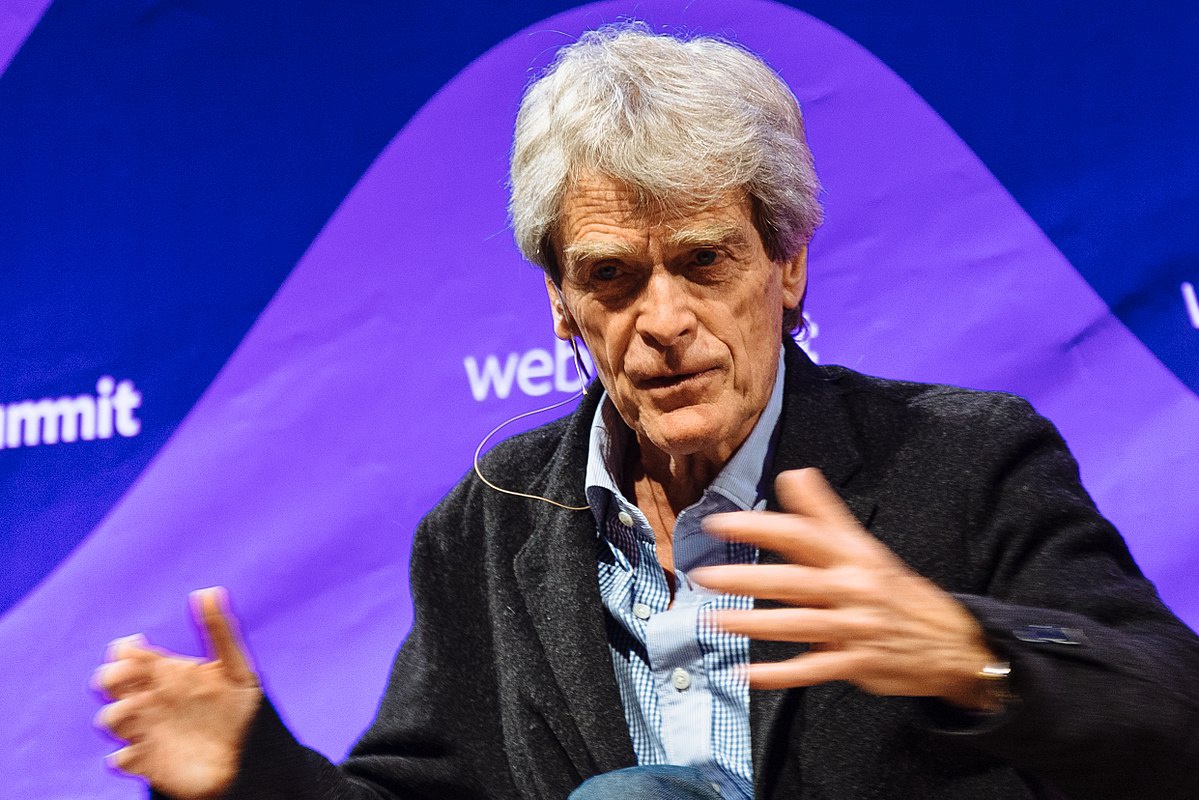
John Hegarty
Advertising executive
8
APPEARANCES
8
PODCASTS
Jul 1, 2026


Gary VaynerchukHOST
... or experience instead of, like, having reverse audacity and being like, "I can just randomly do something better 'cause I like golf, and I can run this golf company better." But what do you know about the golf business?

John HegartyGUEST
Well, there's a great lesson there, too, that so many businesses have been started by people who care, who, who obviously, who actually care about what they're doing and what they're making.
John HegartyGUEST
It isn't just, "I'm gonna start a business." "I really care about this, and I think I could do it better." So again, it's bringing yourself into what you're doing.
9 MINS LATER
Gary VaynerchukHOST
I think there's an extraordinary lack of humility at the creative director level in ad land.


Colin RosenblumHOST
What do you think gets in the way? Is it too many people? Is it measurement?
John HegartyGUEST
I think the great thing in life, whatever you do, is to try and remain outside and look in.
John HegartyGUEST
I think outsiders... make very interesting people, because they're brought up with that, I'm outside, I'm looking in.
John HegartyGUEST
And I think if you look at so many of the great artists, the great thinkers, they were outsiders, you know, Leonardo da Vinci, all the way through, you know, he was illegitimate, he was gay, he was vegetarian, left-handed, I don't know why that should be there, but you look at them, Picasso, outsider in France, he was an outsider.
John HegartyGUEST
So therefore, when you come to being a brand manager, director, whatever it is you are, remain that ability to step outside and look in.

30:23

But given how close this road is to the hospital, that's particularly frightening.
John HegartyGUEST
And there's going to be nowhere to go for an ambulance or an emergency vehicle or a fire brigade.
John HegartyGUEST
There's going to be nowhere, if two trucks are meeting there, there's nowhere for the trucks to go.
John HegartyGUEST
It's just the cycle lane there, the way I see it, they're the same all around Dublin and that there, and they are that wide.
31:43
And how has it been, maybe from whenever you started now, trying to navigate Letterkenny?


John HegartyGUEST
I'd almost go as far as to say in America, if you use the word creative, people slightly recoil.
John HegartyGUEST
They say, oh, I see you're going to do that edgy stuff, are you? I don't want edgy stuff.


Dan DawsonHOST
If you've got a good enough brand story and you've got a good enough – communication metric, whether that's a billboard or a podcast or a TV show or TV commercials, people will make an appointment to watch.
John HegartyGUEST
This was about, I have to say, this was pre-COVID, actually, so this goes to show how long ago it was.
John HegartyGUEST
A very good friend who was working with Land Rover, Range Rover, and we were chatting about it and he was in charge of their digital output.
30 MINS LATER


John HegartyGUEST
Well, do you know what's interesting about it? Because people say, well, your philosophy and that.
John HegartyGUEST
And actually, I've always said, your philosophy comes... through your work, through your thinking.
John HegartyGUEST
And we didn't, BBH didn't adopt the black sheep as its symbol for, so that was like 1983, and it wasn't until 1995, I'm just gonna get my dates right, is when we moved into Kingley Street.
John HegartyGUEST
And so we're having a meeting with the architects, moving into Kingley Street, doing the offices up, and I say to the architect, Oh, look, I think it's a very narrow street.
6 MINS LATER

Marco BertozziHOST
uh just interesting like how did the the how did that all start not you know the run-up to the sale but the business of creativity and uh the way i sort of looked at it was i guess it's as a sort of form of mass mentorship where you must have you know constantly be thinking i need to get this message out for people to what was the what was the story of how that all came away yeah


Conor ByrneHOST
it's so funny that you say like marketing is in some ways caught in the 60s and like by that do you mean marketing still believes kind of their needs like there's one idea and it's just not even the idea but there's one piece of creative and just that's it and also with that maybe I think there's a level of you know low risk where people are kind of going yeah that's great but I don't think they'll buy it I don't think the boss will buy it instead of even bring it yeah like is that kind of your your viewpoint and where we're at with creativity now
John HegartyGUEST
But, you know, I spent all my years in advertising as an art director, then as a creative director, then as an owner, with people saying to me, well, John, you're creative.
24 MINS LATER
Conor ByrneHOST
Who do you think is doing it well? When you're looking out there, are you kind of going, they're getting this, they're doing this well?

John HegartyGUEST
If you go back to the original creative revolution, which happened in New York in the mid 60s, early 60s, and an agency called Dordain Burnback drove it, a man called Bill Burnback, a real visionary, a man of huge humanity and creativity.
John HegartyGUEST
But actually, if you looked at what they worked on, They were very local, small little companies.
13 MINS LATER