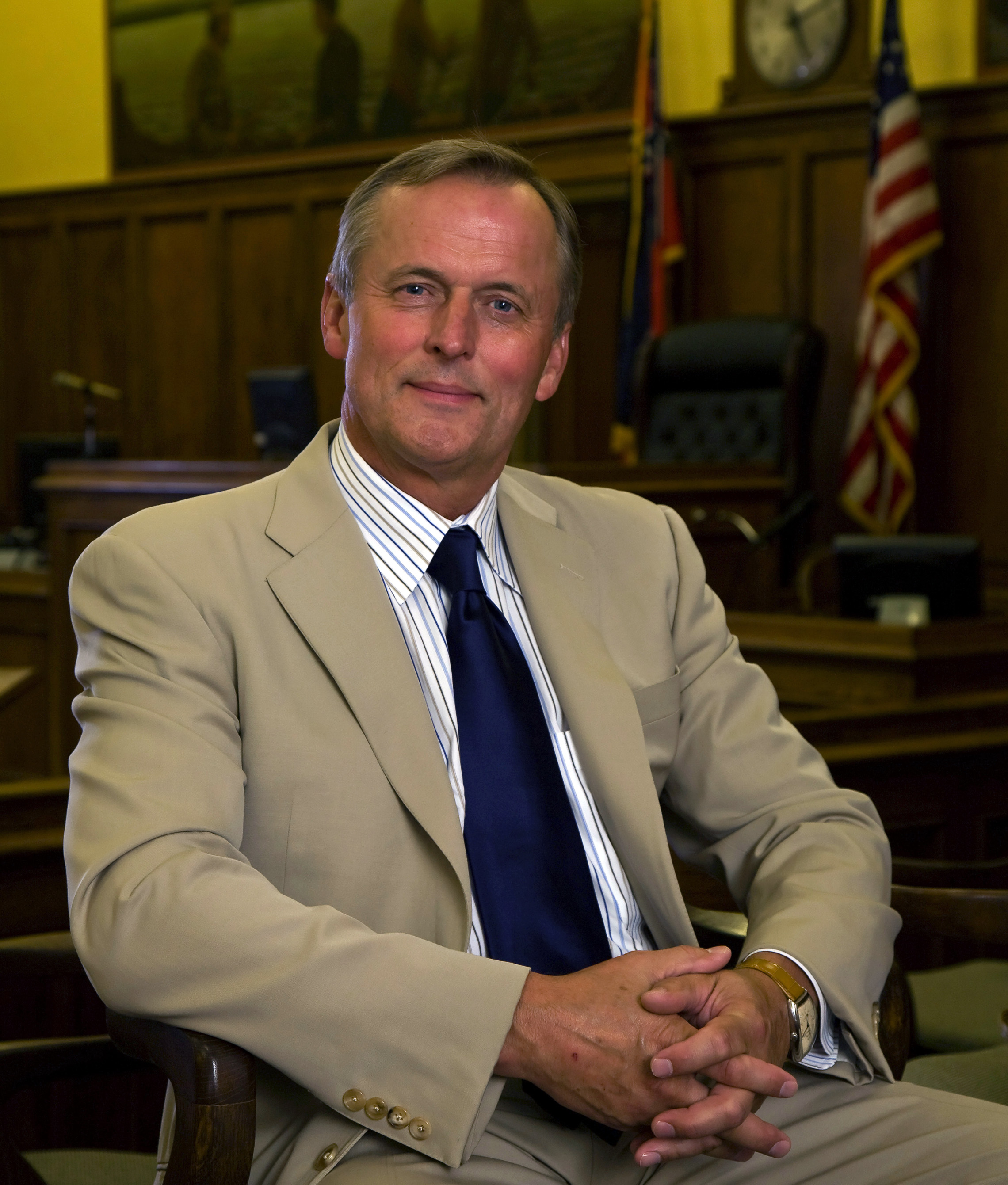
John Grisham
American writer and lawyer
22
APPEARANCES
19
PODCASTS
Oct 22, 2026

McGraw MilhavenHOST
No, instead he, you know, climbs up a ladder, right? You can sort of redesign it once it's on paper.

John GrishamGUEST
I mean, I make Doubleday give me the day and time when the book will actually hit the printer.
John GrishamGUEST
And that's months down the road because I'm constantly tinkering with dates, with plots, with characters, names.
John GrishamGUEST
And there's a lot of – it may sound kind of weird at this point in my life to say there's a lot of insecurities.
John GrishamGUEST
Is this character really like this? Is this person going to be – do you want this person to be despised? It's good if you would do.
7 MINS LATER

John GrishamGUEST
Every high school English teacher thinks she can teach The Sound and the Fury, and nobody can understand it, especially a bunch of high school kids.
John GrishamGUEST
And I remember thinking so many times reading Steinbeck, I would think, gosh, I wish I could write this clearly.
5 MINS LATER

James CrawfordHOST
So tell us, John, how do we get from To Kill a Mockingbird to your latest novel, The French Illusion?

John GrishamGUEST
Mike, you get spoiled because you were able to live this incredible lifestyle where you don't really have to work, and you get paid well, and you get to travel around, and you get to... do things like this right here.
John GrishamGUEST
I mean, 30 years ago, I never thought I'd be talking to you in New Zealand for breakfast, just for the heck of it.
8 MINS LATER

Mike HoskingHOST
How much are you looking forward to the midterms on a scale of 1 to 10? 10 being you'd rather shoot yourself.
John GrishamGUEST
Well, you know, Mike, you get, you get spoiled because you, we're, we're able to live this incredible lifestyle where you don't really have to work.
John GrishamGUEST
And you, and you get paid well, and you get to travel around, and you get to do things like this right here.
John GrishamGUEST
I mean, 30 years ago I never thought I'd be talking to you, you in New Zealand, uh [laughs] so, you know, for, for breakfast, just to, you know, just for the heck of it.
8 MINS LATER
Mike HoskingHOST
How much are you looking forward to the midterms on a scale of one to 10? 10 being you'd rather shoot yourself.


John GrishamGUEST
There were, there were two f- two major factors, I think, that sent me drifting.
John GrishamGUEST
One was the fact I was raised in a very strict Southern Baptist environment, very conservative, and I couldn't wait to leave home, to get away, to drink beer and chase girls and have some fun in college, and that was a huge factor.
John GrishamGUEST
We grew up in a suburb of Memphis, and it was a middle-class suburb, well, working-class suburb, and Vietnam hung over us all through high school.
9 MINS LATER


John GrishamGUEST
... a month earlier before Christmas, he had said, "Uh, haven't sold the book yet.
John GrishamGUEST
Something gonna happen then." But the, The Firm, the, the manuscript had, had been around New York for a few months, and nobody, uh, wanted to buy it.


Chris GillespieHOST
It sounds almost like thinking about your – origins as a lawyer and working in the legal system it sounds similar to how you approach storytelling like you're almost i don't say litigating the story but you are making sure that you have every step of the story covered and you know what is going to happen going into it you're not really similar to how you would enter going into a trial right you're probably not going to be going into a trial flying by the seat of your pants like hey we'll get in there we'll wing it
John GrishamGUEST
Listen, when I was in law school, about halfway through law school, I had this desire to be a courtroom lawyer.
John GrishamGUEST
I'd taken part in the required mock trial competitions and moot court and things like that in law school.
John GrishamGUEST
And and so my last year in law school, which is always a pretty easy year, I would skip class and go down to the federal courthouse just down the street from Ole Miss in Oxford, Mississippi.
18 MINS LATER
Chris GillespieHOST
And I was wondering if you could speak about about the work that these organizations do, but then also your involvement with them, how you got involved, what kind of role that plays in your life right now?


Gayle KingHOST
Even his first line, though, Nate, it said the surveillance began on the third day of the honeymoon, though the bride and groom had no possible way of knowing
John GrishamGUEST
I keep changing it because especially with this story, I want to hook the reader in the first paragraph.
21:43

Even a good spy couldn't write 50 bestsellers, right? So how did you research what it means to be a spy, the world of espionage?


John MaythamHOST
And this idea, was it purely from the imagination? Was it from something you watched on screen, something you read about in a newspaper, on a news site, or it was just an idea that sprung to the front of your brain in the way that ideas sometimes do?
John GrishamGUEST
No, I'm always inspired by something that really happens, and for years I've been fascinated with Guantanamo.
John GrishamGUEST
and all the things we did there, and all the terrible things we did, and the way the American lawyers and British lawyers stepped in to try to defend the innocent people at Guantanamo.
John MaythamHOST
But I mean, do you leave any notion of a film, four wall cinema adaptation or a small screen adaptation until somebody approaches you?


John GrishamGUEST
And with any false confession case, what you would hope that the authorities do is once they manage to extract the confession, and whatever tactics they use to do that, is that they will match it up to the physical evidence to see if it in fact matches.
John GrishamGUEST
And false confessions virtually never match up because there are too many details or specifics in the murder.
20 MINS LATER


Tom LlamasHOST
When you think about that, I mean, does it hit you or is it just, it's what you love to do?
Tom LlamasHOST
Is there a character you started writing that you just loved everything about them?

Tom LlamasHOST
That real-world injustice eventually pulling Grisham out of the realm of fiction, leading to his work with the Innocence Project, fighting to free the wrongfully convicted.

John GrishamGUEST
When you have a place with such a tortured history and a long period of conflict and suffering, you have great stories.
Tom LlamasHOST
That real world injustice eventually pulling Grisham out of the realm of fiction, leading to his work with the Innocence Project, fighting to free the wrongfully convicted.


Nancy GraceHOST
John Ray, now Shannon's family has to read this and only imagine what Shannon may have or the other victims put up with, what they endured, what they lived through before they died.
John RayGUEST
His image is now frozen in the minds of the Gilbert family, and I also represent Jessica Taylor's family, and they had the same reaction.

19 MINS LATER

David RubensteinHOST
And can you tease us a little bit about what it's about or it's a secret? Oh,

19 MINS LATER
David RubensteinHOST
And can you tease us a little bit about what it's about or it's a secret? Oh,
John RayGUEST
His image is now frozen in the minds of the Gilbert family, and I also represent Jessica Taylor's family, and they had the same reaction.

John GrishamGUEST
It was a honky-tonk shooting one night, and everything blew up and it was out of control, and there were more guns than you could count and bullets flying everywhere.
John GrishamGUEST
But my client had obviously killed another man, and there was a lot of pressure, and I had no business trying that case by myself seven months out of law school, but that's the way it worked in our small county in Mississippi.
John GrishamGUEST
We had no public defender's office, so the cases were parceled out by the judges to all the young lawyers.
31 MINS LATER

Adam GrantHOST
Why is this such a slow uphill battle in the US, and what do you think it's gonna take to change it?

John GrishamGUEST
It was a honky-tonk shooting one night, and everything blew up and was out of control, and there were more guns than you could count and bullets flying everywhere, but my client had obviously killed another man, and there was a lot of pressure, and I had no business trying that case by myself seven months out of law school, but that's the way it worked.
John GrishamGUEST
In our small county in Mississippi, we had no public defender's office, so the cases were parceled out by the judges to all the young lawyers, and there I was in court, and I was not prepared for the trial.
John GrishamGUEST
I thought the trial would be postponed for another month or so, and the five versus cases ahead of my case suddenly went off on plea bargains, and the jury panel was there, and the judge said, "Okay, you're up next.
33 MINS LATER
Adam GrantHOST
Why is this such a slow, uphill battle in the US, and what do you think it's gonna take to change it?
David DavisMODERATOR
And I'll come back to Jim in a minute, John, but how were you drawn to the work of the Innocence Project and the Innocence community? Was it related to your other only nonfiction
John GrishamGUEST
I had a lot of clients, most of them were indigent criminal clients, and I did a lot of criminal work, and I never had a client I thought was wrongfully convicted or abused or mistreated by the system.
22 MINS LATER
David DavisMODERATOR
How did you pick the ones you picked?