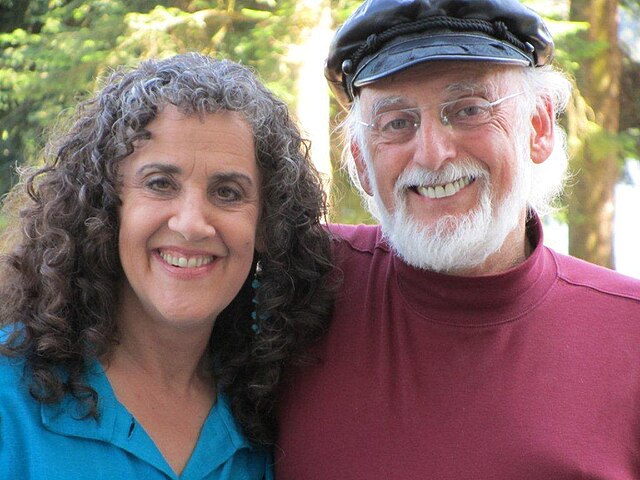
John M. Gottman
American psychologist and professor
19
APPEARANCES
14
PODCASTS
Sep 22, 2026

CarlosGUEST
... come back.

John GottmanGUEST
So one of the things I'm wondering about is I heard Carlos start to identify the problems that they're having in terms of deficits in Lauren's character.
John GottmanGUEST
We call that criticism, and once you see that pattern of one person saying, "The problem is with my partner," that's a bad sign.
8 MINS LATER

Charles DuhiggHOST
And this is a bad belief and a bad instinct, because it's much better to acknowledge that you're different people and that you have to accommodate that.
John GottmanGUEST
Early on when we were married, I, I kinda thought, "She's being too emotional.
John GottmanGUEST
Why can't she be more like me?" And over time I've learned to realize that her emotions are actually a resource for us, and if I listen and understand what she's feeling, then we actually get closer.


John GottmanGUEST
And that classic research was done by a psychiatrist named Renee Spitz, and it's been replicated over and over again.
John GottmanGUEST
Ceausescu had these orphanages where kids weren't picked up and they died like the droves.
John GottmanGUEST
During the Blitz in World War II, when 700,000 kids were moved out of London to keep them safe, they were moved to the families of nice people, but they missed the touch of their moms.
John GottmanGUEST
That's how emotionally focused couples therapy emerged from that research that John Bowlby did about the kids who were moved in the Blitz.
23 MINS LATER


John GottmanGUEST
But on the other hand, you know, in the last 50 years, we've seen the emergence of this field of social epi- epidemiology, which has shown that relationships that have trust and commitment in them confer these, you know, amazing, uh, health benefits.
John GottmanGUEST
And, you know, in the context of modern medicine, you know, it's really a relationship that provides this resilience from, from illness and, and longevity between 15 and 17 years longer than if you're not in a good relationship.
John GottmanGUEST
And when Cullen did the research for gay and lesbian couples, even before the Supreme Court in the United States allowed marriage, gay marriage, if they felt committed to the person, if they felt that they were married sort of in their minds, they got all the health benefits and they got that reduction of the fear system, and, but if they didn't, then they got the benefits from a stranger-

John GottmanGUEST
I really wanna know what you're feeling." My hero is this guy on one, uh, one of our subjects who was a lawyer, and he was helping his wife identify what it was in his personality that made her the most angry.
John GottmanGUEST
And I just admire this guy enormously because he was saying, "Well, is it the way I talk?" And she said, "Yeah, that's it, the way you talk." "Well, what is it about the way I talk?" And she said, "I'm not really sure." And he said, "Well, is it am I, do I sound like an authoritarian?" She said, "Yeah, that's it.
12 MINS LATER


Mel RobbinsHOST
What does that mean? For the person that's not familiar with your groundbreaking foundational research on relationships, what do you do?
John GottmanGUEST
So, um, Julie and I, uh, after we first met, you know, we designed this apartment where 130 newlywed couples just a couple months after the wedding would spend 24 hours, cameras rolling, no instructions.
John GottmanGUEST
You know, they have an opportunity to eat together, clean up together, you know, read the newspaper, watch TV, whatever they wanna do, and the cameras are just rolling.
John GottmanGUEST
Every time they urinate, we take a blood s- we take a sample and measure stress hormones, and then we take blood from them the next day and, and look at the immune system and stress hormones in the immune system.

John GottmanGUEST
But the good news is we discovered that whether you have those three styles of fighting or you're mismatched, you can have a successful relationship as long as the ratio of positive to negative responses during the conflict discussion was at least five to one.
John GottmanGUEST
And examples of positive responses were head nods, affection, interest, shared humor and words like, fair enough.
7 MINS LATER
John GottmanGUEST
At the core of fighting to understand is asking one another a set of pre-designed questions.
John GottmanGUEST
that are designed to get at people's thoughts and feelings behind their position on the issue.

John GottmanGUEST
... and close friend, staying in touch and, and making sure that they're keeping the relationship alive, their sense of curiosity, adventure, playfulness, all of that is staying alive.
John GottmanGUEST
I mean, there was a study done by the Sloan Center at UCLA, you know, in Los Angeles, of two career families today with young children, and what they discovered was that these couples had stopped really working on the relationship.
John GottmanGUEST
They were so focused on their children that they had neglected the relationship, and that's very dangerous.
14 MINS LATER
SoniaHOST
[laughs]

John GottmanGUEST
One of the things that we find that people do that gets in the way of mutual understanding is that they don't feel entitled to their complaints, so they kind of stockpile their grievances.
John GottmanGUEST
They do that again and again until resentment builds to such an extent that all of the complaints spill out at once, and that's what we call kitchen sinking.
John GottmanGUEST
Everything but the kitchen sink is in there, you know, and they just let it all out at once, and it's really overwhelming when you do that.
John GottmanGUEST
When you say, "Hey, Fred, I've got this list of 15 things that you're doing wrong, and here they are," and, you know, you come up with 15, and to Fred it feels like an avalanche.
speaker_3UNKNOWN
So explain yielding to win and maybe how it played out in that scenario.
speaker_1ADVERTISER
apocalypse.But the real story started way before John and Julie even got together, back when John and his colleague, Robert Levinson, were dreaming up a way to robustly study relationships inside the laboratory.
John GottmanSOUNDBITE_SPEAKER
We were too dumb to really have a good theory or anything, so we just had couples come into this lab, talk about how their day went after they'd been apart for eight hours, and interviewed about the major problem in their relationship, and asked them to resolve it.
John GottmanSOUNDBITE_SPEAKER
And then they looked at the video tapes and turned a dial to tell us what they were feeling, that ranged from very negative to very positive.
John GottmanSOUNDBITE_SPEAKER
And then we just sent them home 'cause we had no clue about how to help anybody [laughs], you know? And, uh, three years later, we recontacted these couples to see if they were still together and how happily married they were, how their relationship had changed.
John GottmanSOUNDBITE_SPEAKER
And then we started really looking at the data to get hypotheses, and really determine over time, by doing this study over and over again, also with gay and lesbian couples, that there really are masters of relationship and disasters like Bob and I.
John GottmanSOUNDBITE_SPEAKER
And then 26 years ago, Julie and I decided to work together in a canoe, you know-
30 MINS LATER

Laurie SantosHOST
Explain what this ratio is and, and why it's so important for relationship success.

John GottmanGUEST
Yeah, uh, the idea came from a guy named Bob Weiss at the University of Oregon.
John GottmanGUEST
He's a very wise, uh, scientist, and what he said was, "I have noticed that generally couples are in one of two states of mind.
John GottmanGUEST
Either they kinda think that the relationship is much better than costly-Or they think it's more costly than, than good, right? You know, when you do a cost-benefit analysis of your, the relationship and your partner's character, you either come out on one side or the other.
23 MINS LATER
John GottmanGUEST
... where you can count on having your partner's ears, where you can count on your partner being there for you.
Julie GottmanGUEST
They understand that part of you and the life purpose, the meaning, the weight and importance you're giving to something because it is your life purpose.
John GottmanGUEST
And the other two parts of that are, one is supporting the roles you play in life.
John GottmanGUEST
Maybe it's important to you to be a really caring daughter or a very good friend of your friends.
John GottmanGUEST
And does your husband support that as your husband? you know, really value that.
John GottmanGUEST
So Julie is really a very good sister to her brothers, you know, and I support that, you know, and I wanna be a good brother to my sister and she supports that.
John GottmanGUEST
So supporting each other's roles, I support her as a mother and grandmother, and she supports me as a grandfather.
John GottmanGUEST
and father, and then the other part is creating rituals of connection, creating ways of being together where you can count on having your partner's ears, where you can count on your partner being there for you.

Lisa BilyeuHOST
another question? Do they just masturbate? And that's why they're just, they're not.
John GottmanGUEST
Can I count on you? So that was the beginning, and the people who got through those issues were able to build trust, and that was the next phase of the relationship.
John GottmanGUEST
But building commitment for a lot of couples didn't haven't, didn't happen until they built something together that was meaningful, like have a child together or have a business together like you and your husband did, but did something, you know, that moved them toward the state of commitment where they were able to say, "You know, you're the love of my life.
John GottmanGUEST
There's not another person on the planet who can compare to you in my heart, and this is my journey," you know? And that's a very, very big step, and a lot of, lot of couples we see in therapy who are married and have children and a house together have not gone through trust and commitment, haven't built those two-
Lisa BilyeuHOST
The end of that marriage could have been predicted long before either spouse strayed.
John GottmanGUEST
so explain and you know really uh what research has shown is that affairs happen for all kinds of reasons you know and it could be one night stands and things like that but in general it's a product of loneliness and it's a problem of not talking to your partner about what's bothering you and avoiding conflict when you really need to talk about what you feel.
John GottmanGUEST
So rather than my saying to Julie, you know, since we had the baby, you know, we just haven't had good times between us.
16 MINS LATER
Lisa BilyeuHOST
I'd love to talk about, I think there's a stat in your book where you'd say that people that have kids within three years of having a child, 70% of couples are less happy and more hostile towards each other.


John GottmanGUEST
You know, even in the way couples talked about how their day went, the disasters of relationships went out of their way to communicate boredom when their partner was talking about They did a whole bunch of things that Irving Goffman, a famous sociologist, called away behaviors.
1 HR 49 MINS LATER

Jonathan CohenHOST
John, are there any stats on how many marriages survive the rebuilding process after an
John GottmanGUEST
know, even in the way couples talked about how their day went, the disasters of relationships went out of their way to communicate boredom when their partner was talking to them.
John GottmanGUEST
They did a whole bunch of things that Irving Goffman, a famous sociologist, called away behaviors.
1 HR 43 MINS LATER
Jonathan CohenHOST
John, are there any stats on how many marriages survive the rebuilding process after an affair?

speaker_5UNKNOWN
Loving someone or something is finding them so excellent and desirable that you want to make them part of who you are.
John GottmanGUEST
When you're describing the way love is, you're not gonna come up with an Aristotelian definition like you would for a triangle.

Geena DavisHOST
Play detective by looking out for all the good things your partner does during the day, and then letting them know you see it.
John GottmanGUEST
Changing a habit of mind changes you so that you notice all the good things that are happening in your life.

Chris DuffyHOST
Can you, for people who aren't familiar, can you just walk us through what those are?
John GottmanGUEST
So, you know, what we found initially was that there were four things, four negative things that people did, and these four things were the way they started talking about a conflict.
John GottmanGUEST
The first was criticism, which is stating the problem as a defect in the partner's personality.
John GottmanGUEST
You know, our problem is that you're, you know, thoughtless and unkind or something like that.

Julie GottmanGUEST
And what we discovered from the physiological research is that people who stonewalled tended to be what we call flooded, which actually means in fight or flight.
John GottmanGUEST
So, you know, when you're flooded, you really feel likeYou're in danger of dying.
John GottmanGUEST
You feel so threatened by your partner that you start to really secrete these stress hormones, cortisol and adrenaline, and it creates a kind of tunnel vision where they can't really listen, they can't really process information very well, and they wind up repeating themselves, thinking if they repeat themselves louder and louder, they'll be more persuasive.
10 MINS LATER

John GottmanGUEST
Another deal breaker, Manoush, uh, that's really emerged quite recently in the last couple of decades is when a relationship really doesn't fulfill the growth needs, either career or, uh, emotional or spiritual growth needs of one person, and that's one reason sociologists have been saying that it leads to the end of a relationship.

John GottmanGUEST
And it's set at an alarm, um, and the alarm is if your percent oxygen goes below 95% or your heart rate goes above 100 beats a minute, that's around when we start secreting our two stress hormones, cortisol and adrenaline.
36 MINS LATER
John GottmanGUEST
I think one of the other things is that what makes this show so important to people around, all around the world, is that they feel the love, and they see the hostility and put-downs.