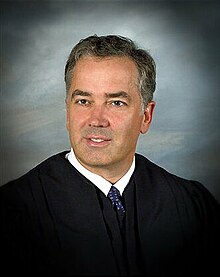
John E. Jones III
President of Dickinson College
14
APPEARANCES
7
PODCASTS
Sep 22, 2026

Anderson CooperHOST
Judge Jones, so what are you expecting to happen in this hearing set for Wednesday?

Johnny Jones IIIGUEST
I think what's going to happen quite clearly is that the judge is going to convene around 3.30, it looks like, in the afternoon.
Johnny Jones IIIGUEST
What's at stake here are liberty interests that the media organizations have grounded in the First Amendment to the Constitution, freedom of the press, and free speech.
Johnny Jones IIIGUEST
And once you establish, and it's pretty clear that that is a matter of fact, that you have these liberty interests, you can't take them away without due process, meaning that you have to give the holders of the press passes an opportunity to challenge or respond.
Johnny Jones IIIGUEST
And he's going to ask that question, Judge Kelly is, and there's no good answer, my view, that the government lawyers can provide in terms of the lack of due process.


John JonesGUEST
Well, I think in the first instance, to your first question, for Judge Fogel and myself, we're unfettered by the code of conduct that properly restricts what judges can do.
John JonesGUEST
As we frequently say, you know, judges can't get out on the courthouse steps and have a press conference, no matter what the sort of loosening of some of the strictures are that that that probably isn't going to work and it's going to get that judge in some difficulty.
John JonesGUEST
We understand the business of judging, if you will, and we understand the dangers that are involved.
John JonesGUEST
And I think all of us feel passionately that we've got to stand up for our former colleagues who remain on the bench.
8 MINS LATER

Michael PopokHOST
And now you've got the federal bench getting the same – um pressure on it that the other two branches get you know there's people who don't run for the presidency because they don't want to put their family through you know that process that that grist mill and of course members of congress but we never used to talk about that also happening to judges but when you have the trump administration you know the tone is set from the top when you have donald trump himself who's been through the court system, state and federal, civil and criminal, all the way up to appeal, and has some very definite ideas about how that is supposed to work, and is not shy about talking about it, but now from the bully pulpit of the presidency, when you have him then send out the message that it's fine for the General Counsel of the Department of Homeland security to put effectively targets on the back of a bunch of judges that he didn't agree with their position it's one thing to criticize you don't agree with jurisprudentially with how they got to a decision it's yet another thing to say you know target of the week or whatever the heck he was doing


John E. Jones IIIGUEST
... because, uh, the post office hadn't promulgated a final rule, I, I, I think they just bought themselves more trouble by doing that.
John E. Jones IIIGUEST
I mean, uh, you know, they said it was speculative to assume that the post office would do the final rule and what the rule would say and so on and so forth.
John E. Jones IIIGUEST
I don't think it was, and I more agree with the dissents, uh, which were pretty strongly worded, that, um, look, what, what did, what do you think they're gonna do, uh, at this point? It's pretty easy to see that however the post office rule made, that, um, this is an intrusion into that, uh, area that is not for the president to, uh, uh, to, uh, make an executive order covering.
John E. Jones IIIGUEST
What do they do now? Um, you know, I, I think that i- i- it's possible, if they wanna get a quick resolution, they may rule that, uh, they're not gonna vacate the, um, district court's injunction, uh, and therefore the EO will not be operative for the, uh, uh, election, and then reserve for a la- a later time, uh, a determination on the merits as to whether or not it violates the Constitution.

Robin BlumnerMODERATOR
Can you give us some stories?
John E. JonesGUEST
What was sometimes misunderstood and, and written about in a way that was totally misleading was that they said, "Well, who is this judge to arrogate to himself the ability to decide this case?" Well, a-and why did he get rid of a jury? Well, it, you don't have a jury when you're seeking injunctive relief.
John E. JonesGUEST
Who are they playing to? And what they knew, I think, was that they had a generalist.
John E. JonesGUEST
They had a judge who was not a specialist in any area of science particularly.
Robin BlumnerMODERATOR
S-

MatthewHOST
No, go, go
Edward Jones IIIGUEST
goUm, anyway, so yeah, that was my Neiman's, uh, and it was just a, you know, most wonderful time 'cause Mr. Stanley was, was, he was still in charge, and, you know, he was, uh, teaching all of us and mentoring all of us.
Edward Jones IIIGUEST
And every, uh, day at lunchtime, uh, a buyer... 'cause we were all in the downtown store, which is where all the buying offices were, and there were about 50 of us at, at the time.
Edward Jones IIIGUEST
And once a month, he would have everyone, uh, all the buyers into the, the, our employee restaurant, which was called The, uh, The, The Little Dipper, and, uh, he would lecture and show, show slides.
Edward Jones IIIGUEST
And basically the subject matter of all of his incredible books that he's written, um, you know, Minding the Store, Quest for the Best, those being the two that over the years as I mentor, I, I teach or tell young people that these are the books you need to read.
Edward Jones IIIGUEST
This is the basis of knowledge of, of, you know, customer service and, you know, all that, all that good, good lessons.
19 MINS LATER
MatthewHOST
Sure.

John E. Jones IIIGUEST
The judges have, uh, Jen, oversight responsibility for the grand jury, and generally not much happens with that oversight responsibility day to day as the grand jury, um, does its work.
John E. Jones IIIGUEST
Um, you, uh, end up, uh, taking the returns, uh, from the grand jury, which would be the true bills that are handed up typically by the US attorney and the foreperson of the, uh, grand jury.
John E. Jones IIIGUEST
Occasionally, there are instances where, uh, a judge gets involved when the grand jury is requesting information through, uh, subpoenas or, um, other methodology, but those are fairly routine.
John E. Jones IIIGUEST
However, what we've seen recently, uh, as Barbara alluded to, are improprieties so grave, uh, that, that judges have had to get involved, um, in very unprecedented ways.
John E. Jones IIIGUEST
We had an instance in, uh, very recently in, uh, Illinois, uh, where April Perry, the US district judge, uh, a- absolutely had to, uh, go back and have, uh, a grand jury transcript unredacted, where it appeared that the United States attorney was trying to cover things up that took place in the grand jury room.
13 MINS LATER

Jen WhiteHOST
Well, Johnna, is, is there a role here for judges to play in holding prosecutors accountable when they find that they, that they're acting outside of ethical norms and standards?

John E. Jones IIIGUEST
Yeah, this is a big statement from the Chief, and I absolutely respect the Chief Justice.
John E. Jones IIIGUEST
I think that he's been a terrific leader of the federal courts, agree or disagree with his decisions.
John E. Jones IIIGUEST
You know, he's stood up historically for his judges, but for him to go this far means to me that he appreciates that this has reached critical mass.
John E. Jones IIIGUEST
I was privileged to be on 60 Minutes a couple of weeks ago in a spot on threats against the judiciary, and I said very straightforwardly that we're gonna get a judge killed if we're not careful.
June GrassoHOST
Do you have any confidence that this is going to get the President or those in his administration to tame their remarks?
June GrassoHOST
Also, I just wanna point out that when he was nominated, the American Bar Association rated him not qualified, with some lawyers and judges saying he was arrogant, lazy and an ideologue who doesn't have an open mind, um-
John E. Jones IIIGUEST
Uh, you know, I, I read that, and he certainly-- You know, if you get dinged like that, and of course, a lot of people don't like the ABA process and so forth, but if you get dinged like that as you're going through your confirmation, you would think that you'd wanna sort of enhance your reputation and prove to everybody that you're qualified.
John E. Jones IIIGUEST
And to my comment earlier, June, about, you know, working in close quarters, you know, you sit typically in three-judge panels unless you're en banc and the whole court sits, which I guess I don't know how they do that necessarily in the Ninth Circuit with all the judges they have, but it doesn't matter.
John E. Jones IIIGUEST
I mean, you have to, to fashion an opinion, there's a lot of trading off, and you're shuttling between-- Well, first of all, you, you may hear oral argument, and then you caucus after that and get a preliminary view, and, you know, you're hanging out with your colleagues.
John E. Jones IIIGUEST
Sometimes you have lunch with them after a particular sitting, and I enjoyed doing that.
7 MINS LATER
John RobertsSOUNDBITE_SPEAKER
But, uh, personally directed hostility, um, is, is dangerous, and it's got to stop
Anderson CooperHOST
What are your thoughts on how President Trump reacted, attacking the six justices?
John E. Jones IIIGUEST
I think, uh, he's, he's really debasing his office, uh, Anderson, and good evening to you and, and to my colleagues on the panel.
John E. Jones IIIGUEST
And I've talked a long time about, uh, threats against, uh, judges, federal and, and state judges.
John E. Jones IIIGUEST
In the last fiscal year, there were 564 threats, uh, real threats, uh, as recorded by the Marshals Service, against, uh, judges.
John E. Jones IIIGUEST
You could get somebody ginned up, uh, by the president's unfortunate rhetoric.
Anderson CooperHOST
The, the accusation by the president of the United States, or the suggestion by, you know, by the president of the United States, that sitting justices are subjected to foreign influence is pretty incredible, especially from an administration which has folks who have business dealings in [chuckles] a lot of foreign countries ongoing and are reaping billions of dollars from them.
Johnny Jones IIIGUEST
law.Well, of course, Elie is, uh, quite right and what's really brilliant and interesting, uh, Anderson about this decision is that, uh, eh, the judge accepted, uh, the rationale that was proffered by the administration as true.
Johnny Jones IIIGUEST
And the judge said, "All right, I'm going to accept this as true and I'm gonna see if the statute applies," uh, using kind of originalism, uh, in saying, you know, we're looking at the plain meaning of the, uh, enactment in 1798.
Johnny Jones IIIGUEST
And, uh, heretofore, you know, the, the gov, government said, "You, you can't pry into what we know and how we know it." And he said, "Fine, I'm going to accept what you're telling me." And he said, "It just doesn't fit." This is a wartime, uh, enactment used three times during wars.
Johnny Jones IIIGUEST
As you said, Anderson, he went into the extensive history and said, "There's no way that this, uh, applies to a gang, um, dangerous though it may be, um, that is, uh, that is sent into the United States by, uh, Venezuela."
Johnny Jones IIIGUEST
Well, you know if, if past is, um, uh, prologue in history, we're gonna see, uh, probably a split court, uh, on this and it's possible that, uh, some justices, uh, will say that, um, i- it is not for courts, uh, to, uh, question the, the authority of the president.

John BermanHOST
Judge Boasberg and this, you know, 40 plus page ruling, what did you think of what he had to say and how he laid out?
John E. Jones IIIGUEST
Uh, he's clearly trying to do what he should do, in my view, which is vindicate, uh, the- the- the court's authority, uh, in this particular case.
John E. Jones IIIGUEST
Uh, he was thorough in laying out the factual panoply that led him to the, uh, finding of probable cause, uh, of contempt.
John E. Jones IIIGUEST
And so, you know, from a, uh, former, uh, district judge, uh, judge's perspective, the same rank as Judge, uh, Boasberg, uh, I think he did what he had to do.
John BermanHOST
Before they're taking any off-ramps, they're appealing this, Judge Jones, so walk us through how this will work, what the steps are, and what Judge Boasberg's options are and role in all this now.
John E. Jones IIIGUEST
Well, I agree with my, uh, my, uh, co-panelist that, uh, it is very unlikely.


John KingHOST
And so that, Jeff, stay with us, 'cause that conversation is gonna continue. Let's bring into the conversation the former chief judge for the Middle District Court of Pennsylvania, John E. Jones, and our CNN anchor and Chief Legal Analyst, Laura Coates. Judge Jones, I wanna start with you. Th- the judge consistently, repeatedly, in an exasperated tone, slamming the Justice Department, saying at one point they were using intemperate and disrespectful language. He said that was, quote, "Never seen from the United States." Uh, sounds like he's out of patience. What does that tell you?
John E. JonesGUEST
(clears throat) Well, the first thing I was gonna say, uh, Jon, it's good to be with you, is that, uh, maybe the proclamation was signed, uh, by an autopen. Uh, uh, who knows? You know, and it's, it's void, uh, uh, from the time that it was signed. But seriously, on the question that you ask, this judge has a long, um, fuse, uh, i- in this, from the standpoint of judicial temperament. That fuse has clearly burned down, uh, and he's ready to go off. Uh, he's had enough. You know, what's happened all week is that the government is playing hide the ball. They're temporizing. They're, they're, uh, not answering the questions that he's put forward. They're making disingenuous arguments. And then today, of course, counsel for the government admitted, uh, that he did convey, uh, what was a, a, a verbal order from the judge, conceded that he knew that that was an order, and he conveyed that and that was that and the planes didn't turn around. So this is an evolving story, and it kinda has the, uh, allure of a slow-motion car crash as you look at it. But I think there's a further showdown coming, and he means to finish up, uh, what he started, which is this inquisition about whether his order was violated.
John KingHOST
Uh, you know this quite well. Uh, you're right about the car crash metaphor, and you can see it in the transcripts, uh, about the tense, the tension, and the distrust between... But this judge also knows this is going to go up to an appellate court and probably make it to the Supreme Court. And so that record becomes critically important. So in that regard, what he says, how he talks about the law, how he asks about the law is absolutely essential. What do you make of his line of questioning as he was questioning the lead Justice Department attorney today?
John E. JonesGUEST
Well, I think he's doing what any good judge would do, Jon, uh, under the circumstances. You know, the president's position's... First of all, the, the, the administration is deliberately misrepresenting the role of the judiciary and, and trying to, as you, uh, alluded to earlier, get up and over this legal debate by saying, "Well, these are bad people, and we should throw 'em out of the country," writing due process completely out of the equation. So what the judge is doing is he's, he's faced with the completely novel application of a 200-year-old statute. And, and he, he's saying, "I, it, it doesn't seem to fit. Uh, to me, it's a reach. We're not at war, uh, with Venezuela. You've, you haven't tied these gang members to anybody in the government. Uh, y- you know, I don't know who was on the plane. I don't know whether, uh, it was justified, even if you, uh, uh, apply the statute the way the, the government wants to, whether it's justified to take these guys out, you know, a- again simply because you say it is." And in the court of public opinion, I realize people say, "Well, they're bad guys, we wanna get 'em out of here." But these are due process rights that are enshrined in the Constitution of the United States. And, and I, I, I have to say Judge Boasberg, uh, has been a lot more patient than I might have been, you know, with the government this week in giving him till next Tuesday to invoke, uh, state secrets, which, quite frankly, if they had that, they should've produced it already.
Anderson CooperHOST
... thanks very much. Joining me now is CNN's Senior Legal Analyst, Elie Honig; former Chief Judge for the Middle District Court of Pennsylvania, Johnny Jones; and CNN Political Commentator, Xochitl Hinojosa, former Director of Public Affairs at the Justice Department. Um, Jus- Judge Jones, how big a deal is Chief Justice's rebuke here?
John E. JonesGUEST
It's a very big deal, Anderson. Because, uh, this is something that, uh, the, uh, very, uh, I think taciturn and mild-mannered Chief Justice, uh, uh, doesn't normally do as was noted, he did it back in 2018, as you said, uh, earlier. And it happened to be, uh, again triggered by Donald Trump. It's very remarkable. Um, the court typically doesn't wade into these types of disputes. Um, and, uh, the, the constant drumbeat of impeachment, uh, threats and in fact, uh, filings by the Congress, I think now have hit a nerve, uh, at the Supreme Court. So, it's, it's very, very remarkable.
Anderson CooperHOST
Judge Jones, I mean, White House aides have been saying in recent days that federal district judges don't have the authority to rule against the president on a host of issues. Stephen Miller, uh, said, "Judges have no authority to administer the executive branch." What do you say to that?
John E. JonesGUEST
I think, uh, Mr. Miller probably needs to take a civics lesson, because, uh, that, that's just patently untrue. I saw that interview, uh, and, um, you know, he, he got himself overheated, uh, talking about his version of what he thinks, uh, uh, judges can do and what jurisdiction they have. And Anderson, I gotta tell you something else that I think has been a little bit forgotten, and I find this interesting. Uh, President Trump's, uh, late sister who passed away a couple years ago, Maryanne Trump Barry, is a former United States District Judge, and then was put on the Third Circuit Court of Appeals. I happen to know her a bit. She was an excellent judge, a very decent person. Um, and, uh, you know, Donald Trump knows judges and he understands what judges do. Uh, and to intentionally misstate, as Mr. Miller and others in the White House have done, uh, what judges have the jurisdiction and the power to do, and to trivialize, uh, federal judges the way the administration is doing, they're playing a dangerous game here with, uh, with Judge Boasberg, you know, who set another deadline tomorrow. And this is like, you know, the force continuum. This is escalating day after day. So, tomorrow's gonna be another showdown. We'll see what happens.