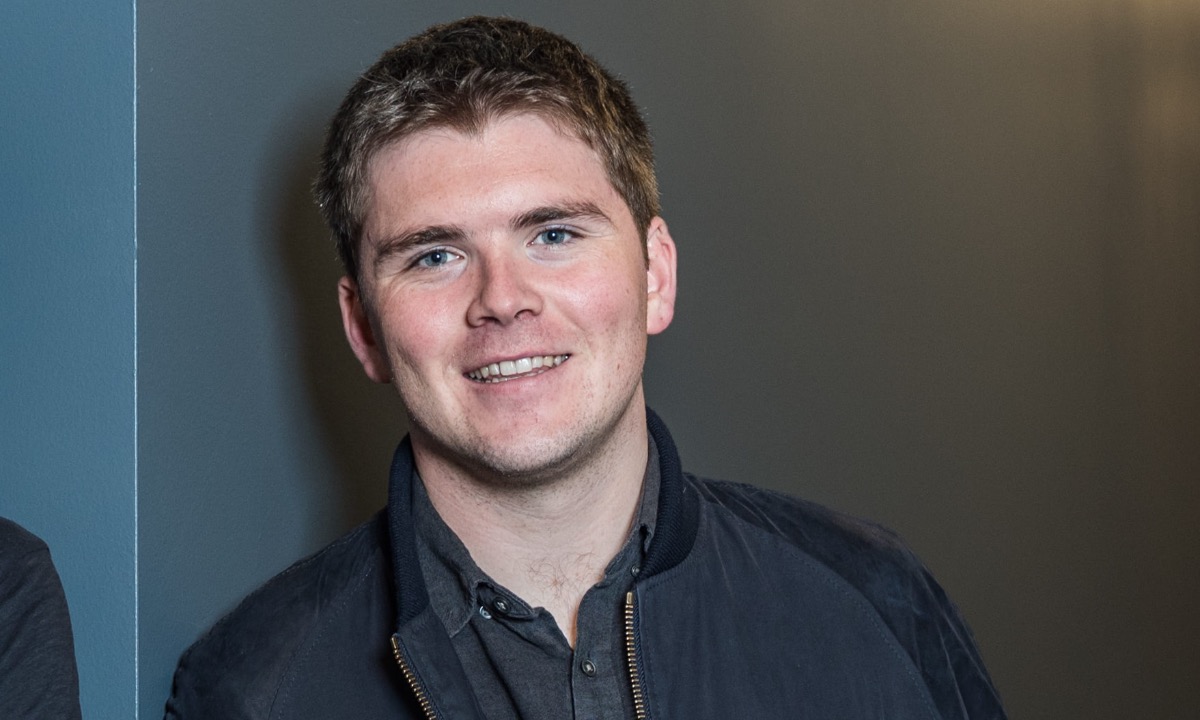
John Collison
President of Stripe
11
APPEARANCES
9
PODCASTS
Oct 5, 2026


Molly O’SheaHOST
What have been the biggest transformations with AI internally at Stripe that you've been most excited about?

John CollisonGUEST
You guys have all probably seen or experience the, you know, what they refer to as the jagged frontier, the uneven performance of AI where it's really good in some domains and really bad in others.
John CollisonGUEST
And for example, if there is something where there is a huge corpus of data online, then it probably does reasonably good of this.
John CollisonGUEST
There's, you know, many areas where it doesn't have access to any training data and then, you know, suddenly it just kind of has to reason from first principles and is much poorer.
John CollisonGUEST
I think the organizational equivalent of that is like, yeah, you can do stuff in your random consumer AI app.
7 MINS LATER

speaker_0HOST
John, over to you.
John CollisonGUEST
And look, you could say that certain people in the investing world need no introduction.
John CollisonGUEST
But I think Stan is probably, if you were to ask investors for their role models, Stan would probably be one of the top three names that people give you.
John CollisonGUEST
And his performance over the last number of decades probably makes that very, very deserved.
John CollisonGUEST
Stan is also a macro watcher, and there's no more relevant time for us to be talking about that.
37 MINS LATER


John CollisonGUEST
There's gonna be kind of cost trade-off and things like that, and then ultimately you will make a call, and it'll go buy it for you.
John CollisonGUEST
And when you make that call, some brand preference you have, oh, sure, I just know that they're, like, the ones with the really good sound quality.
John CollisonGUEST
But, so we think brand preference and as part of that, advertising, will clearly stick around because, again, it's definitely not going to be the case that agentic commerce means no humans make buying decisions.
27 MINS LATER


speaker_0HOST
Yes
John CollisonGUEST
And it's interesting you bring that up in the context of AI because one thing that I get excited about in the current moment is this idea of individual empowerment, and, you know, you could have different visions of AI, and I definitely have an adverse reaction to this, you know, very passive, uh, you know, I think the term slop is, you know, the term we use-
9 MINS LATER
speaker_0HOST
Yep
John CollisonGUEST
... that you've ever heard of? And that's the kind of stuff you do then, and like, you have stuff...
John CollisonGUEST
And so it's always the most competitive time that it's ever been with recruiting, and this is certainly no exception.
John CollisonGUEST
That kind of gets to, I think, you know, people are talking about the death of software engineering.

John CollisonGUEST
And maybe part of that is, you know, the, um, the examples people give almost sound incredibly far off, where it's like, "Oh, I'll just have my AI agent plan my entire summer vacation, you know, in France." Where it's like, no, you love planning the summer vacation.
John CollisonGUEST
Whereas if you say, "Okay," uh, you just give your AI, uh, "This is the recipe I'm making tonight, um, buy the things I don't have in the fridge already," like, that's the kind of delegation that, you know, people are much more comfortable with.
John CollisonGUEST
And so we think people and, uh, AI services will kind of work their way up the trust curve, where again, it's already the case that the research you're doing, the product research you're doing, you do with an AI app.
John CollisonGUEST
You're probably still confirming that directly, but it might get to the case where you're allowing the AI to make small decisions for you, and especially as, uh, it gets to know you.
Ed LudlowHOST
The, the, the partnership that y- you've been through today and the changes of integrating Stripe into AI mode and Gemini, does that change th- their fortunes in that market?


John CollisonGUEST
And so again, I think any MBA would've told you that, um, the adjacency of, uh, you know, incorporation makes no sense.
John CollisonGUEST
Whereas you actually go talk to founders that are like, "Guys, it's like this is the single biggest issue I ran into starting my company." And similarly with Tempo, and just as we think about incubations, we're trying to solve a real problem here, where we talked in the letter about Bridge having operational issues, not because of Bridge, but because of blockchain congestion-

John CollisonGUEST
A way you can think about what Flock is doing is, uh, not changing any of the norms around privacy, but really expanding law enforcement's bandwidth to go deal with stuff.
John CollisonGUEST
And so I don't think anyone really has an expectation of, you know, a right to privacy of the car they are driving just being observed from a distance-
32 MINS LATER
John CollisonGUEST
As we've learned from Flock Safety, fighting crime is most effective with network data on your side.

John CollisonGUEST
Uh, and we see it, I guess, both in Stripe's data compared to, say, public earnings from others.
John CollisonGUEST
Like, clearly, the respective populations are performing somewhat differently.
John CollisonGUEST
But I guess we also see it qualitatively in the conversations we're having with customers, where what tends to happen, uh, say for some incumbent, is they built some business, they installed some system long before Stripe even existed.
11 MINS LATER


John CollisonGUEST
And one of the reasons that we're very focused on the long term and how we run the business is you can't tightly measure it on a year-to-year basis.
John CollisonGUEST
And so growth accelerated last year from 25% in the prior year to 38% payment volume growth in 2024.
John CollisonGUEST
I imagine it'll be less than 38% in 2025, again, just because these things are lumpy.
John CollisonGUEST
But what caused it to be so strong in 2024 was basically the combination of the businesses that were already on Stripe grew quite well.
9:54
How's it transforming what you're doing? How's it changing just even the day to day of it all?

John CollisonGUEST
trust.And the fact that the fraud problem hasn't really been solved in online payments, a big reason people come to Stripe is basically we are a reputation network across the internet economy.
John CollisonGUEST
And so when someone comes and buys something from a Stripe user, 93% of the time we have seen that card before.
John CollisonGUEST
And so the merchant can know something and know that they can trust this end user.
John CollisonGUEST
And it's gotten to the stage now where if someone comes along and buys with a credit card, if they're, you know, signing up with an email address or a phone number or something that we haven't seen before, that is just ipso facto suspicious because, you know, they are coming along and maybe trying to- it's a stolen credit card or, or, or something like that.
John CollisonGUEST
And so a big part of what Stripe ends up doing is acting as a reputation network to keep fraud out of the system that maybe you would have wanted to design in from, from day one.
1 HR 17 MINS LATER

Jason CalacanisHOST
I'm sure some employees are wondering when will Stripe go public, and under what circumstances, and what's the hold up here? Why aren't you public already?
John CollisonGUEST
Yeah, look, um, I think people sometimes hold us out to be, uh, dogmatic or something on this topic, whereas we feel like so many other people out there in the world are dogmatic, and we just try to be pragmatic on this.
Unknown podcast
The Stablecoin Future, Milei's Memecoin, DOGE for the DoD, Grok 3, Why Stripe Stays Private
Feb 21 · 1h 45m

David FriedbergHOST
What's the right solution if we were to build a financial system for the world from scratch today? And can you guys see a world where we bridge away from the credit card networks, where we move out of some of these legacy systems? Or are they so deeply ingrained in everything that it's going to continue to be this thing where we've got to build these complicated solutions into and around the legacy of financial infrastructure?
John CollisonGUEST
The finance industry has its version of the mine shafts, for sure, where everything should be highly scalable in real time.
John CollisonGUEST
And I think, in a way, stablecoins are solving something that you don't technically need full decentralization to do, but the ability to make real-time payments any hour of the day or night is a useful property.
11 MINS LATER