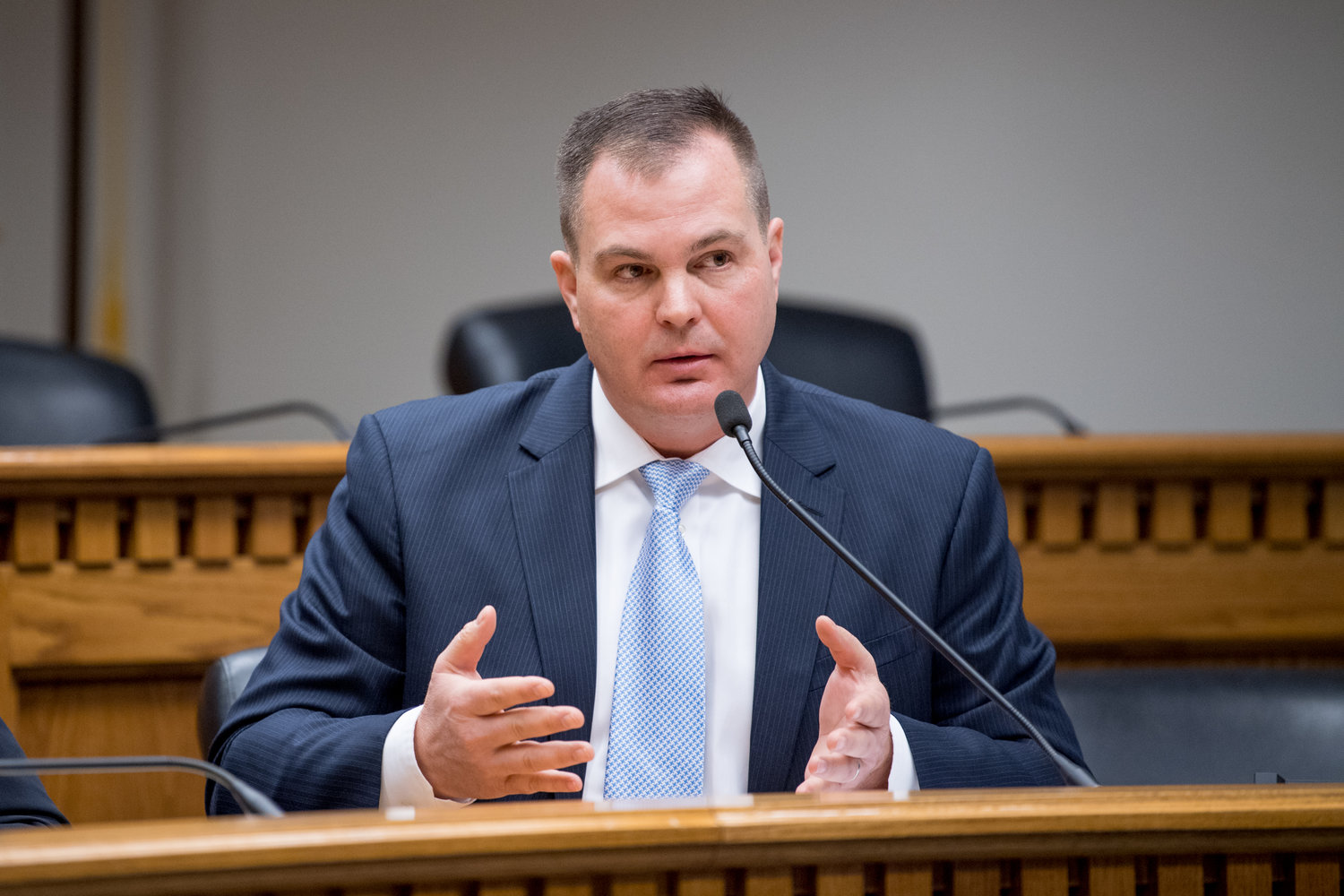
John Braun
Minority Leader of the Washington State Senate
18
APPEARANCES
8
PODCASTS
Oct 20, 2026


Mark LevinHOST
Tell us a little bit about yourself and tell us the main issues and tell us about your opponent.

John BraunGUEST
So Navy veteran, went to school on Navy scholarship, out and working nights, put me through school, served seven years of activity as a submarine officer, the balance of 31 years in the reserve, retired as a captain a few years ago.

Lars LarsonHOST
If she actually believes in that stance, she should be willing to say it out loud.
John BraunGUEST
And she likes to make a big deal about being moderate, about being independent, but she has clearly been cowed into not saying anything on this issue because she's worried about the political implications.
John BraunGUEST
She understands that this is a common-sense issue supported by folks across the partisan spectrum.
John BraunGUEST
divide is that we should have a fair, safe, level playing field for women and girls to compete against each other.
John BraunGUEST
We should support the basic premise of Title IX, and we should stop putting, especially young women, in this very, very difficult situation.
Lars LarsonHOST
So, John, what are the other big issues that you're going to be hitting voters with in the closing days of this campaign?

David KromanHOST
Since much of this immigration push is driven directly by President Trump without kind of specific policies from Congress, is there something that as a member of Congress you could do to kind of shift that focus toward, as you said, people who have been convicted of crimes in the past?
John BraunGUEST
Yeah, I mean, I said, you know, look, we started from a very bad situation with the Biden administration.
John BraunGUEST
We let, you know, somewhere around 15 million folks into our country without documentation.
John BraunGUEST
And it's created quite a problem for state and local government, for federal government.
John BraunGUEST
But I have been clear when it comes to working on folks, you know, with folks who are here illegally, we should focus on folks who are here illegally and have committed crimes.
John BraunGUEST
And we need to do a better job there at the federal level, but also at the state level.
David KromanHOST
What do you make of those concerns from rural hospitals as somebody who said that you supported that One Big Beautiful Bill? And what should Republicans in Congress do here? Yeah.


Carleen JohnsonHOST
So I talked to Senator Braun about this this morning to provide some further context.
John BraunGUEST
It's, it's a reflection of the fact that she spent the last four years getting absolutely nothing done in Washington, DC to help the people here in Southwest Washington.
John BraunGUEST
Instead of running on her record, which is virtually nothing, uh, she has decided to attack me personally, attack our business here, uh, in Southwest Washington with all kinds of dishonest and, and, and disingenuous ads, things, uh, having to do with safety, you know, where she claims...
John BraunGUEST
You know, an individual, you know, had a, a fractured finger as a result of a, of an accident, but claims she was maimed.
John BraunGUEST
Uh, overstates that and does not recognize a very strong safety record we have and tries to paint me as someone who, frankly, i- doesn't pay attention to these things, when in fact, the fa- the, the record shows just the opposite.
Lars LarsonHOST
What are the other issues that you're finding are resonating with voters as the ballots get ready to drop?

Phillip OlsonHOST
What specific federal funding commitments would you pursue for Washington salmon hatcheries federally if you get elected in November?
John BraunGUEST
Yeah, I think at a very minimum, you gotta, you gotta pursue funding that keeps up with the cost of, of, uh, of running the hatcheries.
John BraunGUEST
Uh, but we have to do a better job of coordinating the activities of federal, state, and tribal hatcheries, making sure that, uh, you know, that they're, uh, they're, you know, they're creating the, the, the salmon that, that feed our salmon runs in a, in a thoughtful and collaborative way.
John BraunGUEST
We have some opportunities to impr- improve that production, uh, both in quantity and in quality, uh, even without additional money, but it has to be...
Phillip OlsonHOST
Would you support this bill in your current form? Would you kinda talk about that a little bit and what you might do federally for us with that?

John BraunGUEST
It's not just all the impact of the millions of folks who immigrated illegally during the Biden administration, but think about the tragic impact from human trafficking, from drug trafficking, and all the folks who have, you know, died as a result or faced, you know, untenables.

John BraunGUEST
No, it's, you know, broadly, and I suppose you could call it the Portland metro area north of the Columbia River, the border between the two states.
John BraunGUEST
So, yeah, Vancouver is kind of the population center and very, you know, just across the river from Portland.
John BraunGUEST
You know, it goes from an urban area in the south to very resource-dependent, timber-dependent fishing, that type of thing in the rest of the district.
John BraunGUEST
and willing to vote for the person who they think is going to go represent them well in Congress.

Hugh HewittHOST
So the website is VoteBron, B-R-A-U-N, VoteBron.com. How much money do you have to raise in a district like this, Senator?
Lars LarsonHOST
It looked as though you and Perez were running almost exactly the same percentage of the vote in last night's voting.
John BraunGUEST
At least there hasn't been an update that affected the third congressional so far today.
Lars LarsonHOST
You don't get to keep all that money, but that's going to put some of those businesses you wouldn't have thought of as being millionaire businesses, it's going to put them in a position to have to pay this tax, isn't it?
John BraunGUEST
Most of these companies are pass-through, meaning they pay tax on their personal finances for everything that shows as income, even if that income It comes out of the company because it's used for working capital, for capital investments, and especially in construction where they may have a project that goes on multiple years and maybe they lose money in one year and two years, back up, plus a little extra in year three.
John BraunGUEST
It is really a harmful bill for our businesses, especially small, medium-sized businesses.
John BraunGUEST
I think 50 to 300 employees really are the heart of Washington's economy when you get right down to it.
Lars LarsonHOST
So what are the issues you're focusing on that seem to resonate so well with the voters right now?
John BraunGUEST
It's affordability, and at the federal level, that's mostly, uh, federal taxes and the cost of energy, pursuing the all-of-the-above energy strategy, uh, that has driven, uh, you know, you know, we have this thing going on in Iran, but, you know, even with that, it's driven the price of gas, even in Washington, where we have terrible policy re- uh, for energy, down by almost a dollar a gallon, uh, and, and makes a big difference not only in filling up your car, but in the cost of goods.
John BraunGUEST
Uh, people care about, uh, a, a, a strong national defense, make sure it's funded and used well.
John BraunGUEST
And also they still care, even though, uh, we've made great progress in the last year and a half on border security, it's still an important issue.

John BraunGUEST
at some point the executive branch has to say look no you have to and i i hope they're going in this direction that you have to maintain the record so you can be audited and when there are audits like this one they show significant uh examples of overspending of overpayments uh that you follow up and you found out why and their the response was was somewhere between laughable and maddening, that they need more money so that they can more accurately audit themselves, is frankly stunning that they would respond that way when they have over 500 people in their administrative division.
John BraunGUEST
The example we've used is government affairs has doubled in the last five years, and yet they can only afford... six auditors.
John BraunGUEST
And the only way they think they can figure it out is if we send them more money.

Brandi KruseHOST
Am I missing something? Is she like, I mean, ill? Is there a family? What is going on?
Brandi KruseHOST
If the state auditor wants data from a state agency, how is it that the state auditor can't just get that data from the state agency?
John BraunGUEST
It does appear, we've done a fairly deep dive into this, it does appear there is, you know, when we created Department of Children, Youth, and Families, I think back in 2017, buried deep in that creation, you know, statute was some prohibition on sharing data with the auditor.
John BraunGUEST
You know, if I was going to talk about, you know, give it a positive light, perhaps they were worried about privacy.
John BraunGUEST
The auditor audits lots of things where private data is involved and they have very strict protocols on how they protect it.
Brandi KruseHOST
So how is it possible to even do an audit of a state agency like DCYF if you don't have information like that?
Brandi KruseHOST
So, I mean, didn't they squeeze everything they could squeeze out of us already this year? I mean, where are they going to find that money?
John BraunGUEST
Yeah, and the difference in that range is whether you include local taxes or not.
John BraunGUEST
But it's a big number, an order of magnitude larger than any number in the past.
John BraunGUEST
And what the rumor mill is, and it's always ramping up here in the last few months before session, is they want to go back and talk about the wealth tax, which we know doesn't work from experience around the world.
John BraunGUEST
They want to go back and talk about the state version of the jumpstart tax in Seattle, which... know saw the relocation of what 50 000 jobs from seattle to across the lake to bellevue or other places in the country and now they're just being candid i mean they're talking about just going ahead and putting in place a real uh income tax in spite of the fact that they just voted uh on a citizen initiative legislature last year to make it you know to forbid an income tax now they're showing their true colors and they want to come back and they think based on the ruling from the capital gains income tax that they can, in spite of the fact that the Constitution says we can't tax property over 1%, it has to be uniform, they're saying, well, an income tax isn't really about own, it's about the transaction when you get your paycheck, and therefore an excise tax, and we can therefore have an income tax.
John BraunGUEST
And they feel, I think, confident that the very liberal state Supreme Court will back them up on that.
Brandi KruseHOST
Do you believe they would even propose it if they weren't confident the state Supreme Court would back them on it? Do you believe there are conversations that happen behind the scenes?
Brandi CruzHOST
And he said, look, you know, On the whole, Washington state isn't good at managing money, but the state entity that manages these sorts of investments actually has a really good track record.
John BraunGUEST
Our Constitution says you can't invest public funds in the stock market, essentially, in nicer words, but that's what it says.
John BraunGUEST
Three times in our state's history, the voters, through a change to the Constitution, which means it goes through the legislature, a two-thirds majority, then it goes to the vote of the people, have said, we're going to exempt that.
John BraunGUEST
We do it for our labor and industry trust, our industrial insurance workers' comp trust.
6 MINS LATER
John BraunGUEST
Claiming people aren't going to be, are going to lose their health care because of this bill.
Brandi KruseHOST
yeah and here i'm like where's all this new progressive revenue they passed over the last like five to ten years going i mean billions of dollars in additional revenue that they said would be such like a boon to our state so i have to ask you a question we'll end here because i get this question more than any other question about washington state politics in the budget where's the weed money where's the weed money go
John BraunGUEST
Well, I mean, they are on a train track, and they are intent, particularly Senator Peterson is intent on finishing on time.
John BraunGUEST
They're just trying to solve the problem that's right in front of them right now, and then they'll get the next problem after that.
John BraunGUEST
I do think that the broader plan, which is they want a lot of new taxes, uh is working they what they did is they waited until late in session before they were induced to introduce their big tax package i mean it seems like a long time ago but it's only a few weeks ago when they introduced their first tax package for the first 10 weeks of session they didn't talk about taxes at all and then they induced that they found out the governor didn't like some of it they didn't have the votes for all of it and they introduced a whole new one basically the middle of last week and now they're trying to rush that through uh pretending to offer uh public comment but really very little input during very short hearings in both the House and the Senate and really not listening because still doing things that never had a hearing on the floor of the House, or I'm sorry, on the floor of the Senate without much regard for public input.
5 MINS LATER
Brandi KruseHOST
So wouldn't this just be saying, we want Democrats to control the head of our public school system, for decades.
John BraunGUEST
But the reality is, you know, the candidates have historically been well known as Republicans or Democrats.
John BraunGUEST
And and if it if somehow on the on the few cases where we've had, you know, I think two cycles ago we had what I would call a real independent running for OSPI.
Brandi KruseHOST
Can you just summarize it quick? It seeks to help basically deal or help with kids who are chronically absent through what means?