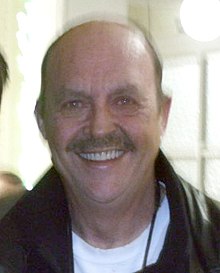
John Ashton
American actor
36
APPEARANCES
5
PODCASTS
Nov 5, 2026
John AshtonGUEST
Is it reflective love? In other words, that person that says that they have loved me, in response are they giving me that freedom as well? Yeah.
John AshtonGUEST
But it's freedom within limits, right? So again, God has set up the law of gravity.
John AshtonGUEST
They wanted to go against the law of gravity and they had all different attempts.
John AshtonGUEST
And of course, now we have developed planes and other devices for going up in the air.
John AshtonGUEST
Or a particular superhuman, you know, like some of the Greek gods, these sort of things.
5 MINS LATER

Casey VerkerkeHOST
What implications does a morally centered universe have for how we approach science, evidence, and truth?
John AshtonGUEST
Yeah, so this is quite an important question, actually, particularly that last part that you alluded to, what is truth? And this is a question, of course, that is being argued and in our postmodern society, of course, we've come to, in my view, this crazy conclusion that, well, truth is relevant to the person.
John AshtonGUEST
And as a result of this, of course, we see that There's a whole lot of confusion in society now over certain issues, you know, classic issues, gender issues, for example, different other relationship issues, these sort of things, politics.
8 MINS LATER
Casey VerkerkeHOST
And I guess the question is, what should that do for us in seeing a judge with those attributes?
John AshtonGUEST
Um, and I think of a, a classic example that really impressed a friend of mine who's a, a leading, uh, uh, creationist, um, and, um, uh, he's a, um, uh, has both a PhD and a DSc, and he was, uh, uh, giving a, um ...
John AshtonGUEST
He was giving a talk at the University of Virginia, and just while he was there, a young woman who had been the, the top of her medical class, she was a very strong Christian, she'd been over in Africa volunteering medical aid, uh, to, um, uh, to, uh, uh, communities that otherwise wouldn't see medical aid.
John AshtonGUEST
And, uh, one, one, one night, uh, on the, on the weekend, she went down to, uh, the little local, uh, shopping center to get some money out of a teller and, um, and, and, uh, buy so- some things.
TidiusHOST
... built in in certain kinds of cells?
John AshtonGUEST
Well, I, I guess the main thing to understand is how, how we see and how we see in low, um, in low-level light, and the- we've heard of the rod cells perhaps in our eyes, if we, if we do biology.
John AshtonGUEST
And the fascinating mechanism is this, that proteins, um, are, are, are fairly long-chain molecules, and they are bent in, in particular ways.
6 MINS LATER
TidiusHOST
... crazy to think about it.
ScafiHOST
but built in in certain kinds of cells?
John AshtonGUEST
Well, I, I guess the main thing to understand is how, how we see, and how we see in low, um, in low-level light.
John AshtonGUEST
And the- we've heard of the rod cells perhaps in our eyes, if we, if we do biology.
John AshtonGUEST
And the fascinating mechanism is this, that proteins, um, are, are, are fairly long-chain molecules and they are bent in, in particular ways.
6 MINS LATER
ScafiHOST
... crazy to think about.

ScafiHOST
... built in in certain kinds of cells?
John AshtonGUEST
Well, well, I, I guess the main thing to understand is how, how we see, and how we see in low, um, in low-level light.
John AshtonGUEST
And the- we've heard of the rod cells, perhaps, in our eyes, if we, if we do biology.
John AshtonGUEST
And the fascinating mechanism is this, that proteins, um, are, are, are fairly long-chain molecules, and they are bent in, in particular ways, so they're, they're folded up.
6 MINS LATER
ScafiHOST
... crazy to think about.
John AshtonGUEST
Firstly, he had to show what the consequences of evil were in the long term, how evil manifested, how it grew, how the long-term effects were and how those effects multiplied.
John AshtonGUEST
It wasn't where it reached a peak and then got better, as a lot of people at one stage hoped that humanity would make things better of their own accord.
6 MINS LATER
John AshtonGUEST
So this leads to a very interesting thing is that the Bible describes God as being true.
John AshtonGUEST
And so this leads, so if something belongs to you, right, and then you go and take that from someone, you're now creating a situation that really isn't true because that particular thing that you take belonged to someone else.
John AshtonGUEST
It was his, right? So we can see how this leads to a very interesting principle.
6 MINS LATER
John AshtonGUEST
And often people that do these bad things, when they're confronted with issues, say they change their mind.
John AshtonGUEST
They realise that what they did was wrong, which is a very interesting observation.
John AshtonGUEST
The fact that we also have beauty, which gives pleasure, is spread throughout all these things.
John AshtonGUEST
But let's assume that somehow, you know, in their position, of course, from the basis of evidence, there's actually no known evolutionary explanation for consciousness that works because consciousness involves the non-material aspects of our mind.
John AshtonGUEST
So they're very much linked to this whole aspect that we discussed previously of where do thoughts come from? Where does consciousness come from? But essentially, they believe their own arguments, of course, which, as I said, I believe we've shown quite clearly that are false.
8 MINS LATER
speaker_0HOST
Mm-hmm.
John AshtonGUEST
And I think the important thing is are there any of the main professional organisations like the Diabetes Association of Australia, if you're looking at an app to look at food suitable for diabetics, these sort of things.
John AshtonGUEST
But, again, they may not necessarily be telling us the form in which the calories are coming from.
speaker_0HOST
Yeah, yeah, yeah.
ScafiHOST
I had the impression that all numbers are just like hiding in like hundreds and hundreds of chemicals behind them.
John AshtonGUEST
But then it's actually some vitamin C or citric acid, something like that, which is, you know, quite a harmless sort of acid part of, you know, citrus foods, these sort of things.
6 MINS LATER
ScafiHOST
Yeah, yeah, yeah.


John AshtonGUEST
Well, sadly, this report is flawed because it's based on the false premise that Lucy Letby murdered and harmed babies.
John AshtonGUEST
Well, I'm sorry, Nick, but since the trial, it's now generally understood by experts around the world from a variety of disciplines that there is no sound evidence.
John AshtonGUEST
I'm not buying it, but please could you let me make the point here that going down the track of safeguarding is a red herring.
John AshtonGUEST
And so this was a practice, for example, that was common many years ago in India.
John AshtonGUEST
And it was an English Christian missionary that fought to actually stop that practice.
John AshtonGUEST
And I think we would accept that, hang on, that's morally wrong to kill the wife when the husband dies.
6 MINS LATER
John AshtonGUEST
And so he committed these horrendous murders, which are really horrific in detail.
John AshtonGUEST
And when he was being tried, he actually came to realise that he actually felt sorry for what he did.
John AshtonGUEST
Um, but further, furthermore, when we created the essay on how jellyfish saved the world from World War III, we had inputs that were going in there.
6 MINS LATER
John AshtonGUEST
And so we have the challenge of where did the first living organism come from? Uh, there's a number of, uh, challenges there.
John AshtonGUEST
We, you know, it's outside the scope of this chapter to, to talk about them, but basically they are that the chemical reactions required to form a living organism just don't work in nature.
John AshtonGUEST
Um, they, um, they only, those chemical reactions will only go in a living system.
John AshtonGUEST
So this again raises another interesting question, uh, and so that's why essentially the argument is that, uh, it's absolutely impossible for a living cell to form from non-living molecules on the basis of the chemistry we know today.
John AshtonGUEST
Now, if we extend that and take that a little bit further, what, um, they're trying to say is that, okay, these non-material molecules can somehow, uh, produce a non-material entity, consciousness.
John AshtonGUEST
And this is where we get into the very interesting definition of, you know, what, what is actual consciousness? Like, is, is consciousness, um, just, uh, electrical reactions within the brain, which we can measure, right? Or is it, is it actually something more? And one of the arguments is, of course, that we, you, as we mentioned before, you can weigh your brain, but you can't weigh your thoughts.
7 MINS LATER
speaker_3NARRATOR
Okay.
John AshtonGUEST
A small piece of that chocolate instead of a dessert will give you a much lower calorie intake.
John AshtonGUEST
But by just having one small piece of chocolate, After a meal, instead of that piece of apple pie or those couple of biscuits or some other dessert, will in actual fact give you a lot less calories.
John AshtonGUEST
And the same goes for morning tea, you know, the traditional thing where you have a beverage and a couple of biscuits.
John AshtonGUEST
When you do the calculations, there's less calories in a small piece of dark chocolate than in a couple of biscuits.
9 MINS LATER
ScafiHOST
I'm interested in asking about this chapter about how can we train our body to burn fat? What is that entails?
speaker_0HOST
Just smell it.
John AshtonGUEST
Really? And they ate less than the group of women who didn't smell the chocolate beforehand.
John AshtonGUEST
The other thing, of course, too, that has come out recently, that the cocoa polyphenols have, you know, a lot of other benefits.
speaker_0HOST
So how should we choose a good chocolate? What are some of the pitfalls to avoid? Yes,
John AshtonGUEST
So we've developed this ability to be able to combine this information in such a way that, uh, computers then can, can make decisions.
John AshtonGUEST
Uh, and of course, there is still shortcomings, um, uh, depending on the system they use, whether they use a radar system or whether they use an all-visual system.
9 MINS LATER
John AshtonGUEST
Now again, just as the Bible talks about one global flood, the biblical, a, a creationist view has in particular one ice age.
John AshtonGUEST
Now we need to understand that there's actually no known really viable explanation for ice ages, and yet we know that a massive ice ages have occurred in the past.
John AshtonGUEST
We've got the, the evidences of glaciation and so forth, and we've got animals that have been preserved in the permafrost-
John AshtonGUEST
So wherever you go around the world, the head of something means the most important part or the, the top of something, this sort of thing, even though they'll be using different words.
John AshtonGUEST
Now, there's a lot more examples that I could go into, but we don't have time for that.
John AshtonGUEST
the amount of radiometric, uh, material? Now, one of the ways that scientists, uh, get round some of these assumptions is that within a particular rock you may have different radiometric elements or different types of crystals, and we can, uh, looking at those, uh, crystals, um, measure the rates, uh, of the different ones and, and plot them, and, uh, and using averages, we can work out, you know, better timelines.
John AshtonGUEST
Ooh.It's a discrepancy? And it's very interesting that carbon-14 dating in a way is more accurate because it, carbon-14 we know a lot about its decay rate- Mm-hmm ...
John AshtonGUEST
has a half-life about 5,700 years, um, and we can measure it, uh, quite, quite accurately.
John AshtonGUEST
And the thing is that if these coal deposits were hundreds of thousands to millions of years old, there should be no detectable carbon-14 there- Mm ... because it would've all decayed away due to the short half-life.
John AshtonGUEST
The fact that we find it there in all the ones where we tested is very, very, well, powerful evidence, and this is much stronger evidence.

John AshtonGUEST
Now, Megrahi was alleged to have bought clothes from Gauci's shop two weeks before the bombing.
John AshtonGUEST
He was in Malta on the 7th of December, and that was, according to the Crown, the date upon which these clothes were bought by him.
John AshtonGUEST
The first is that Mr. Gauci's clear memory of the close purchaser was somebody who was much older and much bigger and much darker than Megrahi.

Myles BonnarHOST
So the description of the customer did not match Megrahi's appearance at the time.
John AshtonGUEST
He could not pinpoint the date, but he did say his brother was at home watching a football match, and he did say that when the customer left the shop, it was raining.

John AshtonGUEST
... seen any, um, types of catastrophic events occurring that mirror what we see must have happened in the past in the geological record, and it exactly fits the flood account, that there was this massive global event where the fountains of the deep opened up, water came up from out of the earth.
John AshtonGUEST
These layers that are separated by millions of years, there should be massive erosion.
John AshtonGUEST
And the other problem we have is, of course, we know from current, uh, geographical data and measurements of erosion rates, the rate at which rivers are carrying sediment into the ocean, all this sort of thing, the continents would erode away in less than 10 million years.
Scroll for more appearances