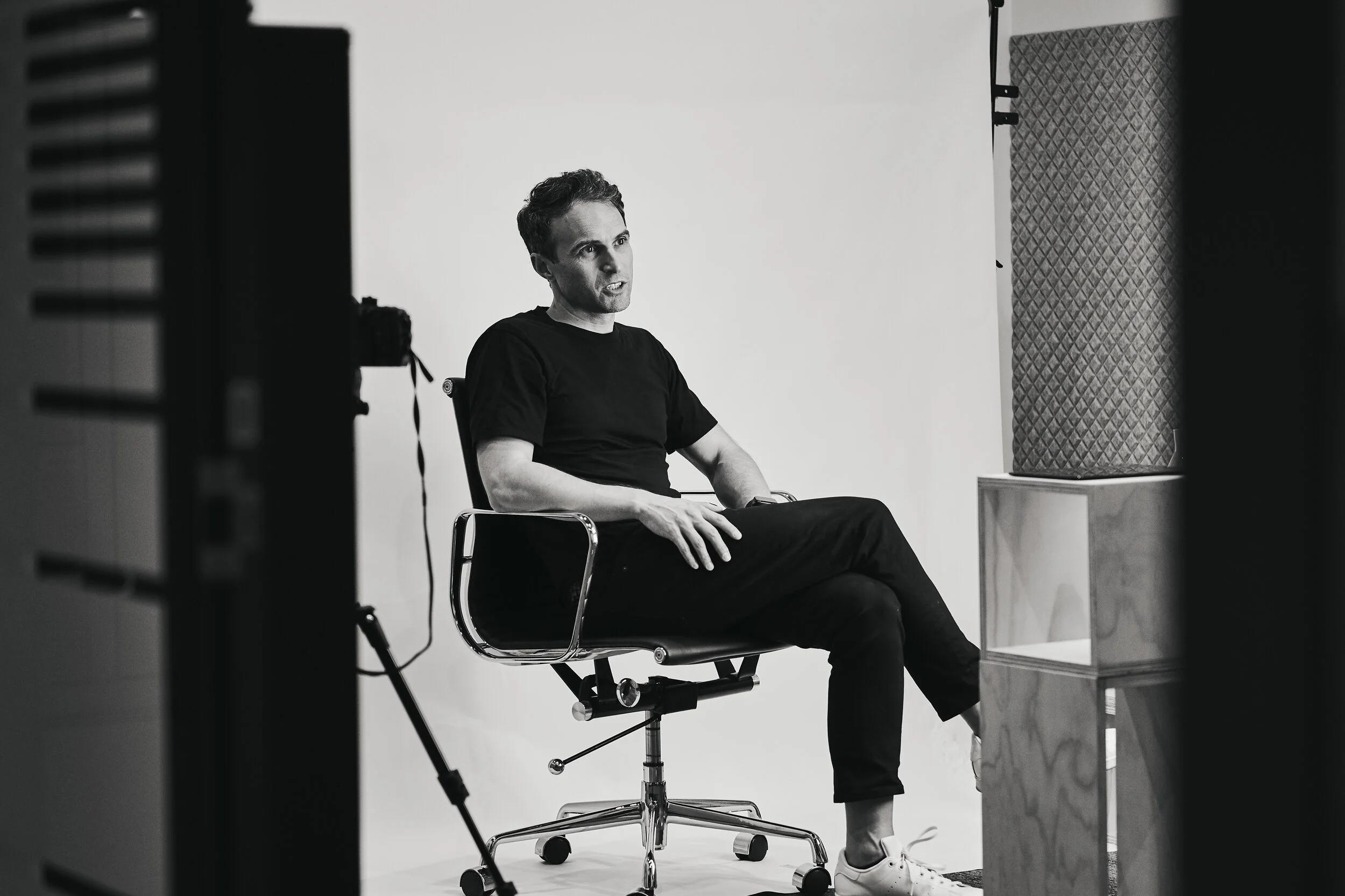
Joel Pearson
Researcher
11
APPEARANCES
9
PODCASTS
Sep 6, 2026

SoniaHOST
Wow!

Joel PearsonGUEST
And the more change you have, say, in a month period, the more sort of cumulative impact it has.
Joel PearsonGUEST
Even really good change, like winning millions in the lottery, can be hugely disruptive.
SimonHOST
Mm


Joel PearsonGUEST
Uh, and the way I sort of view change is from the sort of, it sounds very corporate, but change management point of view.
Joel PearsonGUEST
So from decades and decades of research with companies, you know, when they go, go through a simple change, maybe the, you know, think of Netflix.
47 MINS LATER

speaker_2NARRATOR
Hmm,
11 MINS LATER
speaker_3AUDIENCE
But anyway.

Tegan TaylorHOST
Joel, do we have an idea in the workplace what areas are most likely to be affected in the short term?
Joel PearsonGUEST
Anything that's digitized and is doing things, that's obviously where things are being affected initially.
Joel PearsonGUEST
It's more that another person is enabled to do so much more in any one day, but then take on extra skills and just do extra things.
14 MINS LATER
speaker_4AUDIENCE
And then if you've got millions of artists and poets around the world, as we found out on the internet, where there's a lot of crowding in terms of creativity, how many podcasts can you actually create or listen to? What is the fulfilling part of life, the real purpose in that context? Assuming, of course, that we don't have an artificial super intelligence that decides to snub us out in the first place, but that's another issue.


Joel PearsonGUEST
I had Future Minds Lab, which was originally something called the Science of Innovation Lab.
Joel PearsonGUEST
And it was an endeavor with me and the University of New South Wales here to understand and apply cognitive neuroscience, neuroscience and psychology to outside the university walls, to startups, to large corporations, both testing products and services they're doing, but also making education content and things for them.
Joel PearsonGUEST
I felt strongly that psychology and neuroscience more or less has been a bit of a failure when it comes to really applied things outside of clinical work and treating disease.
17 MINS LATER

speaker_1HOST
And could you tell us a little bit about yourself and what a neurofuturologist is?
Joel PearsonGUEST
And then the mysteries, if you like, of consciousness pulled me away from that sort of career in filmmaking.
53 MINS LATER
speaker_1HOST
Yeah, in the humans.

34 MINS LATER


Joel PearsonGUEST
And because I have this weird thing where I both, I love stimulation, I love nicotine and caffeine, I love things that stimulate.
Joel PearsonGUEST
So I'll tend to lean into those things too often sometimes, and then I'll go too far and it'll sort of push me over the edge into this sort of stressed anxiety state.
Joel PearsonGUEST
And so that's, I don't like that, but at the same time, I kind of like it just sort of a nudge or two before that critical level.
Joel PearsonGUEST
on a chalkboard or something in front of an audience because I may misspell something, right? But now, because I dictate or I type, I don't have to even think about spelling because it's all taken care of.
Joel PearsonGUEST
So is it something like that, which feels like it's not really gonna affect us long-term? People have said that, no, the ability to write is critical for the way we think.
Joel PearsonGUEST
So if we all, over time, sort of just outsource our writing, we're still going to have to talk to each other until we have neural implants that will do it directly or whatever.
Joel PearsonGUEST
It may well have some kind of noticeable en masse change in our thinking style.
Joel PearsonGUEST
Now, I don't want to say it seems like that would be a negative, but you never know.
8 MINS LATER
speaker_10VOICE_ACTOR
Mm-hmm.

Joel PearsonGUEST
We've actually developed three different methods over the years, and the first one that sort of, you know, that was pivotal in my personal journey getting to study mental imagery was using a visual illusion called binocular rivalry, which, as it sounds, is rivalry between the images going into each eye.
Joel PearsonGUEST
So if I put up a hand in front of one eye, my brain, my one eye, my right eye will see my hand, my other eye will see you on the computer screen, and that puts my visual system into this state of conflict, hence rivalry.
Joel PearsonGUEST
And when you sort of balance those images out, you get these beautiful vacillations and oscillations of consciousness between whatever's going to one eye versus the other.
Joel PearsonGUEST
And so we s- use that visual illusion, binocular rivalry, to study consciousness in its own right.
Joel PearsonGUEST
But I discovered many years ago that you could actually use the illusion as a way to measure mental imagery.
Kim MillsHOST
expensive.But speaking of brains and fMRIs, what do we know about what's happening in the brains of people who have aphantasia? Do we have information from these, uh, brain studies?

Mannee NguyenHOST
But visualizing is still related to how you see.
Joel PearsonGUEST
When you look around the room now and you're seeing, you know, or you're driving a car or whatever you're doing, you're seeing things, a lot of information's hitting your eyes, your retina.
Joel PearsonGUEST
It's shooting back to your visual cortex, and so that's going upwards, if you like, from your eyes up into your brain.
Mannee NguyenHOST
Like there's one where you can observe people's eyes and tell them to imagine looking at something really bright, like the sun.
Joel PearsonGUEST
So the pupil, right, in your eye, when you look at a bright light, it contracts.