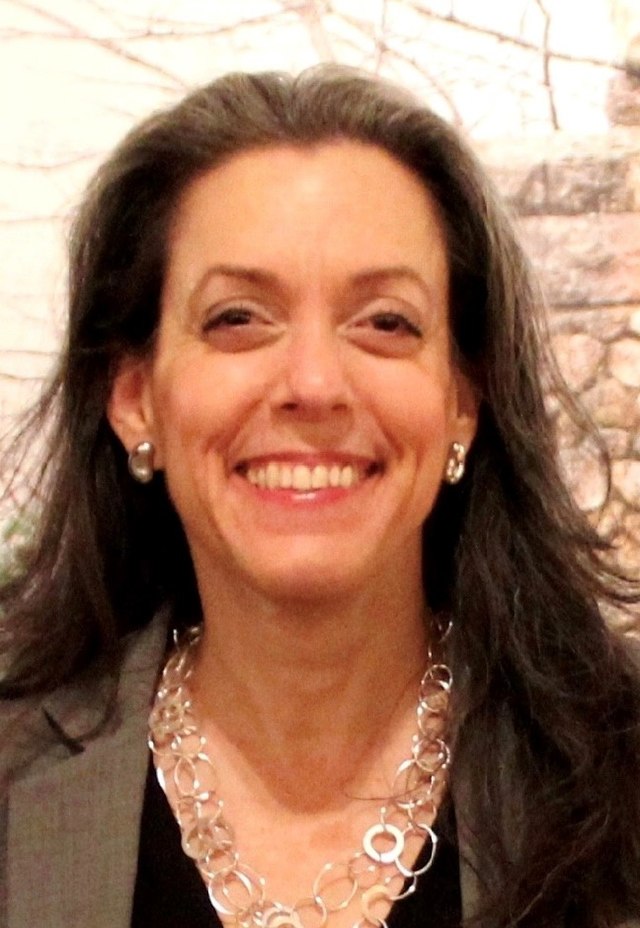
Joanne B. Freeman
American professor
10
APPEARANCES
6
PODCASTS
Nov 5, 2026


Preet BhararaHOST
So why don't we be, Joanne, historian, why don't you put what happened yesterday and overnight into historical perspective? How big a deal is this? Is it comparable to any other change election? Would you call it a change election? A lot of compound questions there, but as the resident historian, what the hell's going on here?

Joanne FreemanGUEST
On the things that echo throughout history level, midterm elections, which we normally, we don't pay so much attention normally to midterm elections, Often in the past, when there has been a little political creativity, it's been the midterm elections where that happens because the presidency isn't involved.
Joanne FreemanGUEST
So like the radical Republicans after the Civil War, they rise up in a midterm election and then they take over with Reconstruction.
Joanne FreemanGUEST
So midterm elections tend to be Actually, the Tea Party, too, comes up in a midterm election.
46 MINS LATER

Preet BhararaHOST
So why don't we be, Joanne, historian, why don't you put what happened yesterday and overnight into historical perspective? How big a deal is this? Is it comparable to any other change election? Would you call it a change election? A lot of compound questions there, but as a resident historian, what the hell's going on here?
Joanne FreemanGUEST
On the things that echo throughout history level, midterm elections, which we normally, we don't pay so much attention normally to midterm elections, Often in the past, when there has been a little political creativity, it's been the midterm elections where that happens because the presidency isn't involved.
Joanne FreemanGUEST
So like the radical Republicans after the Civil War, they rise up in a midterm election and then they take over with Reconstruction.
Joanne FreemanGUEST
So midterm elections tend to be Actually, the Tea Party, too, comes up in a midterm election.
47 MINS LATER

speaker_4ADVERTISER
It's the best of bank worlds.
Joanne FreemanGUEST
So for example, Washington, during his inauguration, again, struggling for a cultural compromise, he wore a suit of plain brown broadcloth, American-made cloth, very deliberately.
Joanne FreemanGUEST
symbolizing his support of American manufacturers to show he was an American leader.
Joanne FreemanGUEST
He's not dressed in monarchical splendor, but he also had these bright gold gilt buttons on that suit with some kind of emblem that represented the presidency.
8 MINS LATER
speaker_5ADVERTISER
day,
Preet BhararaHOST
Which of those do you pick? And if it's all of them, explain what those mean when people use them.
Joanne FreemanGUEST
Well, for sure it was seen as an experiment 'cause the rest of the world was monarchies, and these crazy people in the new United States, "We're gonna do something different.
Joanne FreemanGUEST
Will it work? We don't know." This is part of what I love in studying the time period, is they all the time are trying to decide if it's gonna work and are anxious, and they think one stupid mistake is gonna take it all down, and it's the improv of it that I find really fascinating.
28 MINS LATER


Ali VelshiHOST
This is not an administration that i-i-it seems sincere about the, the, the op- op- its opposition to political violence.
Joanne FreemanGUEST
And, and again, if that is the message that's being sent, and it has been sent since that point, and particularly recently, when people are being, you know, ma- held off, made free, the convictions overturned for what they have done, then yeah, the message is that you won't be held accountable for that kind of crime.
Joanne FreemanGUEST
Looking over the long haul of history, political violence tends to increase when there are people who feel that they are absolutely entitled to something, and the system won't deliver it to them.
Ali VelshiHOST
Donald Trump has inflamed this country against lots and lots and lots and lots of groups who are endangered by his language.
Joanne FreemanGUEST
How could they do that?" And these are the same people who are armed with knives and guns and prepared to pull them on each other in the House and the Senate.
Joanne FreemanGUEST
Americans, and, uh, for most of the modern age, have just been more confrontational.
Joanne FreemanGUEST
It, it was relatively genteel, and it hasn't shed that in the s- the recent past.
10 MINS LATER


Joanne FreemanGUEST
Um, the ideas that they put out into the world were ideas that they had an understanding of, meaning they were s- in a world in which they were thinking of white men with a certain amount of property as being the people that they were largely talking to.
Joanne FreemanGUEST
But that the ideas that they gave birth to in the Declaration of Independence, in the Constitution, were ideas that were broad enough, you know? Uh, h- the human condition, right? They're- they're th- they're broad ideas that later generations, all kinds of marginalized peoples could point to those documents, and talk about those ideals, and own those ideals, and, as Allen was just suggesting, use them to say, "Well, you know, I'm an American, too.
Joanne FreemanGUEST
I understand these documents." So, it isn't as though whatever the founding generation of people thought about the boundaries of who has certain kinds of rights-


Jeffrey RosenHOST
Wh- h- how do you think of the basic thesis? How do your students respond to it? And, and what are some complicating factors?
Joanne FreemanGUEST
Well, i- indeed, uh, this semester, um, as a matter of fact, I'll go back, and on Wednesday, go right back into the class.
Joanne FreemanGUEST
Uh, it's an undergraduate seminar, and it's taught almost entirely with the writings of Hamilton and Jefferson, divided up thematically.
Joanne FreemanGUEST
You're absolutely right about the, the sort of major themes and major ways in which the two men clash and disagreed.
17 MINS LATER

Frank BruniGUEST
The thing that I keep thinking about, and, and to me the, the big question of the next year, uh, revolves around a word that came up earlier. Someone talked about accountability, right? And I worry that because of our poisoned and fractured information environment, that we're actually living, or possibly gonna be living, in a post-accountability age. So, people always say, "Listen, Trump can give 100 minutes of remarks like that, they can be successful, um, by the ter- by whatever terms he's defining that, he and his people. But when all is said and done, either grocery prices will go down or not. When all is said and done, people will either feel more affluent or less affluent, um, and that will determine his fate." Um, and I don't know if that's true anymore, because he's not just a bullshitter extraordinaire. He's a bullshitter extraordinaire in an era, um, when people are only consuming certain kinds of information, um, where they are bec- they're rendered by the, by the kind of technoscape, they're rendered more gullible than everfo- ever before. They're rendering themselves more gullible. And so, if nothing improves, nothing that he said he would improve, if things are really bad, will people say, "Okay, he didn't do what he was supposed to do and we have to change horses"? Or will they listen to him and believe him, his bullshit, when he says, "This has nothing to do with me. These are the people who stood in my way. These are the scapegoats. This is where your reality is not exactly what you think you're experiencing," and on and on? And I just wonder if there's that element of post-accountability in our politics now.
Joanne FreemanGUEST
And post-accountability meaning non-reality, right? How do you pinpoint the reality? And if you can't pinpoint the reality, how are you holding someone accountable? And I, I've been thinking about and talking about accountability for years at this point, because if you're talking about the, uh, pillars of any kind of democratic governance, you're talking about free and fair elections, the rule of law, and the accountability of people who get power. All of which are under attack right now. But after Jan- the original January 6th, when there basically, for people with power, was no accountability for what happened on January 6th, that, to me, felt like a sort of death of accountability moment. If that could happen, if, if there could be an attack on the Capitol and an attempt to overturn an election, and people with power are essentially not held accountable, really, for what happened, and to the point that now (laughs) they're elected president again, that feels like some certain ex- expectation of accountability. And I totally agree with you, Frank, in the mix, the media mix that we live amongst now, that's beyond a serious problem. That's, that's where we are.
7 MINS LATER
Joanne FreemanGUEST
Because if that's where he's getting his quote unquote guidance from, and Musk is like, "Well, you know, there's gonna be some bumps in the road. People are gonna do some suffering," that's in his head, right? So that's reality. And he's gonna echo that. You're right. It would be typical for him not to. But if he really believes that it's (laughs) gonna be really, really, really bad, and I wouldn't say he cares, but if he knows that, then that a- acknowledging a bump is hardly going very far in Trump land to, you know. And he didn't. He, you know, he of course wouldn't. There, there's no reason why he would have touched on the things that actually we've been seeing people respond to. I want... This is what I wanted to say a moment ago is that, um, as far as the, the cult people versus the broader electorate, we're seeing now at town halls people standing up. They're upset about people losing their jobs. They're upset about veterans, uh, benefits being cut away. They're upset... And supposedly now Republicans are being urged not to have town hall meetings because they're spectacles of people standing up and having issues. And the Republicans have announced, "Oh, they're paid protestors," right? People aren't upset with us. We're seeing at least the beginning of people getting upset at precisely the sort of thing we're talking about here, which is-