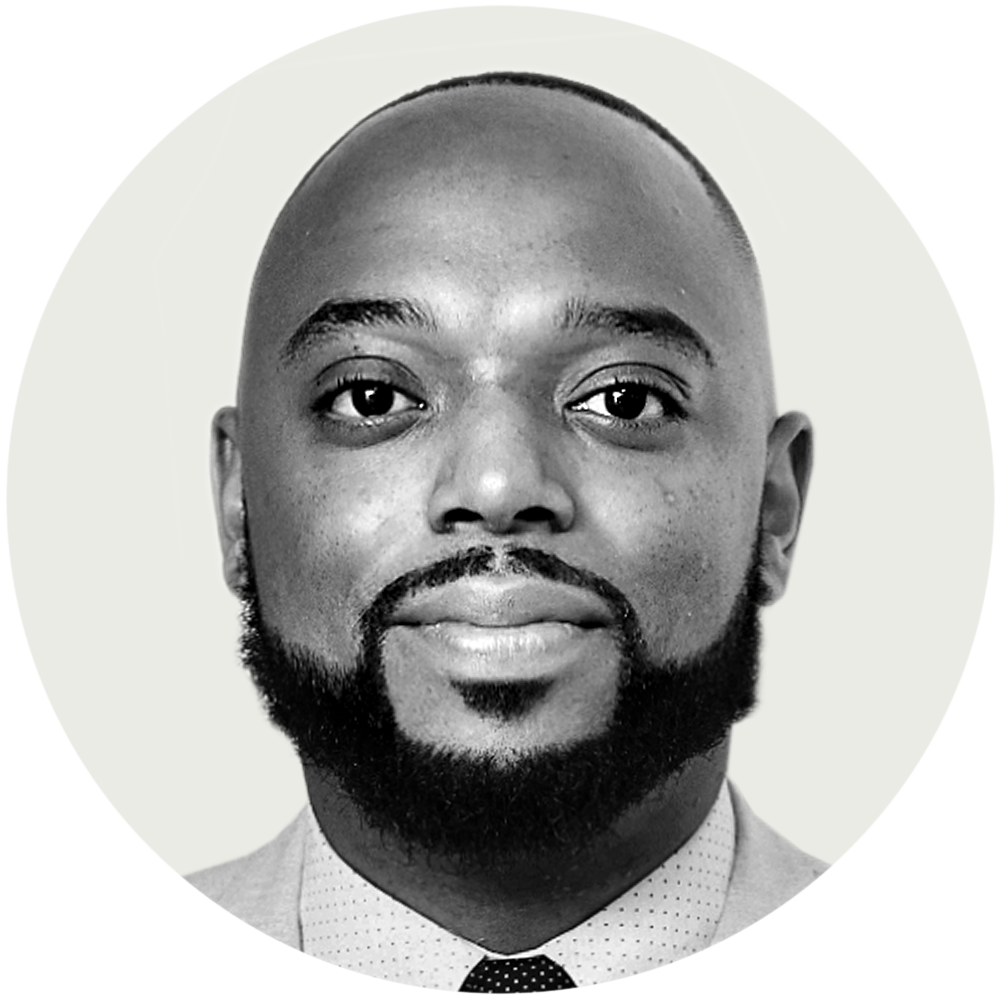
Astead Herndon
American journalist
30
APPEARANCES
22
PODCASTS
Nov 4, 2026

speaker_7SOUNDBITE_SPEAKER
This is what it is not for.

Astead HerndonGUEST
And I think that really speaks to some of the issues that were really making up this sort of populist backlash.
Astead HerndonGUEST
And I think that those things really drove Democrats to really have a bottom versus top election in the ways that they wanted rather than right versus left.
Astead HerndonGUEST
But I think that, like, although there are a lot of encouraging signs for Democrats, that certainly does not mean they're about to cakewalk to the White House in 2028.
Astead HerndonGUEST
But at the same time, I think there's a lot of seeds of a message that will get them closer, I think, to a more big tent party unifying theme that they were not maybe three, four months ago.


Astead HerndonGUEST
There's been a kind of media narrative about El-Sayed's struggles with Black voters, but we haven't really seen that play out in the data.
Astead HerndonGUEST
And I think as recently as the New York Times-Siena poll this week, you had no signs of attrition from the Democratic coalition.
Astead HerndonGUEST
And I think from the reporting I've seen there, I understand the blowback because this is a pretty nakedly political, in my opinion.

Astead HerndonGUEST
It's, like, so funny because, like, since we live so much in, like, the electorate and kind of seeing the values that will outlast Trump, I'm sort of sometimes late to his latest craziness.
Astead HerndonGUEST
And so when this stuff was popping off, I was just like confused more than anything.
Astead HerndonGUEST
But what I would say is like, I do think you're seeing a figure that is increasingly lost it.
Astead HerndonGUEST
And I think for people who have always thought Donald Trump had no credibility, they're wondering why this moment would feel unique.
Astead HerndonGUEST
It's like he has, I think, really abandoned, you know, Obama set this line yesterday.
9 MINS LATER

Astead HerndonGUEST
And I think that they align with, it's important to me that they align with the reporting we felt throughout the year.
Astead HerndonGUEST
And they've isolated trends that we're seeing backed up, even if you look across them.
Astead HerndonGUEST
And so the biggest one would be Trump's collapse with independents, Trump's collapse with Latino voters, young people receding.
Astead HerndonGUEST
So I think that part is trustworthy, right? But polls, and particularly I think individual state race polls can get wrong, is, you know, in presidential races, it is harder to capture your more marginal, like, you know, we sometimes talk about white working class or whatever.
8 MINS LATER

Carlo VersanoHOST
Do you see the point I'm trying to make? Like, why? Why do you think that is that they're having a better is it just the candidate quality is better in some of the red states?


Astead HerndonGUEST
I had a family who was always really into newspapers and had a grandfather who would read the newspaper every day.
Astead HerndonGUEST
And he used to always say, like, this is where they put the things that they don't want Black people to know.
30 MINS LATER


Astead HerndonGUEST
I mean, Trump, you saw the disconnect even in the lead up to that presidential race.
Astead HerndonGUEST
Like, people agreed with his diagnosis of dissatisfaction with the status quo, but they didn't agree with his solutions, right? Like, we were at those rallies hearing people saying, you know, they may have thought that there was some progressive overreach and kind of not focusing on tangible priorities, but I don't think they signed up for Project 2025.
Astead HerndonGUEST
And when we were hearing when you were talking to people about that prospect at the time, they were really disconnecting it.
Astead HerndonGUEST
He was benefiting from a Democratic Party that I don't think put up a competing vision in the same type of way.
Astead HerndonGUEST
But I also think he was benefiting from kind of a rosy view of his first term.
Charlene ChangHOST
When you look back at that time, 21, 22, what do you think Democrats got wrong about governing when they had that power strategically? Politically, and what is a takeaway from that? And what is something they can't afford to do again if voters give them all that power again? Well, they won't have the White House, but House and Senate.

Astead HerndonGUEST
Yeah, I mean, it somewhat has been from seeing it develop, I feel like somewhat from a front row view.
Astead HerndonGUEST
I mean, after the 2024 election, a lot of folks, even in my kind of mainstream media world, were going to Piker as a voice for why Jim's loss, as a helpful explanation of how Jim's lost the Internet.
Astead HerndonGUEST
And I think specifically someone with credibility around calling the party to task about things like abandoning Palestinians.
Astead HerndonGUEST
What changed then, I think, what I tried to track in that piece was, frankly, you know, some folks got rubbed the wrong way, not necessarily by the, I think, by more than kind of what they're giving on.
6 MINS LATER

Sam SederHOST
This is really about, it seems to me, the first six months of the 2028 primary more than anything else.


Astead HerndonGUEST
like, that's why it's like, you're like, what can this world be? I'm like, the world of boys.

speaker_11SOUNDBITE_SPEAKER
For example, nearly 58% of you support the Black Lives Matter movement, but when you look at whether defund the police gets any traction, it's a resounding no.
Astead HerndonGUEST
Right? Like, that was much more of a certain class of Democratic activists and elected officials who reflected their language than it was reflected across the Democratic base at large.
Astead HerndonGUEST
So there's always been a misalignment between what voters feel are priorities of social justice, of, uh, criminal justice reform, of ideals they still care about, like diversity, equity, and inclusion, and how those things were being, uh, talked about, I think particularly in elite liberal circles.
Astead HerndonGUEST
So that gap is still informing for when we think about what has changed since.
Astead HerndonGUEST
But, uh, to actually answer the question, sure, s- a lot of things have changed in that time.
Astead HerndonGUEST
Really I think, um, you know, Democrats were so focused on issues like representation, and I think there was an argument that was kind of coming from the Obama era that Trump's biggest sin wasn't just, you know, his kind of willingness to blow up norms and all those things, was that the right people weren't in the room.


Astead HerndonGUEST
The anxiety, uh, particularly around potential job loss, has been driven by uncertainty that folks don't know what's coming.
Astead HerndonGUEST
But more importantly, they feel the absence of proactive legislation, the absence of elected officials who are talking about this issue too.
Astead HerndonGUEST
And so I think that it's something where I mentioned kind of the process has felt like it's left behind, but it's also one where I feel like the gerontocracy, our, our, our older members [laughs] of government, becomes that, that, that gap between them and the electorate becomes really stark because people feel as if, uh, their elected officials don't have a real handle on where the work economy is going, and therefore cannot kind of legislate with them in mind.


Brian LehrerHOST
So my question to you is, did you do any on the ground reporting or see any indicating a gender divide among Democrats in Maine about Plattner before this week?
Astead HerndonGUEST
Yeah, I mean, we had looked at focus groups in Maine, and so we had seen some of that gender divide come out.
Astead HerndonGUEST
For a lot of people, it did not take this latest report to kind of see the character indictment of Plattner.
Astead HerndonGUEST
Clearly, there were the deleted Reddit posts that have kind of explicitly misogynistic comments.
Astead HerndonGUEST
There was obviously the tattoo that you mentioned, and the clear kind of timeline mismatch there.
9 MINS LATER

Brian LehrerHOST
So my question to you is, did you, uh, do any on the ground reporting or see any indicating a gender divide among Democrats in Maine about Platner before this week?
Astead HerndonGUEST
Yeah, I mean, we had looked at focus groups in Maine, and so we had seen some of that gender divide come out, but I think what you're saying is important.
Astead HerndonGUEST
For a lot of people, uh, it did not take this latest report to kind of see the character indictment of Platner.
Astead HerndonGUEST
Clearly, there were the deleted Reddit posts that have kind of explicitly, uh, misogynistic comments.
Astead HerndonGUEST
There was obviously the tattoo that you mentioned, and the clear kind of timeline mismatch there.
Astead HerndonGUEST
The candidate, to me, kind of clearly, uh, uh, knew about this before, and we kind of had reporting and evidence that he did, but was not kind of saying so, was very evasive about that question.
Astead HerndonGUEST
And then obviously, there was this con- there, there was The New York Times report recently that had, I think, a group of people, uh, vocally expressing their displeasure with the Platner candidacy.
11 MINS LATER
Brian LehrerHOST
Do you think that indicates simply that this is a unique issue, or also that after his successful primary endorsements in New York and now these other socialist or populist wins around the country after his for mayor, that he's decided to start stepping out more into, um, you know, trying to establish a national leadership role?
Astead HerndonGUEST
question?Yeah, I mean, I definitely think you're right that, um, this is a follow-up to what we saw in 2025, and I think at that time, um, we were wrapped up in a lot of personalities.
Astead HerndonGUEST
It was, it was Cuomo, uniquely bad politician, and Mamdani, uniquely good politician.
Astead HerndonGUEST
But that obviously, um, I think papered over some real coalition shifts we saw in that race.
Astead HerndonGUEST
Um, when I was doing that profile of Mamdani last summer, the big thing that was happening, at that time, people thought Cuomo was a, you know, was a legit chance, uh, even to run as an independent, as an outsider.
Astead HerndonGUEST
And what Mamdani did there was really, um, consolidate support among more traditional Democratic bases beyond the DSA millennial left, right? Like, he improved, uh, among that kind of working class homeowner base, um, Hispanic voters, particularly in NY7, places like that, and kind of Black or, Black voters up, uh, upper Manhattan, Harlem, the Bronx.
Astead HerndonGUEST
And that's a big reason why he gets that kind of, uh, margin in November, and that's a big reason of why there's opportunity here for DSA now.


Astead HerndonGUEST
Um, I like empowering voices to get kind of the thoughts behind, um, why folks have arrived at their individual political decision.
Astead HerndonGUEST
I mean, a lot of it for me is based off of feeling that polling has some blind spots that, you know, we can understand the kind of big swath or big trends, but the why and how people got to that point, or the kind of, um, nuances between issues, I much f- I, I, I find people to be better explainers of that, or at least people in the aggregate.
Astead HerndonGUEST
And so one of the things that we did in the Run Up specifically was, like, we were trying to not go to campaign events.
17 MINS LATER

Astead HerndonGUEST
I'm like, you know, whether it's, like, the kind of open grift and corruption or, or pay to play-ness of it all, whether it's the change in federal workforce and DOGE and all that stuff, um, whether it's the growth of executive power and the way that, like, I think some of those things were intentionally written so they can have a fight, uh, in, in, have a fight in court to expand the president's role and actually make Congress more minimal, right? Like, and so I think all of those kind of structural power questions are ones that Donald Trump has uniquely, um, introduced because of his, uh, you know, I would say, like, authoritarian-y tendencies or his, his unwillingness to, I think, think about democracy in its three branches form.
Astead HerndonGUEST
I don't think the Democrats have offered a counterweight that recognizes that democracy in its current form is not serving even the mo- their own voters.
Astead HerndonGUEST
And so-That's what I think is, is, is we're leading to is, okay, what is the way...

Jessica TarlovHOST
My last question was going to be, you know, from your work on America Actually and just all of your reporting, what do you think is the most under-covered story right now in American politics? And it might be this, you know, that we actually need a vision for 2028.


Kara SwisherHOST
But talk about what that does because, uh, uh, as you said, Mikie Sherrill or Abby Spanberger or, you know, Talarico couldn't be more different from each other and from him, right?
Astead HerndonGUEST
Yeah, I mean, I think they're coming to things, though, with a desire for political creativity.
Astead HerndonGUEST
I think they're not seeing the system as is, and I think you have to pitch from the premise of that sort of change.
Astead HerndonGUEST
And what I would also say, though, is, like, it feels like Democratic base has recognized that the normal shell game of kind of electability is not something they're inherently deferential to.
Astead HerndonGUEST
So I don't think you can just say, you know, as they're finding out in Maine, as they may find out in Michigan, that this person's supposed to win or this person win, and, and the electorate just follows.
Astead HerndonGUEST
You know, a lot of people feel like they have been told the right thing to do for too long, and that walked them into a Donald Trump, you know? And so that kind of, that kind of a thumb on scale, particularly from the DSCCs of the world, is not what's working.
Kara SwisherHOST
Talk about looking past the midterms, how you assess the medium and long-term prospects for Democrats.
speaker_4PANELIST
Um, for people that may not be familiar, just talk about what you reported on in twenty twenty-four, and maybe you can toot your own horn about what you saw coming and what others didn't.
Astead HerndonGUEST
Yeah, I mean, our, our, our goal in '24 was really to ask, like, how did we lead to, uh, this kind of double haters election? Like, a, a kind of party and establishment that had nominated candidates that the clearest sign in polling, the clearest sign in our kind of anecdotal work was that folks didn't want it.
Astead HerndonGUEST
And so in doing a lot of that, we were seeing the places that I think, um, Democrats were talking over and now so- kind of know of that stuff.
Astead HerndonGUEST
When we were checking in with voters, particularly in twenty twenty-two, twenty twenty-three, there was legitimate anger about an inflation crisis folks felt were, was unseen.
Astead HerndonGUEST
There was, um, anger about, uh, southern border for folks felt were, uh, was overrun.
Astead HerndonGUEST
We would feel things about, um, Biden, the kind of, uh, uncertainty or kind of shock that he was thinking about re-election, even though there was a kind of certainty in my, like, kind of DC and CNN life.

Sam SederHOST
And B, then let's talk about more the substance of, of, of immigration in and of itself.


Stacey AbramsHOST
And as someone who has reported on white evangelical voters, someone who knows how black evangelicals think about politics, how do you see this sort of authoritarian God complex changing? affecting the Republican standing with that demographic? And then how do you see other voters who cite faith as a reason to vote? How are they responding and aligning themselves in this moment?
Astead HerndonGUEST
Um, and I remember being, you know, the way that they would contort themselves to make ex kind of excuses for Donald Trump's open, uh, disdain for religion.
Astead HerndonGUEST
I mean, I would say open, like, uh, just total ignorance, right? Like if you look through the, if you look through the principles of what evangelicals said they wanted from the Republican party or from their leader, Donald Trump's flagrantly violated most of those.
6 MINS LATER
Stacey AbramsHOST
And you said, is this the first Democratic primary where the Black vote won't be determinative? So what are the dynamics that led you to pose that question? And just in light of what you said about race and identity and faith and realignment, what If not the Black vote, what will be determinative? Yeah, I mean, I think


Preet BhararaHOST
This is a terrible parallel, perhaps, but that speech he gave at the Ellipse on January 6th, you know, he says all these things that are inciting, but then he also can say, in say, in, in papers later, he did, in a little footnote, in a lower voice, he did say, "Be peaceful, be peaceful."
Astead HerndonGUEST
Well, I would-- you know, you kind of said at the beginning, like, you know, uh, h- the economy was the biggest reason he won.
Astead HerndonGUEST
I think in important ways, you know, he has been quite successful at what he would call closing southern border, or at least like, you know, like having less unauthorized crossings.
7 MINS LATER


speaker_8SOUNDBITE_SPEAKER
Like why that response?
Astead HerndonGUEST
I mean, you would think, right, that they would, if public sentiment was shifting, you would see a White House calibrating itself to that.
Astead HerndonGUEST
But, you know, this is Donald Trump who, one, believes in this kind of like double down forever philosophy.
Astead HerndonGUEST
But most importantly, this is a political system where public sentiment has kind of been shut out from its impact.
Astead HerndonGUEST
So I think the biggest reason that you see a White House that is doubling and tripling down is that they really don't have any congressional pushback on that front.
speaker_8SOUNDBITE_SPEAKER
these law enforcement operations.


Sarah LongwellHOST
So tell me what you learned about Mamdani in your reporting, and did anything about the meeting, then, surprise you?
Astead HerndonGUEST
you?No, I think he's actually moved authentically to what he kind of signaled, particularly in the time I was doing that reporting.
Astead HerndonGUEST
That was after the primary and the early stages of the general election, and I thought it was a really critical time to see what was the post-primary version of Zora.
Astead HerndonGUEST
You know, like, was he going to open up to critics? Was he gonna be all about the base? How did he kind of evolve from campaigning to thinking about governing more clearly? And I think that, you know, in the time I was spending around him and folks close to him, it was really clear to me that, like, (laughs) and this sounds so basic, but, like, this is a good man to be mayor of New York City.
Astead HerndonGUEST
Also, I think, um, because of his politics comes from a more ideologically rigid place, you can kind of think that he would bring that to the role of mayor.
10 MINS LATER


Astead HerndonGUEST
No, I think that's a huge, a huge lesson of mine was like, it, it does require a kind of moment where you have to be willing, like, you have to be willing to step back and say, "Wait, wait, you know, have we asked them? Have we asked around?" And so one of the things that was super clear about it to me, and part of the reason, you know, I think age became a focus in Biden, is just because it was the most flagrant example of a thing that they, happens all the time.
Astead HerndonGUEST
And so, you know, well, one of the things I remember even in that episode is that sense of like, oh, you don't get it because, because this is how it, this is how it's done.
Astead HerndonGUEST
And I'm like, "No, no, no, no, no, I do get it, and I know this is how it's done, and I actually think no one's actually asked..."...
17 MINS LATER


Astead HerndonGUEST
I mean, this civil war as not just ideological, it's not just populist versus centrist, uh, or progressive versus liberal or even young, old.
Astead HerndonGUEST
I think there is a sense among Democratic electorate that th- the leadership sold them out, and that happened in a lot of different ways.
23 MINS LATER
Noelle KingHOST
What questions still remain unanswered for both Republicans and Democrats going forward after last night?
Astead HerndonGUEST
I think that Republicans have the same problem that we knew they had in the Biden era that they have not solved since Donald Trump showed up on the scene, which is that in elections where he is not on the ballot, they have not been able to put it together.
Astead HerndonGUEST
So they underperformed in the 2022 midterms, they lost seats in that 2018 midterms, and without the kind of uniqueness of the Donald Trump, uh, only voter, their coalition is very beatable for Democrats.
Astead HerndonGUEST
I think the hope here is that it shows how this big tent party, a version of the party that includes both Mamdani, Sherrill, and Spanberger, has an opportunity to really claw back some of the losses that they've seen over the last several years.
Astead HerndonGUEST
The peril is that the path to success in the midterms is not the same as the path to success in the presidential race.
Noelle KingHOST
Mm-hmm.
Astead HerndonGUEST
I'm someone who thinks we're a little too prescriptive about separating kitchen-table issues and not.
Astead HerndonGUEST
And you can make an argument that Donald Trump m- brought trans women in sports as an issue to the kitchen table in the last election.
Astead HerndonGUEST
And so I don't think that you can just separate those things and say, um, that's some type of firm distinction.
Astead HerndonGUEST
At the same time, I do think there's a fair point to say that Democrats have become more disconnected from working-class stuff.
Astead HerndonGUEST
Now, I don't think that manifests in the same ways that we often talk about.
9 MINS LATER
Scroll for more appearances