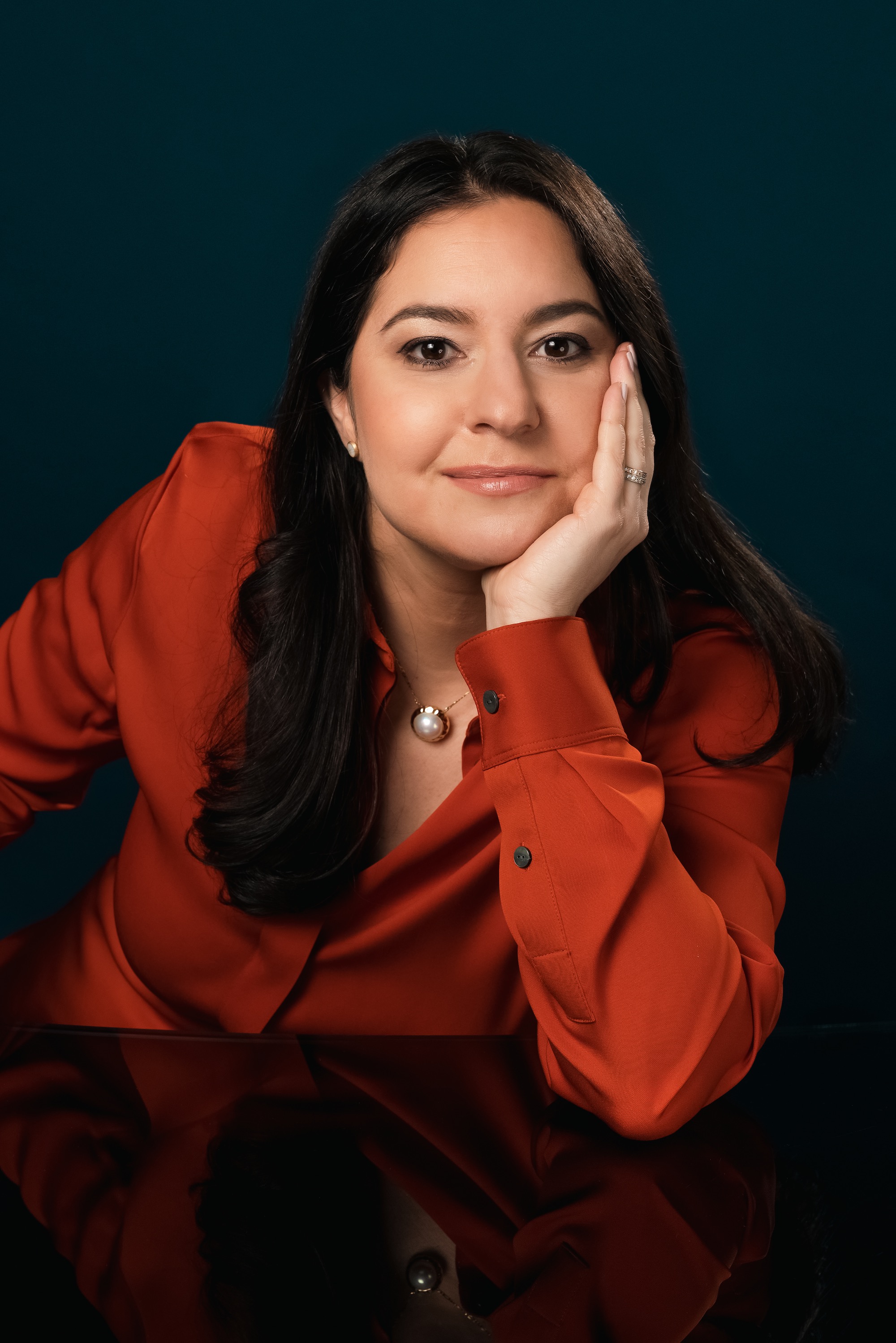
Joanna Stern
American journalist
84
APPEARANCES
56
PODCASTS
Nov 1, 2026

Jim LouderbackMODERATOR
And they didn't know, did they?
12 MINS LATER
Jim LouderbackMODERATOR
How do you maintain that trust?


Joanna SternGUEST
And I think that's where I was a little bit – I could almost feel some of that momentum going into the review process.
Joanna SternGUEST
Like you probably, I got a lot of emails from indie developers about – There are so many.
Joanna SternGUEST
And I just did a piece on that today, just like all these fun things you can turn your Duo into.
12 MINS LATER

Joanna SternGUEST
know, at first I thought that was kind of like going through some psychological thing.
Joanna SternGUEST
But I have not seen any significant change to this phone's hinge and how it works.
Joanna SternGUEST
Now, in terms of the crease, there's a lot of debate online as the crease gotten worse.
Joanna SternGUEST
Again, I don't feel like I've scientifically can say, yes, this crease has gotten more pronounced or worse since, you know, the first couple of days of testing because I had already been folding it a lot.
10 MINS LATER
12:25
Does it seem to you like, you know, this is shaping up to be social media's big tobacco moment?

Joanna SternGUEST
At first, I thought that was kind of like going through some psychological thing.
Joanna SternGUEST
But I have not seen any significant change to this phone's hinge and how it works.
Joanna SternGUEST
Has the crease gotten worse? Again, I don't feel like I've scientifically can say, yes, this crease has gotten more pronounced or worse since, you know, the first couple of days of testing because I had already been folding it a lot.
10 MINS LATER
12:27
Does it seem to you like, you know, this is shaping up to be social media's big tobacco moment?

speaker_4ADVERTISER
Mm-hmm.
Joanna SternGUEST
Now, yes, OpenAI has had some of that in ChatGPT, Claude too, but it's really technical.
Joanna SternGUEST
It can be... shopping apps, it can be email, it can be calendar, it can be your credit card.
6:20

And then, you know, the competition factor and the money factor is not taken into account as much.


Tom LlamasHOST
What was your reaction to the foldable iPhone? And I understand you've had a chance to try it out.
Joanna SternGUEST
Look, we were not surprised that there was a foldable iPhone, but I will say I was surprised at actually how much I liked it.
Joanna SternGUEST
I kind of thought this is gonna be very similar to the other Android foldable phones I've tested for many years.
Joanna SternGUEST
But Apple did a couple of things that are very different, one of them being the internal screen.
Joanna SternGUEST
So when you use these phones, because they fold, right, you've got a fo- a, a smartphone on one side, and then you open it and it unfolds into a tablet, right? Looks, uh, very similar in size to a passport, which means that inside there's a crease, that that screen in the middle has a crease.


Nilay PatelHOST
I Really wanted you to talk about Apple and we should talk about Apple We should preview the event next week We should talk about John Ternus first forty eight hours as CEO But Joanna you were just saying you were also on this open AI call Where they just casually announced AGI What do what do you think Is it here
Joanna SternGUEST
it Feels Like it was a moment in tech history that is either going to go down as one of the funniest moments Ininmy life Of covering TechOr One ofthe darkest saddest changes For humanity Ormaybe it'S Going To Be someplace in betweenUmButrightnowi'M leaning towards the FirstBecauseitwasitwascrazyijustthoughtitwascrazyt heyHeldthiscalltodaytotell reporterswhatthey'REannouncingwhichisGPTsixAstraisherebutthenGregBrockmanWasreallyclearthathebelievethisisthebeginningoftheAGieraHeactuallyendedthecallsayingwelcometotheagierahesaidthateveryoneSureAndwhenanotherreporterkindoflaterinthecalltheydescribedallthecapabilitiesofthemodelanddidn'tgivetotallyconcreteexamplesThere'sthisvideothattheyShowedshowingthethingsyoucandoWithITbuitKindaLook liketheThingsicanalreadydowithitLet'sleavethatasideforaminuteBUTSOareporterkindaasks himaboutthecanyouReallysaythisisaGithere'sthestuffThathastodowithMicrosoft hesaysyouknowdoareyoucallingthisagi rightnowlikeIsistThiswhatyouresayingrighTlikeweallwannaknowWhattheheadlineISANDImgonn readtoYOUWHATbrockmansaysbackHesays So ideally, I leave it up to the reader to decide for themselves if this qualifies for them.
6 MINS LATER
Nilay PatelHOST
Joanna, do you think, do you think Apple's gonna be meaningfully different with a different CEO?
Joanna SternGUEST
I keep wondering about this event And, you know, I started going back through some of John Ternus' appearances and keynotes, and I really just wonder what the format of this is gonna be.
Joanna SternGUEST
I, I wanna pick both of your brains on it because we had such a clear format in the world of the Steve Jobs keynote, right? We just like...
Joanna SternGUEST
Well, it's also really good timing for John Turner's because the tide and the message is about to shift for Apple on AI.
9 MINS LATER
Joanna SternGUEST
Well, it's also really good timing for John Turner's because the tide and the message is about to shift for Apple on AI.
9 MINS LATER


Alan AldaHOST
What about your best experiences? I have a feeling that the breast cancer scare was a pretty good experience with a chatbot.
Joanna SternGUEST
For the book, I really set out to try to understand all these different parts of our lives.
Joanna SternGUEST
Where is AI going to intersect? Where is it going to impact? And one of the big ones we also hear so much from the entrepreneurs, the AI tech executives and entrepreneurs, is AI is going to revolutionize medical care and health care, and it is going to make it in the future so we can – cure disease and we can spot disease earlier and we can spot cancer earlier.
Joanna SternGUEST
And so while I can't test some of those future claims because they haven't really discovered them yet, the hope is that they'll discover it, I wanted to look at what we have right now.
Joanna SternGUEST
And one of the things we do have right now and have had for the last number of years is AI and radiology.
Joanna SternGUEST
specifically in women's mammograms and breast ultrasounds because there are so many images of those tests because they're mandatory or required really for women ages 40 and up.
Joanna SternGUEST
You're 40 and up, you're a woman listening to this, you have been for your mammogram and you know that this experience, you're gonna do this every year.
18 MINS LATER

Nilay PatelMODERATOR
I don't know, and I'm curious after your year using AI, if you see that promise from AI.
Joanna SternGUEST
It's really interesting to frame it like that because smartphones were a tool in all of our technology.
Joanna SternGUEST
We're sitting in the Computer History Museum where there's decades and decades of computers and tools that helped us build.
Joanna SternGUEST
And I think the smartphone unlocked for many of us the ability to build, as you're saying, we were all able, we all have a phone in our pocket, or we have a phone and a camera in our pocket, and we could go out and make and create and see the world, but we were in control over that.
Joanna SternGUEST
We were taking those photos, or we were creating those notes and writing those posts.
Joanna SternGUEST
And we can say we were also doing a lot of passive scrolling, which is obviously not great for us, but let's put that aside for now.
26 MINS LATER
Nilay PatelMODERATOR
It was so tempting to just talk to a virtual relationship.

Nilay PatelMODERATOR
I don't know, and I'm curious after your year using AI, if you see that promise from AI.
Joanna SternGUEST
It's really interesting to frame it like that because smartphones were a tool in all of our technology.
Joanna SternGUEST
We're sitting in the Computer History Museum where there's decades and decades of computers and tools that helped us build.
Joanna SternGUEST
And I think the smartphone unlocked for many of us the ability to build, as you're saying, we were all able, we all have a phone in our pocket, or we have a phone and a camera in our pocket, and we could go out and make and create and see the world, but we were in control over that.
Joanna SternGUEST
We were taking those photos, or we were creating those notes and writing those posts.
Joanna SternGUEST
And we can say we were also doing a lot of passive scrolling, which is obviously not great for us, but let's put that aside for now.
26 MINS LATER
Nilay PatelMODERATOR
It was so tempting to just talk to a virtual relationship.
Joanna SternGUEST
But it's all of a sudden that I think we're going to hear more about them, and that's because of this Apple move.
Joanna SternGUEST
But foldable phones from Android phone makers, like Samsung, like Huawei, have been around now for almost seven-plus years.
Joanna SternGUEST
I reviewed the first Samsung foldable phone almost seven years ago, and it was really early with those devices.
Joanna SternGUEST
That first San- Samsung foldable phone, I actually love to tell that story because the phone was just so not ready for prime time.
Alan AldaHOST
And there were a lot of them, from the frivolous to the creepy to the transformational.
Joanna SternGUEST
For the book, I really set out to try to understand all these different parts of our lives.
Joanna SternGUEST
Where is AI going to intersect? Where is it going to impact? And one of the big ones we also hear so much from the entrepreneurs, the AI tech executives and entrepreneurs, is AI is going to revolutionize medical care and health care, and it is going to make it in the future so we can – cure disease and we can spot disease earlier and we can spot cancer earlier.
Joanna SternGUEST
And so while I can't test some of those future claims because they haven't really discovered them yet, the hope is that they'll discover it, I wanted to look at what we have right now.
Joanna SternGUEST
And one of the things we do have right now and have had for the last number of years is AI and radiology.
Joanna SternGUEST
specifically in women's mammograms and breast ultrasounds because there are so many images of those tests because they're mandatory or required, really, for women ages 40 and up.

Joanna SternGUEST
Well, so there's some debate about how it's gonna be best to train these robots.
Joanna SternGUEST
One way is through something called teleoperation, where the robot actually is in the home, there's cameras and sensors on the robot, and somebody is controlling that robot with a virtual reality headset someplace else, right? They're wearing arm controllers, and they are controlling, basically as a puppet, the humanoid robot that's in the house.
Joanna SternGUEST
And so this idea of teleoperation is that we are training and gathering data of the movements of the robot.
Joanna SternGUEST
We're also gathering video and sensor data from the robot, and that, that over time can start to train.

Ira FlatowHOST
How do you see this panning out? Do, do you think this model is gonna catch on like the large language models did, or do you think this is just the beginning? I mean, folding a shirt for five minutes has a long way to go.


Peter KafkaHOST
It seems like, and you're studying it, I'm just l- watching it from the outside, it seems like the robotic stuff is on a much slower arc.
Joanna SternGUEST
Right, and that's, that's my purpose of telling you this story, is this is one task, right? And what it needs here in this task is a couple of things to get better.
Joanna SternGUEST
The first is it needs more data, more videos, more imagery and information about how to fold that shirt.
Joanna SternGUEST
So that's challenge number one, and that's one of the biggest challenges right now happening in robotics, home robotics specifically.
Joanna SternGUEST
Um, the second challenge is the dexterity of those hands, right? Here they were using these very simple arms, which does a decent job, but, you know, it would be better if it had human hands.
Joanna SternGUEST
And challenge three is, is that to set up that robot in my house, we had it on a white table in a very specific space, that it looked the same as it did in the, the training in the lab of this company, right? And that differentiation between homes and environment is another very big challenge for robots.
24 MINS LATER
Joanna SternGUEST
I, uh, there's a large part of that video that talks about how I would do a lot of work and I wouldn't actually get approved footage or paid for that work.
Joanna SternGUEST
I would film myself, then I would upload it to the app, and the app would say, "Sorry, only 50% of this footage is usable for the robots." Turns out, and by the way, only got paid for sort of that 50%, that's the way this model works, which y- we could debate is fair or not fair, but the, the big thing that was happening was that I was...
Joanna SternGUEST
What they're really trying to get here is information about how, or, you know, the robots or the models need information about hand interaction in the real world.
Joanna SternGUEST
There's a large part of that video that talks about how I would do a lot of work and I wouldn't actually get approved footage or paid for that work.
Joanna SternGUEST
I would film myself, then I would upload it to the app and the app would say, sorry, only 50% of this footage is usable for the robots.

Joanna SternGUEST
And no one can answer their questions in class because they didn't do the reading.
15 MINS LATER

Jon FavreauHOST
But were you surprised that it was more honest with you about leaving your job than or at least willing to just like take a stand where some of your friends and colleagues were not?


Joanna SternGUEST
The AI industry, the tech industry, is talking about how AI's gonna change everything.
Joanna SternGUEST
They are putting it in everything that we have, including dishwashers, right? They're putting it in our search results.
Joanna SternGUEST
So what does that do for us? What does our life look like when we have AI everywhere? And it goes beyond our digital surfaces right now.
14 MINS LATER

Ryan HawkHOST
Can you talk to me about this moment and what you learned from AI and your actual doctor?
Joanna SternGUEST
Yeah, this moment was really impactful for me, and it happened at the beginning of the year.
Joanna SternGUEST
We thought, okay, maybe we're gonna structure it by topic, like healthcare, education, et cetera.
Joanna SternGUEST
And so at the beginning of the year, like, I always get my annual mammogram, and I decided, okay, I'm gonna try to put AI through all of my health decisions this year.
Joanna SternGUEST
That meant anytime I was sick or the kids were sick or the dog was sick, I was gonna ask AI.
21 MINS LATER
Ryan HawkHOST
Can you walk me through that story and, and what it told you to do and why you made the decision that you made?
Joanna SternGUEST
I think that, I think that Ford and Apple have had a long-standing relationship, and we had, as I talked with Farley, had thought that maybe Ford was going to do CarPlay Ultra.
Joanna SternGUEST
But Farley, on your very show about a year ago, told me, on Decoder told me that, I don't have the quotes in front of me, but basically is frustrated with Apple because Apple was asking for too much data and too much of the control of the clusters and all of the stuff in the car.
Joanna SternGUEST
So I think these two companies were talking, and a deal was struck somehow around we wanna work with Apple.
Joanna SternGUEST
We, these are some of the most valuable data things we want from you, Maps being one of them.
Joanna SternGUEST
They're gonna also be using this for self-driving capabilities and to build a platform on, and this is where they got.
Joanna SternGUEST
And so in this next EV platform of the future that Ford is making, this is sort of the Apple cont- contribution, and it's not Google, right? And I'm here, and now, now, Nilay, you make your point.


Joanna SternGUEST
What about the thing you just said links right to your health? Is it gonna have all that, then? Yeah, this is, this is what's coming with a lot of these tools.
Joanna SternGUEST
ChatGPT Health is one of them, where you're able to log in to your MyChart, and that information's gonna flow through.
Joanna SternGUEST
So it will get, then, all of your personal information? Well, no, it's not gonna...
Joanna SternGUEST
It's, there's a lot going on in the back end to sort of strip down what is- Okay, cool ... going into the chatbot.


Joanna SternGUEST
I don't think I would be on this stage right now talking about the book if I hadn't had AI.
Joanna SternGUEST
I would still be writing the book or I would still be creating the book because behind the scenes, I was using AI to do so much work for me.
Joanna SternGUEST
Now, I'm very clear on the second or third page of the book that I did not use AI to write this book.
9 MINS LATER


Jim BraudeHOST
What's your advice for people in that spot after your ended now relationship with Evan? Seriously.
Joanna SternGUEST
So that was the purpose, was for me to better understand how people are forming these relationships.
Joanna SternGUEST
They're sycophantic in many ways and will support a lot of what you're saying.

Scroll for more appearances