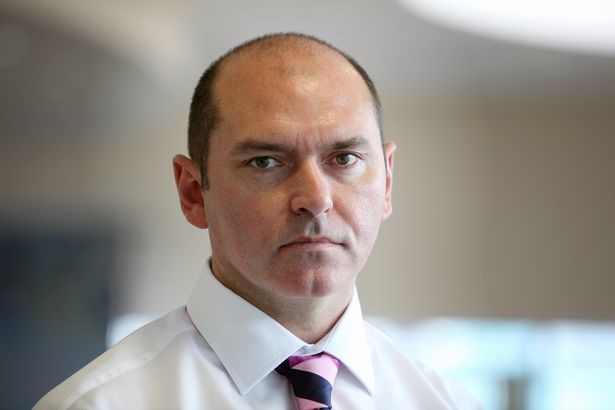
Jim Mackey
Chief Executive of NHS England
4
APPEARANCES
4
PODCASTS
Nov 17, 2026


Hannah GowenHOST
How do you tackle the challenge of the skills gap and training your people when there is so many of them and so many new skills to learn at all times?

Jim MackeyGUEST
So the, the education system, 'cause in healthcare the clinical workforce generally goes through very long educational processes, so those processes need to be keeping up to date and making sure that people who are starting off now in nursing education or a physio or a medical education of some description, this is actually being built in and incorporated.
Jim MackeyGUEST
I'll come back to that 'cause there's a point about some of our other, uh, service changes.
Jim MackeyGUEST
So catching people as they're coming through and being as adaptive and making sure people have the skills to be able to do this when they're actually practicing.
Jim MackeyGUEST
And then for the existing workforce who's already there, a lot of people are self-educating on this, and we have to accept and understand that.
Hannah GowenHOST
So Jim, how can organizations find the capacity to prioritize making change for a better future versus meeting present demands? It comes back to that same today versus tomorrow debate.


Adam BrimelowHOST
How worried are you that recent progress that we've seen could be under threat?
Jim MackeyGUEST
So I worry about it, and I talked in board yesterday about the interplay with, between money, uh, industrial action, either settling it up or having to get through it, the impact on performance targets, the distraction, you know, all those sorts of things.
Jim MackeyGUEST
And we've talked in new secondary state a lot about it in the last couple of weeks, and we're, we're about to start engaging with the government on it.
Jim MackeyGUEST
I think I need to take the strain on most of that nationally, and locally people have just submitted plans.
Jim MackeyGUEST
They've started the plans, you know, starting delivering in, in the new year, et cetera.
Jim MackeyGUEST
So keep everybody focused on that as much as they can, and frankly, we have to resolve the how does this all work kind of nationally.
Jim MackeyGUEST
Um, and if something goes wrong with all that, you know, we'll, like, we'll talk to people and we'll rebuild it.
Adam BrimelowHOST
How satisfied are you that local leaders are getting the support they need to do what's asked of them?

Jim MackeyGUEST
yeah that's great and thanks for the kind words as well there james so they they i i do you do feel as you understand you get kind of uh caricatured in certain ways when you're doing these uh national rules and a lot of what we're having to do and have been doing over the last year around the financial reset is being around hospital productivity the waiting list reduction managing when they're managing industrial action etc But the 10-year plan sets out a different game for the NHS to play, which, again, we've been in and out of over the years.
Jim MackeyGUEST
But this is hopefully a more sustained effort on shifting patterns of care, shifting the balance more out of hospital, further upstream, more technologised, you know, those sorts of things.
Jim MackeyGUEST
If we compare where we are now in terms of proportion of spend in hospital versus community, primary care, prevention, it's very distorted compared to what it was 10 years ago.
Jim MackeyGUEST
And it's also very distorted if you look at other systems that we have a high regard for.
Jim MackeyGUEST
So there's no, I don't think there's any doubt that we need to do that, first of all.

James BethellHOST
Are you really going to put together meaningful partnerships with the other institutions on the ground like the local authorities?


Jim MackeyGUEST
We're trying to do major change on pretty much every front very quickly in what feels like in a rush.
Jim MackeyGUEST
The original focus for me was was around financial discipline and trying to get a grip of the money because you know what it's like if you've got no control of the money everything else goes anyway and that four and a half billion problem that we had in the planning round needed to be the immediate focus and getting a leadership response we've absolutely got that There was a really strong desire, and this is portrayed as a central push, a political push, but it was actually largely driven by the view from the service that we'd had an operating model that was incredibly complicated, very expensive, very overlappy.
10 MINS LATER
