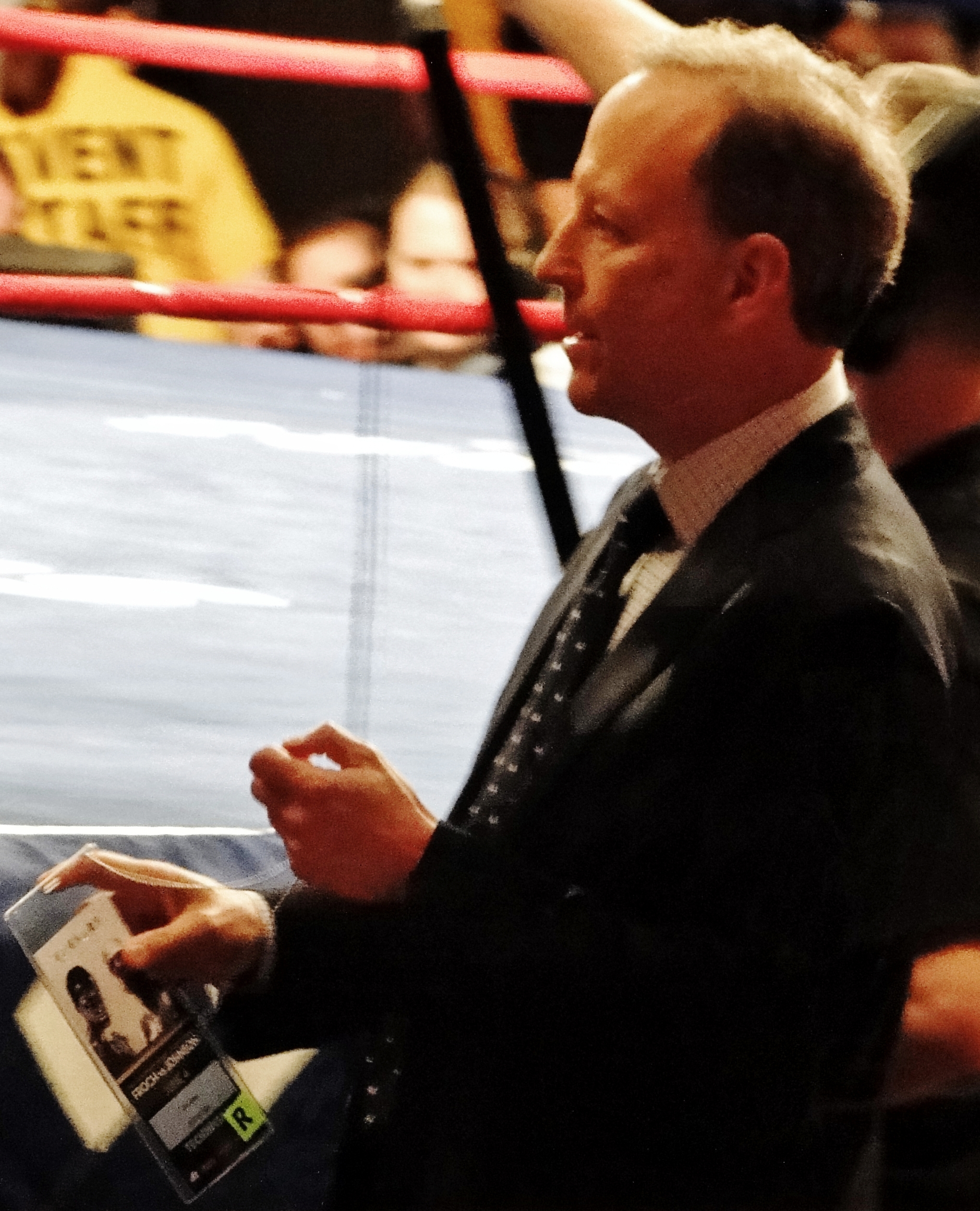
Jim Gray
American sports commentator
14
APPEARANCES
12
PODCASTS
Sep 6, 2026


John OurandHOST
And you as well, the... like take us through sort of what that was like sort of dealing with with all of the all of the just press coming from that because unlike what you described with the yankees and unlike the uh the the um mike tyson one this was all over social media which is a different kind of just a heater just a heat wave that you have to deal with

Jim GrayGUEST
I'll give you two quick stories of how what happened in the past helped prepare me for what happened with LeBron and the decision.
Jim GrayGUEST
About a week after the Pete Rose interview, Al Davis, who was a mentor and a dear friend, called me up and he said, how are you doing with this? And I told him I'm doing fine.
Jim GrayGUEST
He says, do you get upset that none of your friends have stood up and put an end to this and defended you? And I said, well, some of them have, but yeah, a couple of them, I am.
16 MINS LATER
John OurandHOST
why did you what was it that got you to start that like what why did you do that


Malika AndrewsHOST
Knowing what you did then, and seeing what you do now, do you have any idea how maybe he would do it, or something that he would take from that, or things that he would leave behind with that decision?
Jim GrayGUEST
And if you recall at the time, David Stern was very aggravated, the commissioner of the NBA at that time, who was one of the greatest commissioners in history, because he didn't want to see him and the owners and, and everybody lose control of the process.
Malika AndrewsHOST
So then what do you prepare? Do you prepare for a feeling? Do you prepare for, um, just a, a moment that you know is going to be huge? How do you then get ready for something like that, that you know is going to shift the way that the power balance of the NBA is?


Jim GrayGUEST
He had scored a goal, and then he was removed from the game for the rest of it after this.
Jim GrayGUEST
The red card was, it went to the replay, Larry, and the replay determined that he should be given a red card.
Jim GrayGUEST
When things are slowed down in the nature that you see them, it's not in real time.
5 MINS LATER

Larry KudlowHOST
So if those factoids are right, how does it look for us? What's your commentating assessment?


Jim GrayGUEST
[chuckles] Well, I was a videotape editor, Russ, for ABC, uh, station in, uh, in Denver.
Jim GrayGUEST
And, um, you know, all of the guys who were in the union took the buyout because they were converting from film to videotape.
Jim GrayGUEST
So they hired a bunch of young kids from the University of Colorado and some of the interns who had been there, and I was one of them.
Jim GrayGUEST
So I was editing the Broncos with Red Miller show as he was getting ready for the draft in my little cubicle in Denver at 7:00 a.m. And in came running the assignment editor, and she said, "Muhammad Ali's two and a half hours early out at old Stapleton International Airport.
Jim GrayGUEST
You know something about sports." I said, "Yeah." I'd never done an interview before, and I was dressed like this.

Jim GrayGUEST
[chuckles] Well, I was a videotape editor, Russ, for ABC, uh, station in, uh, in Denver.
Jim GrayGUEST
And, um, you know, all of the guys who were in the union took the buyout because they were converting from film to videotape.
Jim GrayGUEST
So they hired a bunch of young kids from the University of Colorado and some of the interns who had been there, and I was one of them.
Jim GrayGUEST
So I was editing the Broncos with Red Miller show as he was getting ready for the draft in my little cubicle in Denver at 7:00 a.m. And in came running the assignment editor, and she said, "Muhammad Ali's two and a half hours early out at old Stapleton International Airport.
Jim GrayGUEST
You know something about sports." I said, "Yeah." I'd never done an interview before, and I was dressed like this.

Jim GrayGUEST
He's won eight Super Bowls, and he can tell you about some innocuous play when he was coaching as an assistant coach, Denver Broncos, back in the '70s, okay? And he can pull it up, and he can tell you all 22 that were on the field and what they did and how they did it, and it's just astonishing, his knowledge of football history, how he's kept current, contemporary, and, uh, you know, he's really...
6 MINS LATER

Sean HannityHOST
You know, how are we gonna look back at this event that took place at the White House last night in your view, and what was your overall take on it?

Izzy GutierrezHOST
Can you tell me where you were, how that came about, and how the decision came about afterward?
Jim GrayGUEST
Maverick Carter was at the game with Ari Emanuel, who's the head of WME, and they were sitting courtside.
Jim GrayGUEST
And it was one of the early rounds, and I knew that LeBron was gonna be a free agent.
Jim GrayGUEST
I had interviewed him when he was in high school, and I had done his first game on ESPN against the Sacramento Kings.
Jim GrayGUEST
So I just went over to, uh, Maverick and Ari and said, you know, "I'd like to be the first guy to be able to interview LeBron after he decides where he's going to go." And we started talking.
Jim GrayGUEST
I said, "You know, why don't we just do a TV show, call it The Decision?" And Ari Emanuel turned to Maverick and said, "That's a great idea.
Jim GrayGUEST
That's brilliant." And Maverick said, "Okay, let's do that." So I didn't hear from them for a few weeks or whatever the passage of time was.
Izzy GutierrezHOST
You mentioned there was a pensive sort of air to it, but he himself, did he seem like somebody who was, as he said, making a difficult decision and potentially hurting a large fan base?


Israel GutierrezHOST
Can you tell me where you were, how that came about, and how the decision came about afterward?
Jim GrayGUEST
Maverick Carter was at the game with Ari Emanuel, who's the head of WME, and they were sitting courtside.
Jim GrayGUEST
I had interviewed him when he was in high school, and I had done his first game on ESPN against the Sacramento Kings.
Jim GrayGUEST
So I just went over to, uh, Maverick and Ari and said, you know, "I'd like to be the first guy to be able to interview LeBron after he decides where he's going to go." And we started talking.
Jim GrayGUEST
I said, "You know, why don't we just do a TV show, call it The Decision?" And Ari Emanuel turned to Maverick and said, "That's a great idea.
Israel GutierrezHOST
You mentioned there was a pensive sort of air to it, but he himself, did he seem like somebody who was, as he said, making a difficult decision and potentially hurting a large fan base?


Ben MallerHOST
I know you're doing a podcast, and you've done a bunch of the media stuff, but back then it was a totally different animal than now.
Jim GrayGUEST
Wasn't the advent of cable television, and then cable came along, and so that changed everything, and then the proliferation of, uh, of talk radio, and then the internet finally arrived, and now we have streaming.

Ben MallerHOST
I know you're doing a podcast, and you've done a bunch of the media stuff, but back then it was a totally different animal than now.
Jim GrayGUEST
Wasn't the advent of cable television, and then cable came along, and so that changed everything.
Jim GrayGUEST
And then the proliferation of, uh, of talk radio, and then the internet finally arrived, and now we have streaming.
12 MINS LATER

Jim GrayGUEST
We got the other gold shoe when he won the 200 and the 400 in '96 sta- sitting right next to the torch that lit Muhammad Ali's torch to, uh, you know, when he stood up there with Parkinson's and, and, and inspired the world.
7 MINS LATER

speaker_4UNKNOWN
48 years.
8 MINS LATER


Jim GrayGUEST
He's been collecting things since the day he went to the catch and he came home with that styrofoam finger number one that he was waving when Dwight Clark, uh, caught that pass from Joe Montana.
Jim GrayGUEST
He's, he's, he's moved by it because, you know, Tom has often said that, "Anybody can be great.
6 MINS LATER
Jim GrayGUEST
Pete Rose accomplishments are his accomplishments, and we should not be trying to erase them.
Jim GrayGUEST
What he did on the field was the greatest hitter of all time, by the numbers, and that should be acknowledged, and he should be in the Baseball Hall of Fame.
Jim GrayGUEST
That sign didn't say, "No steroids." It didn't say, "No domestic abuse." It, it said, "No gambling." And he saw that sign 30,000 times.