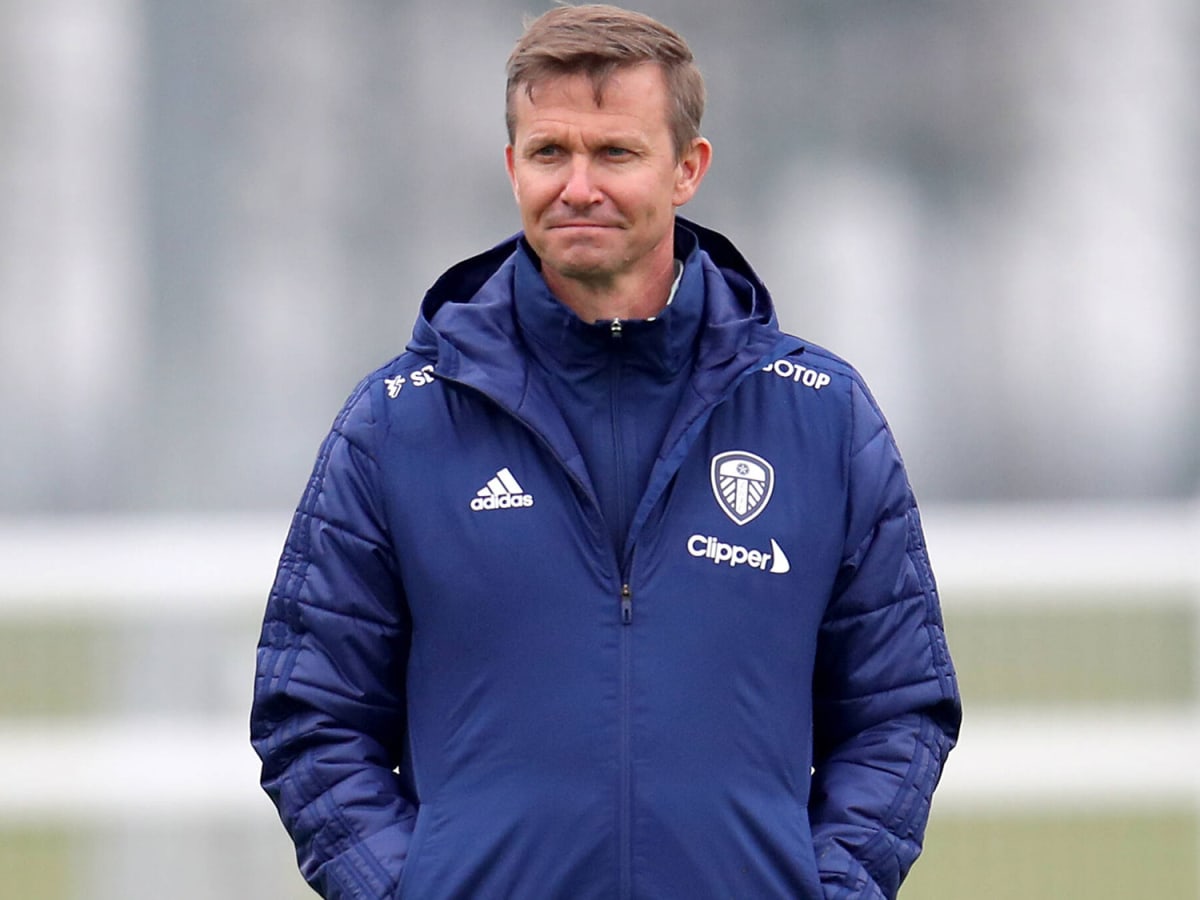
Jesse Marsch
American coach and soccer player
19
APPEARANCES
12
PODCASTS
Nov 1, 2026

BennyHOST
Upcoming for preparation for the World Cup there, I know obviously you always want to keep the same discipline in that aspect for any type of game, but for the World Cup, how did that leadership role play in effect for preparation for that World Cup?

Jesse MarschGUEST
The first phase was really about establishing the idea of the way we wanted to play football.
Jesse MarschGUEST
And the second phase was about challenging each individual to understand how to really achieve excellence and to achieve true potential.
Jesse MarschGUEST
And then the third phase was about the personality and the leadership of the team.
Jesse MarschGUEST
And so, you know, we were very intentional with each step and very we created a lot of programing.
6 MINS LATER
BennyHOST
Was there any of those type of speeches during the World Cup at all you had to give to the team at all? Like, any memorable speeches you kind of can recall?


James SharmanHOST
He wasn't quite the same fluid Moyes he used to, but from our perspective, you wouldn't have any idea that he was struggling the way he was.
Jesse MarschGUEST
the World Cup in terms of the injury situation was absurd right so on May 18th we get together and the 26 names that we want like I I said this publicly I wanted to go to camp with 26 players But we couldn't because we had nine names on the board in red.
Jesse MarschGUEST
And obviously you could write down those names and some very important players.
6 MINS LATER
Dan WongHOST
So how long does it take you to jump back? Do you have like a superpower? Is that your superpower is you can't get tired of it?
Jesse MarschGUEST
the World Cup in terms of the injury situation was absurd right so on May 18th we get together and the 26 names that we want like I I said this publicly I wanted to go to camp with 26 players But we couldn't because we had nine names on the board in red.
Jesse MarschGUEST
And obviously you could write down those names and some very important players.
Dan WongHOST
So how long does it take you to jump back? Do you have like a superpower? Is that your superpower is you can't get tired of it?

Amy WalshHOST
So what do you think about him and his game, his profile makes him a good fit for the style that you want to play, and then what do you see in him that encourages you that he can further elevate his game now that he's, uh, playing for Grasshoppers Zurich?
Jesse MarschGUEST
Yeah, I mean, look, w- when I started watching, uh, obviously there was the, the main kind of core group of guys that, that I knew, and I didn't need to watch that much before, um, uh, we got together the first time.
Jesse MarschGUEST
And then there was sort of the secondary and tertiary group that, that I needed to get to know more.
Jesse MarschGUEST
I like guys that run, you know? I like guys that go after things, that chase the ball, that hunt the ball, that, that play forward, that lose it, that try to go back to get it, that run back and defend, that tackle, that fight, that run, that...
41 MINS LATER
James SharmanHOST
Um, you know, where you're based, how many games a, a week are you able to watch? Do you have your video team sending you broken down highlights? How do you watch MLS? Do you, do you record them and then watch them first thing in the morning? What is the, the Jesse Marsch workflow like?


Scott RintoulHOST
But were you always very laid back, no pressure, or did that adapt throughout your parenthood?
Jesse MarschGUEST
Look, look, there's a reason why firstborns are firstborns and, you know, then and third and fourth are the third...
Jesse MarschGUEST
You know, there's-- I, I mean, even when we scout players, I, I factor in birth order because I, I do think it's a big factor in how people deal with adversity, um, and, and challenges.
Jesse MarschGUEST
The, the reality is, like, yeah, I mean, I, I remember the first time my daughter played, and I remember sitting and, like, wanting her to get everything right and wanting her to get every pass, you know, right, and wanting her to make every decision.
Jesse MarschGUEST
But I also, I also was able to realize pretty early on, and, and some of it had s- something to do with I knew the game, but more of it was I had to-- I knew my daughter, you know? And I was watching her early on, and I could see her reactions and her behaviors, and I could see the things that were natural to her, and I could...
Scott RintoulHOST
As a coach, when you were coaching youth sports, how did you try to encourage your players and the parents around them to feed that message to their kids and, and get it through?


Roger BennettHOST
What, what's your message to him? Is this just about ultimately man management?
Jesse MarschGUEST
Johnny is a very confident and intelligent person, right? Like, he, he I think only needs little reminders.
Jesse MarschGUEST
He doesn't need, like, massive psychological support and emotional, uh, uh, framework or, or foundation.
Jesse MarschGUEST
He, he, he needs, I think, a clear idea of what the expectation is for him on the pitch and the ability to go out and play.
13 MINS LATER
Roger BennettHOST
I do think it's a mirror to the modern Canadian people, the modern Canadian nation in this moment.


Bryan HayesHOST
Um, what do you hope the kind of veterans of the World Cup in the past, the experience that they gained from that, that they can apply to, to this World Cup?
Jesse MarschGUEST
Like, the team did so well to qualify for the World Cup, but it was new for everyone.
Jesse MarschGUEST
And I mean, you're talking about the federation, the coaching staff, the players, everyone.
Jesse MarschGUEST
I think that there's, now that they've got that in their back pocket and they kinda understand how to handle the hype and all the attention around it and, and that really the, the biggest, most important thing is the, the focus on the actual match, along with Copa America success that we had two years ago, along with the fact that we have a lot of players playing at big clubs and playing in Champions League every week, I think means that their overall understanding and expectation for what big games are and how to handle them is different.
Bryan HayesHOST
Uh, so why, why d- why has this connection worked so well for you? And, you know, your, your commitment to the program, why is, why is that important for you?
Bryan HayesHOST
Um, what do you hope the kind of veterans of the World Cup in the past, the experience that they gained from that, that they can apply to, to this World cup?
Jesse MarschGUEST
Like, the team did so well to qualify for the World Cup, but it was new for everyone.
Jesse MarschGUEST
And I mean, you're talking about the federation, the coaching staff, the players.
Bryan HayesHOST
Uh, so why, why d- why has this connection worked so well for you? And, you know, your, your commitment to the program, why is, why is that important for you?

Jesse MarschGUEST
Yeah, well, look, Italy, I think everybody was anticipating Italy, and certainly there's so many Italian Canadians in Toronto, and everyone was thinking about what will that first game look like if it is indeed Italy.
Jesse MarschGUEST
I really respect them as a team, but I think we would have matched up well against them.
Jesse MarschGUEST
But I was advertising it as the first time a home nation would have had its first World Cup match on the road.
15 MINS LATER

Jimmy ConradHOST
What is it about Ivy League guys? Do you remember playing against them, by the way?


Omar SachedinaCORRESPONDENT
Why was that so important for you to weigh in on that, that political debate?
Jesse MarschGUEST
I felt like I was positioned in a very unique situation where being an American and representing the nation of Canada, I thought that there was a lot of unfairness being shown.
Jesse MarschGUEST
Um, f- frankly, cruelty being shown to the Canadian community, and I felt like as an American, I felt the responsibility to stand up and say what I thought was right.
Jesse MarschGUEST
To really live in the moment, appreciate the moment, and make sure that, that, um, we cherish every day.

Brent GunningHOST
W- what are some of the challenges that go into playing a game at BMO and then packing up shop and going to the west coast to, to play in Vancouver for, for the last two of the group stage?
Jesse MarschGUEST
Yeah, I mean, look, i- in these World Cups where you play in big countries, the, the mobility that you have to have, and, and I think every country's going through some version of, of, "All right, how to travel here and get there." And I, and I think for Canada and for, you know, uh, the, the Namer- and the US, like, we're used to kinda moving around and, and transversing the country and, and, and the geography that we have to deal with.
Jesse MarschGUEST
Even when we get to the knockout phases and we're, we're challenged by going to the US, we've been through that a lot.
6 MINS LATER
Brent GunningHOST
How, uh, how confident are you in your group's ability to do that in this World Cup?
Jesse MarschGUEST
And so they're all aware of the, the fitness plans that we have for them, the tactical and technical plans that we have for them.
Jesse MarschGUEST
They're also all competing for end of the year trophies, you know, and some of them to keep in a league so they don't get relegated, some of them to achieve Champions League.
Jesse MarschGUEST
So every player has a little bit different scenario and a different situation, and I've been having a lot of c- daily conversations with a lot of them about how to manage their situation where they're at, you know, how we feel about what we wanna get out of them in March, when we wanna start to see them in May.
speaker_2HOST
Mm-hmm.
Jesse MarschGUEST
And so they're all aware of the, the fitness plans that we have for them, the tactical and technical plans that we have for them.
Jesse MarschGUEST
They're also all competing for end of the year trophies, you know? And some of them to keep in a league so they don't get relegated, some of them to achieve Champions League.
Jesse MarschGUEST
So every player has a little bit different scenario and a different situation, and I've been having a lot of c- daily conversations with a lot of them about how to manage their situation where they're at, you know, how we feel about what we wanna get out of them in March, when we wanna start to see them in May.
Brian HayesHOST
You know, take us through this initiative and, and how you got involved.


Herculez GomezHOST
What was the most difficult thing to change for Jesse Marsh about the Canadian men's national team, if anything you had to change?
Jesse MarschGUEST
I believe I've had an impact on the team, but if you really want to talk about what the best and biggest impact on the sport and on the CSA has been, it's been Kevin Blue, our secretary general.
Jesse MarschGUEST
The election of him put someone in place who is an incredible business professional, who has an incredible idea of how to create structure, how to drive success, how to raise funds.
Jesse MarschGUEST
And he has changed the landscape for what is the potential of what the sport is in the country.
18 MINS LATER

speaker_6PANELIST
What do you think Canada needs to do, and the Canadian MLS teams, the Canadian domestic league, to produce more Alphonsos? How do you take the next step of going from producing very good professional players to producing more world-class players?
Jesse MarschGUEST
Well, let me go back a little bit, and I- I use myself as an example for the '94 World Cup, because in 1993, I was a college student.
Jesse MarschGUEST
I was thinking after soccer, I was gonna retire and get a job, and then move on with my life.
12 MINS LATER
speaker_6PANELIST
How do you think that culture changes? And do you think that the- that people like y- the fact that managers are now addressing this head-on, that this is becoming a- a- a point where it has to change, where managers are pushing back and saying, "If things don't change..."

Jesse MarschGUEST
Like, look, I- I'm a believer that, like, the two phrases that you'll never hear me say, Theo, are, "Don't get beat," and, "Don't loo-" Or, "Keep the ball.
Jesse MarschGUEST
Like, we have a structure and a system that we play in, but I want our players to be creative when they have the ball.
6 MINS LATER

Taylor TwellmanHOST
How important is this World Cup for Canada and that's ... and that federation to realize that they can be a real, for lack of a better word, juggernaut in Concacaf and, more importantly, take advantage of the talent that you guys have now?
Roger BennettHOST
How do you imagine the impact of this is gonna be on Canada, on the United States, how there'll be change footballingly by this moment?
Jesse MarschGUEST
And then the l- then the league started, right? And all of a sudden, I had an opportunity to be a professional.
Roger BennettHOST
... from a Canadian perspective when you, you have that, the World Cup being hosted in three nations being handed over to just one of them?


Adam LeventhalHOST
And it's been fascinating watching you... become this chameleon you've you've you've completely become a canadian and you've become a spokesperson for the nation at such a pivotal time how has that challenge been for you
Jesse MarschGUEST
first of all i have my own personal beliefs about the political situation in the us but i don't think it's my position to talk about everything and all of what's happening.
Jesse MarschGUEST
I obviously have my thoughts, but when it pertains to what it means for my job and the people I represent, I felt it was important, especially as an American, to stand up for a country that, even though it's not mine, deserves different treatment, better treatment, right? And so it was a professional responsibility, but also a personal attachment to my professional responsibility.
Jesse MarschGUEST
And then this person said, yeah, but don't you worry about somebody coming after you.
Roger BennettHOST
It is a mana- It is a managerial Star Wars cantina of wonder. We are living in a brave new world. And by the way, I wanna talk about the Canadian team. Watching Canadians score in the Champions League knockout rounds on the regs is, is just a thing of, uh, of beauty. Last week, back-to-back days, Alphonso Davies, that audacious bottle rocket of a Bayern Munich left back scored the fifth goal to nail shut the tie against Bayer Leverkusen. The very next day, Jonathan David opened the scoring for Lille against Borussia Dortmund. He nutmegged the keeper to boot. You said recently, Jesse, "This is the strongest the Canadian Men's National Team has ever looked."How do you understand it? Is it just coincidence? Is it transcendent players developing at the same time, or has something deepened and bettered the national team roster strategically?
Jesse MarschGUEST
You know, as much as I said I've been trying to invest in the sport and the country, there's clearly a lot of good things that have been done. And- and I've said that a lot, because if you just look at our player pool, you would say that- that it's- it's at a peak of- of development of the sport and the country. What's really amazing about most of these guys is they're first and second generation, so their families come from other nations. Sometimes the Caribbean, places like Jamaica, sometimes Central and South America, some European, some African. So, you know, kind of built into their cultures, or at least their heritage, is this idea of what the sport is. And it's... What's kind of really cool about- about a lot of the players is that in... They- they call Canada a mosaic and the US a melting pot, and what they mean by mosaic is that the heritage of the communities remains strong. Like, if you're from West Africa, your family are still making West African food in the house. You're still speaking French in the house. There's a lot of traditional things that are still happening around your family and around your neighborhood that are reminiscent of what it's like in the country, or the heritage that you came from. And what that has meant for a lot of our players is that that characteristic or that- that- that other kind of feeling of what their culture is remains in the kinds of football players we produce. The best one that I use is Niko Segur. Like, Niko grew up outside of Vancouver. He's from a Croatian family, and he's just got that Croatian kind of feel for how the game works and being clever and, like, when you think he's looking for one thing, he's seeing something else and... But all of our players are kind of built with this- this hair-, like, this- this identity of what their heritage is into their football, right? And so it's been fun to see them recognize this and appreciate all of their differences and have their differences make them stronger and have that appreciation of each other be also very Canadian, and the pride that they have for playing for the Canadian national team.
9 MINS LATER
Roger BennettHOST
You've essentially become both ambassador and salesman. Uh, you've targeted several footballers who have Canadian ties. For this roster, you added Oakville, Ontario-born Bournemouth striker Daniel Jebbison, a gent who won the under-19 Euros with England. He's eligible for Jamaica. Um, and also Nigerian-Canadian promise David of- of Union Saint-Gilloise in Belgium, uh, to complete an all-David attack, possibly, tactically, that would be a delight. You've been- talked about how you recruited them, you got Alphonso Davies and Jonathan David to record messages. Um, you edited together a video, uh, showing how Jebbison's attributes would fit perfectly within your system, the transition and pressing game. Um, but best of all, you gifted them a one-off pair of Canada-themed Air Jordans, which I just love. What does the courting process look like for you? What do you say? How do you break down trying to entice a player to join Canada in the here and now?
Jesse MarschGUEST
It's not like I just pursue every single dual national that we can find. Like, it's still about thinking about what our needs are, w- what we're trying to create as a team, and who I think could fit into that, both from a personality and- and character perspective, and then from a- from an identity of football and- and style of play perspective. In the end, it's just, you know, now I'm part of a project that I really believe in, right? I love being the Canadian National Team coach. I'm really enjoying the process of what we're developing here, both as- as a men's national team and as a CSA. And so, you know, when I- when we identify the exact players that we think can fit into our system, it's just trying to express to them, you know, what a wonderful, um, movement that's being created in the country and in the sport. And typically, I think the people that I've met with, they can see that I'm genuine and that- that I'm excited about it, and- and a lot of them, you know, if they didn't grow up in Canada, they at least spent some time there and they know some of the players on the team, um, and- and through that, I think they know there's a true genuineness and a- and a realness to- to what's being created here. So- and look, we've done pretty well lately too, right? That- that's, I think, the best thing to- to recruit is success. And- and so they can see the team's getting better, they can see there's really high-quality players on the- on the- on the team. They can see that as the team has done well in Copa America and other things, that it's benefited a lot of the individuals inside the team in terms of transfer to bigger clubs and bigger contracts and more development. And I'm, uh, ready to facilitate all of those things, and I'm the vessel to try to get it done, but the program right now, I think, is really selling itself.