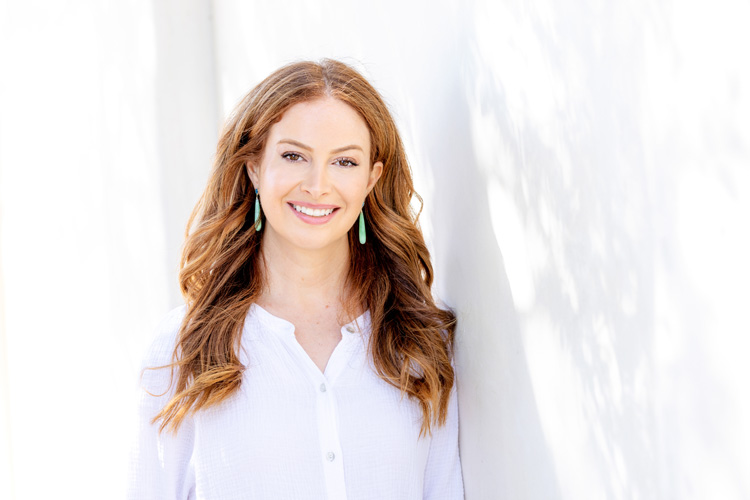
Jenny Taitz
8
APPEARANCES
7
PODCASTS
Jul 7, 2026


Jenny TaitzGUEST
I wrote this book right around the time that dating apps started to become a popular trend.
Jenny TaitzGUEST
I started hearing the same thing over and over again from patients that came to my office.
12 MINS LATER
Yue XuHOST
Do you have any advice or tools that you've used that can help people? It's almost like a jolt before you start slipping into rumination.

Jenny TaitzGUEST
So this is, seems a little silly, but there is a song called Weightless that was designed with sound therapists that is so sedating.
Jenny TaitzGUEST
So if you have insomnia or if you have a loved one with insomnia, this is great.
Jenny TaitzGUEST
Um, and so I- I was really, one of the inspirations for this book, like I mentioned, was seeing so many people struggle with leaning on things outside themselves, like medications that can have serious side effects down the line, especially if they're used over time.
Jenny TaitzGUEST
And I was struck by a study at Penn that found that people that were about to go into surgery, half of the people, it was a study, half the people got, um, uh, like a benzodiazepine medication, half the people listened to this song, and literally the song had almost the same anti-anxiety properties as the medication.
Jenny TaitzGUEST
And so we think like, "This is so stressful, I need something big," but literally songs can be soothing.

Shawn StevensonHOST
And in another, uh, behavior reset, you talk about building your own hope kit


Jenny TaitzGUEST
So making a pie chart is really a way to remember all of the things that matter to us.
Jenny TaitzGUEST
And so if we take a step back and we write down with a pen and paper all of the various domains of our lives that matter, let's say our health, our career, our friendships, our hobbies, and then visually representing them so their relative weight is aligned with how much they matter.
Jenny TaitzGUEST
So maybe health is, like, 30% and hobbies is 20%, or, you know, you need to really do some soul searching and come up with the numbers that represent what's truest for you.
Jenny TaitzGUEST
Um, and making a pie chart of our lives is such a essential way to gain perspective when something disappointing happens because it's so easy if you're doing something like interviewing for a job you really want to think that everything is terrible if you don't get that role.
Jenny TaitzGUEST
And of course, it's a huge disappointment, and I don't want to minimize that at all.
9 MINS LATER

Jenny TaitzGUEST
So I could feel like a little small level of anxiety, and then I could start to judge, like, what's wrong with me? Why am I feeling anxious now? And then I have, like, anxiety on top of anxiety, which for some people in a different situation could lead to panic.
Jenny TaitzGUEST
If, like, someone's heart's racing and they're like, "This is so weird," like that could, you know, lead to like more anxiety or it could lead to different emotions.
Jenny TaitzGUEST
It could lead to something totally different like, "Oh my gosh, I'm so embarrassed.
Jenny TaitzGUEST
Why do I feel stressed by this?" So it could be like anxiety, more anxiety, shame, then maybe there's guilt of like, like, "Why do I feel this way? This is like so it's embarrassing with him.
12 MINS LATER


Jenny TaitzGUEST
Emotions are created when we have thoughts, and then the thoughts create physical sensations in our bodies, and then we have action urges.
Jenny TaitzGUEST
And so if I feel sad, I'm probably thinking thoughts about not being good enough or things are too much for me to handle, and I'm really overwhelmed and lonely.
Jenny TaitzGUEST
And then maybe in my body, I feel heaviness and tension, and then my behavior might be something like withdrawing or overthinking or just mindlessly doom scrolling.
Jenny TaitzGUEST
And so emotions don't just happen to us, but we have a huge role in co-creating them, the same way we can co-create our stress.
Jenny TaitzGUEST
And so a lot of times people think that acting how they feel will kind of help them, but these are actually technically known as emotion-driven behaviors.
9 MINS LATER

Laurie SantosHOST
And so what are some, like, super simple hacks of changing the way our body is responding?
Jenny TaitzGUEST
Emotions are created when we have thoughts, and then the thoughts create physical sensations in our bodies, and then we have action urges.
Jenny TaitzGUEST
And so if I feel sad, I'm probably thinking thoughts about not being good enough or things are too much for me to handle, and I'm really overwhelmed and lonely.
Jenny TaitzGUEST
And then maybe in my body I feel heaviness and tension, and then my behavior might be something like withdrawing or overthinking or just mindlessly doom scrolling.
Jenny TaitzGUEST
And so emotions don't just happen to us, but we have a huge role in co-creating them, the same way we can co-create our stress.
Jenny TaitzGUEST
And so a lot of times people think that acting how they feel will kind of help them, but these are actually technically known as emotion-driven behaviors, and what they do is they intensify our feelings.
12 MINS LATER
Laurie SantosHOST
And so what are some like super simple hacks of changing the way our body is responding?


Jenny TaitzGUEST
I keep coming back to this three-part sequence of our thoughts, our physical sensations, and our behaviors.
Jenny TaitzGUEST
So if you dissect an emotion into, like, its fundamental ingredients, it's thoughts, physical sensations, behavior.
Jenny TaitzGUEST
So it's like you go to sleep and you start telling yourself, "I need to go to sleep two hours ago because I have this important meeting tomorrow morning." That is going to make you feel probably more tense and revved up, and then who wouldn't start scrolling on their phone? And so just noticing, like, what is the arc of my emotions, what are the ingredients that are creating anxiety for me in this moment or sadness.
15 MINS LATER