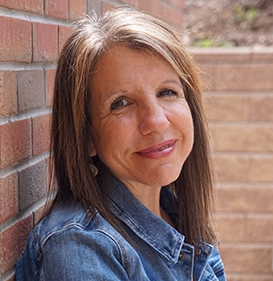
Jennifer Weiss-Wolf
Executive Director of Birnbaum Women's Leadership Center at NYU Law; lawyer, author, and leading advocate for menstrual equity and women's reproductive health policy.
11
APPEARANCES
11
PODCASTS
Oct 19, 2026


Jennifer Weiss-WolfGUEST
I did not have the faith to be present in the audience with, you know, given the Trump administration's history on women.
Jennifer Weiss-WolfGUEST
That said, the objectives about investing in women's health research are critical.

Pamela BrownHOST
From what you observed during the Biden administration, did anything tangible materialize from that initiative on women's health? And how do you think this time could be different?

Jennifer Weiss-WolfGUEST
I did not have the faith to be present in the audience, given the Trump administration's history on women.
Jennifer Weiss-WolfGUEST
That said, the objectives about investing in women's health research are critical.
Pamela BrownHOST
From what you observed during the Biden administration, did anything tangible materialize from that initiative on women's health? And how do you think this time could be different?

Kelly CaspersonHOST
Uh, are you surprised by the speed of this? Are you surprised by the, the overwhelming positivity of this? Like, what shocked you the most about, about this?
Jennifer Weiss-WolfGUEST
I'm gonna answer like a lawyer, so I'm gonna say yes and no. Um, and w- period advocacy also happened really fast.
Jennifer Weiss-WolfGUEST
Um, it was similarly bipartisan, the way we've seen it now, um, in the menopause space, and a lot of it happened in state legislatures.
Jennifer Weiss-WolfGUEST
So I would say that part is super analogous, and that was honestly what gave me the confidence to say, "Hey, I really wanna tackle menopause, too." I've learned a lot about what it takes to move the needle on an issue that people, like, were squeamish about talking about.
Jennifer Weiss-WolfGUEST
Um, but then once they started, discovered that the policy reforms were totally doable, and we could win a lot, and we could win fast, and we could even, you know, bridge the divide and, and work across the aisle because where we might disagree, um, about, you know, the political parties or people might disagree on some aspects or issues about women's health.
Jennifer Weiss-WolfGUEST
And, and it doesn't mean I'm compromising just because I will work with people, um, with whom I disagree on many other things.
Jennifer Weiss-WolfGUEST
Um, but where there was, you know, um, overlap and, and commitment to this one piece, um, we made change happen, and we made it happen fast.
14 MINS LATER
Kelly CaspersonHOST
I, I mean, to me, I'm like, this is Gen X women in their 50s changing the nation.

Jennifer Weiss-WolfGUEST
So the, uh, there's a couple ways to unpack that, and I'm gonna actually start with the here and the now, because we're at this really strange moment where the FDA or HHS and Congress are very interested in what's happening for menopause and wanting to step into this space.
Jennifer Weiss-WolfGUEST
The FDA did actually a good thing last November when they, um, finally removed the outdated, inaccurate warning labels that had persisted since the WHI on, uh, menopause estrogen products.
Jennifer Weiss-WolfGUEST
It was actually less hard to get the FDA to do that here and now than it was to convince the public that it was a legitimate move, and that's a really, you know, bizarre position to be in as a progressive advocate and a women's health advocate.
Jennifer Weiss-WolfGUEST
So Contrarian readers have definitely seen me chime in on the menopause story.
Jennifer Weiss-WolfGUEST
Um, but at the time, I felt that it was really important that doctors and everybody who'd been advocating for this for over a decade really had to be full-throated, not stand side by side with RFK Jr.
7 MINS LATER

Jen RubinHOST
Talk to us about the larger issue of political advocacy and taking that anger, that frustration that so many women feel, whether it's about Cornell, whether it's about abortion rights, whether it's about democracy, and finding a way to express that in a productive way.


Katie FogartyHOST
Why do you think this generational misunderstanding's been happening, that, like, we've discovered menopause, and that didn't exist before, and what did the past references to menopause not do to create a better information highway for us to be on today? Why did we have to reinvent it?
Jennifer Weiss-WolfGUEST
I actually did a lot of digging into old media coverage, not just, like, TV shows, sitcoms, but media coverage really from the 1960s on menopause, and one of the most fascinating pieces I came up with that I found was an op-ed written in 1992 in The New York Times called Mighty Menopause.
Jennifer Weiss-WolfGUEST
And I promise, readers, if you were to read that now, and people did not tell you when it was written, you would think it was written yesterday.
Jennifer Weiss-WolfGUEST
In 1992, there was a sea change of political representation and leadership.
Jennifer Weiss-WolfGUEST
Women won seats in Congress in great waves, and it was the Boomer women who were ascending in politics in particular that created an entire new moment for menopause that led to the Women's Health Initiative.
6 MINS LATER
Katie FogartyHOST
So tell our listeners a little bit about what was going on in the '60s, and how it maps up to where we are today, and why good things are happening.


Tamsen FadalHOST
Can we, can you quickly, uh, explain what you did with the tampon tax? And then I wanna move into policy, advocacy, what women need to know, especially when it comes to the workplace.
Jennifer Weiss-WolfGUEST
So for menstruation and public policy, which the tampon tax is sort of shorthand for lots of things, including the very specific fight about sales tax on menstrual products, but also, um, thinking about the economics of menstruation and how by not talking about an issue and sort of keeping it in the shadows...
Jennifer Weiss-WolfGUEST
I, I don't know if menstruation or menopause, between the two of them, which might be the more marginalized or, um, you know, stigmatized.
Jennifer Weiss-WolfGUEST
Um, menopause of course is laden with age and ageism, and that's an entirely, you know, additional conversation.
Jennifer Weiss-WolfGUEST
But periods were pretty much never talked about publicly, um, not in, certainly not in halls of government, um, and not in a way that was really focused on making systemic change, in this country for, for almost all of time.
Jennifer Weiss-WolfGUEST
Um, in 2015, um, when I started thinking about this, it was kind of, you know, when a good idea takes root, a lot of people start talking and thinking about it.
21 MINS LATER


Jacob SoboroffHOST
Can we talk about this? Can you explain the law as it stands right now and how much of this particular case is hinging on this?
Jennifer Weiss-WolfGUEST
yeah i think that where we're really at right now i think it's such a the failure of the local district attorney's office the law is absolutely an impediment and i think that public attention to it and um the the intricacies of how we define you know incapacitation and consent are extremely important but the problem is is is actually so much deeper than the particular law at hand.
Jennifer Weiss-WolfGUEST
And I do actually have a lot of faith and and I don't know what the word is exactly, because optimism wouldn't even come close to being the right word to use here right now.
Jennifer Weiss-WolfGUEST
But that Governor Hochul has moved the case to a special investigation by Attorney General James.
Jennifer Weiss-WolfGUEST
And even I have to say, even the vision of seeing two women at the helm right now and taking seriously what hasn't happened and what needs to be done is cause for some some level of vision that we should all be able to commit to of what it would mean to live in a democracy that actually treated women and treated the accumulation of power and how we see it abused seriously.
Jacob SoboroffHOST
What does it say about accountability when allegations like this can become a part of somebody's public record, but it doesn't prevent them from reaching positions of power? Brett Kavanaugh is not an outlier here.
Jennifer Weiss-WolfGUEST
Yeah, and to be really clear, the paragraph that you just read, I wrote in 2018.
Jennifer Weiss-WolfGUEST
I did not write that this week, right? And that was a really shocking moment for me.


Jonas SwartzHOST
Do you remember the first time you went in to speak with a legislator and talk specifically about menopause policy? I mean, what was that conversation like? What were you talking about?
Jennifer Weiss-WolfGUEST
Most people, when they think of that, if they think of it at all, they think of, like, a Mr. Smith Goes to Washington kind of thing, and they, and they picture, you know, you sort of walking proudly up the steps of the US Capitol.
Jennifer Weiss-WolfGUEST
I, I will say that among the conversations I have with lawmakers about menopause, um, some of them take place in my local grocery store, where I happen to see my state legislator on a pretty regular basis because she lives in my neighborhood.
Jennifer Weiss-WolfGUEST
And so they don't always entail providing legislative testimony or doing things that are formal and maybe foreign to, to many people in their everyday lives.
17 MINS LATER
Jonas SwartzHOST
You know, another woman, you, you mentioned your discomfort, right? Like, there are- You don't see eye to eye on other reproductive health, health issues, but seems like there is some bipartisan agreement on this.


Shannon WattsHOST
Talk a little bit about the state of menopause care and how far it's come, but also how far it needs to go.
Jennifer Weiss-WolfGUEST
Yeah, it's actually you just framed that really well, because unlike periods and menstruation policy, which was really not a thing in this country, certainly other parts of the world, it has been when I started, you know, kind of coming up with what those policies could be.
Jennifer Weiss-WolfGUEST
Stigma and stigma around aging and gender and all that is absolutely part of it.
Jennifer Weiss-WolfGUEST
And Like I said before, we've made decisions actively and through neglect that have brought us steps forward and steps back, at least since the 1960s.
7 MINS LATER
Shannon WattsHOST
But this is just even more proof positive, the fact that there is an FDA regulated dosage of testosterone for men, but not for women, right?

Jennifer Weiss-WolfGUEST
And that includes everywhere you exist in your doctor's office and the shopping aisle on the Internet with your friends and with your family.
Jennifer Weiss-WolfGUEST
And hopefully those are really low hanging fruit for folks and they can read and go, oh, I could do that.
28 MINS LATER

Alicia J. RoseHOST
Thinking about that, what would you suggest for folks that are listening to make change right now so that we can empower people half the population to feel decent enough to rally folks to activate and mobilize so we can overthrow this bullshit fascist regime.


Guy KawasakiHOST
First of all, could you just please define that for the other ignorant men out there who are listening to this podcast?
Jennifer Weiss-WolfGUEST
But the idea of menstrual equity, I'm going to explain it as a concept, and then I'm going to explain it as a policy framework, if that's okay.
Jennifer Weiss-WolfGUEST
When I started doing work around menstruation and public policy, I learned about this because some kids in my community were collecting menstrual products, tampons and pads for our local food pantry when they discovered that it was a need of the people who used the food pantry and the food pantry didn't have a budget for it.
13 MINS LATER