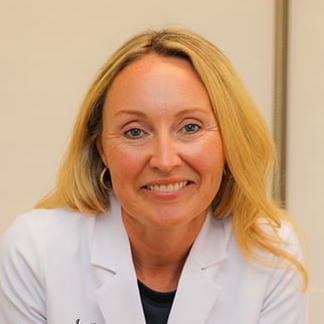
Jennifer Stagg
Naturopathic physician, founder and medical director of Whole Health Wellness Center in Connecticut, and co-host of The Natural Doctors.
12
APPEARANCES
1
PODCASTS
Oct 5, 2026

Jennifer StaggGUEST
But yeah, so s- when we test, we routinely test omega-3 levels, and I will have patients that we test them and their levels are actually in range.
Jennifer StaggGUEST
And so you don't see that very often, but I do have patients that they're there, and we're like, "Okay, well, you don't need additional fish oil 'cause you actually have enough." And the importance of this when we think about it from an ADHD standpoint is that it, um, helps with neurotransmitter balance, but then it also, and this benefits pretty much every condition, is it's changing the cellular membrane.
Jennifer StaggGUEST
So those oils get incorporated into the, like the, you know, basically a membrane of cells, and that influences how well a cell functions.

Kara SundlunHOST
But there are other missing nutrients that often you see in someone who has ADHD.
Jennifer StaggGUEST
But yeah, so s- when we test, we routinely test omega-3 levels, and I will have patients that we test them and their levels are actually in range.
Jennifer StaggGUEST
Like, and I mean optimal, not just in range for what we're looking for in range.
Jennifer StaggGUEST
And so you don't see that very often, but I do have patients that they're there and we're like, "Okay, well, you don't need additional fish oil 'cause you actually have enough." And the importance of this when we think about it from an ADHD standpoint is that it, um, helps with neurotransmitter balance, but then it also, and this benefits pretty much every condition, is it's changing the cellular membrane.
Jennifer StaggGUEST
So those oils get incorporated into, like, the, you know, basically a membrane of cells, and that influences how well a cell functions.
Kara SundlunHOST
But there are other missing nutrients that often you see in someone who has ADHD.
Jennifer StaggGUEST
But yeah, so s- when we test, we routinely test omega-3 levels, and I will have patients that we test them, and their levels are actually in range.
Jennifer StaggGUEST
And so you don't see that very often, but I do have patients that they're there, and we're like, "Okay, well, you don't need additional fish oil, 'cause you actually have enough." And the importance of this when we think about it from an ADHD standpoint is that it, um, helps with neurotransmitter balance, but then it also, and this benefits pretty much every condition, is it's changing the cellular membrane.
Kara SundlunHOST
But there are other missing nutrients that often you see in someone who has ADHD.

Jennifer StaggGUEST
So if your diet looks well-rounded and you're a little bit short, or we're really trying to target something.
Jennifer StaggGUEST
And we would often be recommending this for someone who has typically some blood sugar control issues, some concerns about appetite, trying to really reduce their appetite.
13 MINS LATER
Jennifer StaggGUEST
And there's a lot of different publications that have come out of this one study.
Jennifer StaggGUEST
And so if we pull out, because we're focusing on brain health here, but these patients that were in the study, and there were almost 300 subjects in there, they were obese and had metabolic issues.
8 MINS LATER
speaker_1ADVERTISER
Yeah.
Jennifer StaggGUEST
Now, of course, like if you're spending half the year in Florida, OK, maybe you don't need as much vitamin D as that.
Jennifer StaggGUEST
And plus, if you're outside having enough skin exposed, you're not covered in sunblock because that it prevents the ability to make vitamin D.
8 MINS LATER
Kara SundlunHOST
What would you do? And do you need to go to more of an integrative functional doc like yourself for that?
Jennifer StaggGUEST
you can literally just Google like weight conversion pounds to kilograms and you stick in your weight.
13 MINS LATER
Kara SundlunHOST
St. John's wort in our last couple of minutes, I know you can't take this if you're already on an SSRI, but because St. John's wort was actually sort of the precursor to SSRIs?
Jennifer StaggGUEST
And you're going to get all those sort of minerals, vitamins, all those basics.
13 MINS LATER
Kara SundlunHOST
okay something that most people have heard of is vitamin d and that's hugely important not only for everybody but for college students especially yeah
Kara SundlunHOST
But as a holistic doctor, what's your thought on people who think, I think I really need this or I want this?
Jennifer StaggGUEST
Also, like the research on this, right now it's for diabetes and obesity, but there's a lot of research on it for other conditions as well, things like sleep apnea.
Jennifer StaggGUEST
So there's going to be some indications coming down the line that are going to look a bit different than just like weight loss.
Jennifer StaggGUEST
So it's kind of, you know, that aspect is really fascinating when we look at the effects it could have on some of these chronic diseases.
Kara SundlunHOST
And this is where you can really work with some of the naturopathic medicines, the over-the-counter supplements, and you have a program that you're developing to help people.
Jennifer StaggGUEST
naturally does open a little bit, but it shouldn't be open very often or for very long.
Jennifer StaggGUEST
And when it does open up, what can happen is you can actually get, like, segments of bacteria that can slip through that normally shouldn't get through, and that is extremely inflammatory.
Jennifer StaggGUEST
And if you have that, that is a high risk factor for brain inflammation and subsequent dementia.
Kara SundlunHOST
And then what action would we take? Because I think I've done detoxes, I've done routine stuff, and sometimes you're wondering, does this matter? If I take out all the gluten, which is hard to do, is it going to really benefit me? So does this test tell you then what you need to change?
Jennifer StaggGUEST
Yeah, so it used to be that you had to get a prescription from your doctor, but now, just late in the fall of last year, there's the first approved direct-to-consumer, meaning you don't need a prescription, CGM.
Jennifer StaggGUEST
So it's through a company called Stello, and it's an excellent device, you know, the same type that would be prescribed by your doctor.
Jennifer StaggGUEST
So you can either get a subscription or you can get just, like, a one-time purchase of two CGMs, and you would wear one of them for 14 days.
Jennifer StaggGUEST
And then if you subscribe, you know, it goes to, like, it's 10% lower depending on how long you subscribe to the service, or it could be 15% lower.
13 MINS LATER
Kara SundlunHOST
What do they, like, do you think they actually matter, and how do they help us? Yeah,