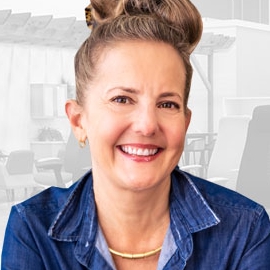
Jennie Byrne
Dr. Jennie Byrne, MD, PhD is a board-certified psychiatrist, neuroscientist, and author of "ADHD in Professionals: Embracing Your Brain" and "Work Smart."
2
APPEARANCES
2
PODCASTS
Sep 21, 2026

William CurbHOST
And because I know a lot of people are like, "Hey, should I, like, let my boss know, you know, disclose my ADHD?" And I'm just like, it's such a hard question to answer because it depends so much on who you're disclosing it to, what the business is, all those things, and it can't just be a blanket answer I give anyone.

Jennie ByrneGUEST
Yeah, I mean, if your workplace has psychological safety and trust, and you need something to change in your environment to suit your brain, or you could call that an accommodation, whatever you wanna call it, it may be to your advantage to disclose, because once you have the disorder label, and again, that's debatable, but if you have that label, it gives you an entitlement to ask for certain things.
Jennie ByrneGUEST
So it can be helpful, but like you said, if the environment is not trusting or not safe or not willing to work with you, it may...
Jennie ByrneGUEST
Unfortunately, it, it can backfire, and that's a shame because when people don't disclose and keep it quiet, others around them end up keeping their issues quiet as well, right? So, you know, most people in their workplace, we think that 5 to 10% of the adult population has ADHD.
25 MINS LATER
William CurbHOST
There are all sorts of other stigma that there's attached with medication, but it is something where it's like, yeah, just try meeting yourself where you're at.
Jennie ByrneGUEST
I think a lot of the misinformation around medicine is kind of shocking to me as somebody who's been specializing in ADHD for, like, over 20 years, because even fellow psychiatrists and, and others who are really smart people, really good at managing other things, they don't even know about [laughs] ADHD medications.
Jennie ByrneGUEST
And so I really want, if anyone's listening, just to know that, yes, Ritalin and Adderall and the families of Ritalin and Adderall are the ones we hear about the most, but that is not the only medication.


Kelsey SpronkHOST
Can you take us on a bit of a journey of how you've seen, how has that changed over the last several decades, in particular for women with ADHD?
Jennie ByrneGUEST
You know, when I started my training in the 90s, I thought it was still pretty stigmatized.
17 MINS LATER