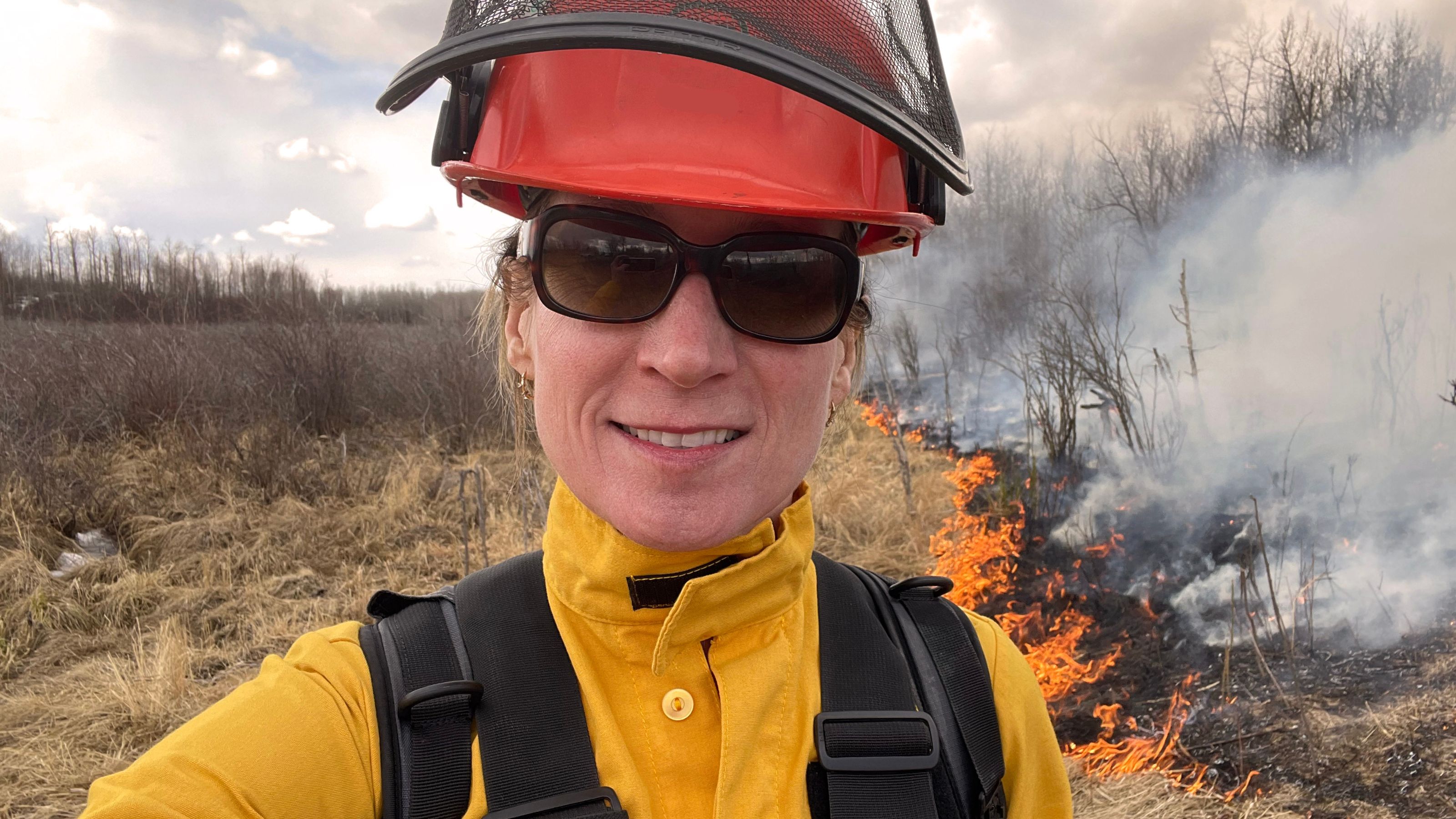
Jen Beverly
5
APPEARANCES
5
PODCASTS
Aug 2, 2026


Jen BeverlyGUEST
When I look at the fire season so far, when you look at the numbers and, you know, we look at the counts of fires, which you mentioned, there's been over 4,000 fires so far, but most of those are out.
Jen BeverlyGUEST
There's just over 800 active fires right now in the country, which is not, even for this time of year with a month left in the core fire season, that's not really remarkable in terms of numbers.

Saroja CoelhoHOST
What are conditions like in the country right now? Where are you seeing critical areas that need to be watched over August?


Meg RobertsHOST
Why are we seeing more intense wildfire seasons? Like what is it about the climate, about the soil, about, you know, temperature that is really making things challenging now?
Jen BeverlyGUEST
So if you do get an ignition and that can be lightning ignition, which is natural, but also people start fires and then that could be a campfire or it could be somebody on an off highway vehicle, or it could be a train, it could be a spark from a chainsaw.

Jen BeverlyGUEST
It was when I was a student at the University of Toronto, um, and I was, I was studying wildfire at that time, so as a graduate student, and I worked on, uh, a helitack crew.
Jen BeverlyGUEST
So in Ontario, uh, they have four person, three person, or four person crews that those are the crews that are dispatched to fires when they first get reported, and they're called Ontario Fire Rangers.
Jen BeverlyGUEST
And I did that for six years, working my way up from the low level crew member up to crew leader.
Jen BeverlyGUEST
My last two years, I worked as a, as a crew leader and, and got to travel around and fight fire actually here in Alberta, but also in Montana and Oregon.
Aspen DudzicHOST
So then obviously starting your career out in Ontario, starting your studies out in Ontario, and then traveling a little bit in, in your career as a wildfire fighter, what then brought you to Alberta?

RebeccaHOST
What do you mean by that?
Jen BeverlyGUEST
There's actually 55% of Canada's land base is, is, uh, um, the boreal zone, and, and that's a crown fire ecosystem.
Jen BeverlyGUEST
So those, those kinds of fires are, um, very much part of the natural process in renewing the forests.
RebeccaHOST
Uh, is there, is there any reason or anything we can do to, to mitigate those fires that though they're not coming near a community, they are creating a health hazard?

Cheryl SutherlandHOST
What do some of those strategies look like?
Jen BeverlyGUEST
So there's always been a lot of interest and, and, and trying to be proactive about minimizing fire impacts.
Jen BeverlyGUEST
[laughs] The hope is that you can modify those forests to make them less flammable.
Jen BeverlyGUEST
So they're naturally flammable b- because they have evolved with fire, and they're fire-adapted species.
Jen BeverlyGUEST
How do you then make them less flammable? Um, well, try to keep the fire on the surface, and you do that by reducing those ladder fuels that I was talking about.
Cheryl SutherlandHOST
Mm-hmm.