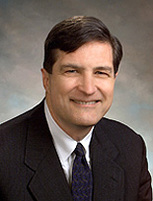
Jeffrey M. Lacker
American economist and former president of the Federal Reserve Bank of Richmond
9
APPEARANCES
6
PODCASTS
Oct 30, 2026


Jeffrey LackerGUEST
I would have thought that before now, earlier this year, they would have questioned the presumption they seem to have had in this whole episode about inflation coming back to 2% rapidly and taking stronger action with more alacrity.
Jeffrey LackerGUEST
Maybe they'll come around in the next couple of meetings, but I've been surprised at the lack of urgency.
6 MINS LATER

Jeffrey LackerGUEST
Yeah, so I think Chair Warsh came in with the right instincts that they need to rethink how they communicate.
Jeffrey LackerGUEST
I think the way they've communicated in the past, particularly the dot plus and the SEP, has placed more weight and emphasis on the most likely outcome and has detracted attention from how future policy is going to vary across possible future circumstances.


Leslie PickerHOST
Do we get any resolution on inflation until we get oil and diesel and other types of commodities under control?
Jeffrey LackerGUEST
There's always one thing that's growing, whose price is growing more rapidly than others.


Jeffrey LackerGUEST
The Fed has a serious inflation problem, and it's been getting worse this year.
Jeffrey LackerGUEST
Um, inflation was firming, not just oil prices, but core inflation, and not just tariff-related categories as well.
Jeffrey LackerGUEST
Um, outside of core, uh, outside of the tariff-related stuff, you've seen inflation firm.
Jeffrey LackerGUEST
And that on top of the fact that it- the disinflation just stalled out, uh, nip below 3%, uh, three... two years ago in 2024.
Mike SantoliHOST
I mean, I don't think he necessarily said, or maybe wasn't asked pointedly, is policy right now restrictive, neutral, accommodative? You think he believes it's, it's certainly not restrictive, I suppose?


David BeckworthHOST
'Cause you bring this up in your, in your testimony, so maybe start there with that.
Jeffrey LackerGUEST
Back in 2001 at the Richmond Fed, we did a special issue of our economic quarterly dedicated to the Fed Accord.
34 MINS LATER


Will CompernolleHOST
But it is also part of this regulatory approach and new Fed approach to have $3 trillion in reserves at the Fed.
Jeff LackerGUEST
yes so the way i think about the difference between scarce reserves and ample reserves is that for any commodity and like interbank overnight loans of fed funds is a financial instrument in some sense there's a supply curve and there's a demand curve there's a total supply of reserves and then there's a market price for borrowing them overnight And when the total supply is low, the price is high.
Jeff LackerGUEST
The price in this case is the rate on interbank loans minus the opportunity cost is you could hold the reserves at the Fed.
Jeff LackerGUEST
Now, in the old regime, you could hold reserves at the Fed and they'd earn zero.
Jeff LackerGUEST
you know, when interest rates were 5%, the Fed made reserves scarce enough that it drove interest rates up to 5% or five and a quarter or four and a half or whatever the target was, it would do that.
Jeff LackerGUEST
And banks would equate at the margin, the value of borrowing to have a little more extra reserves versus the cost of not having extra reserves, which was the risk that at the end of the day, there's a sudden unexpected withdrawal and you have to either go to the discount window or incur an overnight overdraft.
Jeff LackerGUEST
So with a supply large, there's going to be plenty of banks around that have reserves, don't need the reserves they have, and are willing to lend them.
18 MINS LATER
Will CompernolleHOST
But if the positive impacts are kind of benign, does that mean the risks and costs associated with it are also somewhat small?

Jeff LackerGUEST
So first thing to note, from my experience, people inside the Fed are well capable of screening it out, putting it to the side, leaving it out of their minds and putting their heads down and focusing on the data.
Jeff LackerGUEST
and analytically working through just what they think that means for what they should do.
Jeff LackerGUEST
I don't think it's going to change their decisions one way or another in the coming year.
Jeff LackerGUEST
But it's always been the case that politicians, political leaders criticize the Fed from time to time and carp on them.

Roben FarzadHOST
They're having a hard time getting at their target of, what, 2% growth, which might potentially, mayhaps, make them more comfortable for more interest rate cuts in the future, and hence this impasse with the White

Jon ForttHOST
What's the meaningful data that could counter that and still lead to a cut? Is it employment related?
Jeffrey LackerGUEST
But it looks like the employment and labor market effects of the tariffs that have been implemented so far are relatively minor, smaller than expected.
Jeffrey LackerGUEST
But keep in mind, we just have kind of a flood of... uncertainty resolution ahead of us.
Jeffrey LackerGUEST
You know, there's tariffs in place, but then a huge range of possibilities for what tariffs might be implemented going forward.
Jeffrey LackerGUEST
So far, you know, we haven't seen a trace in inflation data that's meaningful or in labor market data that's meaningful.
Morgan BrennanHOST
forecasting towards a stagflationary environment through the second half of this year and even looking to 2026, what would it actually take for the Fed to cut rates twice this
Jeffrey LackerGUEST
So first thing to note, from my experience, people inside the Fed are well capable of screening it out, putting it to the side, leaving it out of their minds and putting their heads down and focusing on the data.
Jeffrey LackerGUEST
and analytically working through just what they think that means for what they should do.
Jeffrey LackerGUEST
I don't think it's going to perturb their – change their decisions one way or another in the coming year.
Jeffrey LackerGUEST
But it's always been the case that politicians, political leaders criticize the Fed from time to time and carp on them.
17 MINS LATER

David FaberHOST
Do you agree with her characterization of where the Fed is in terms of being in a very tight spot?
Jeffrey LackerGUEST
And I think the overhang of the episode we went through from 2021 through 2022, in which their missteps and delays allowed inflation to surge significantly.
David FaberHOST
So how long do you wait if you're the Fed to sort of see what the end game looks like?