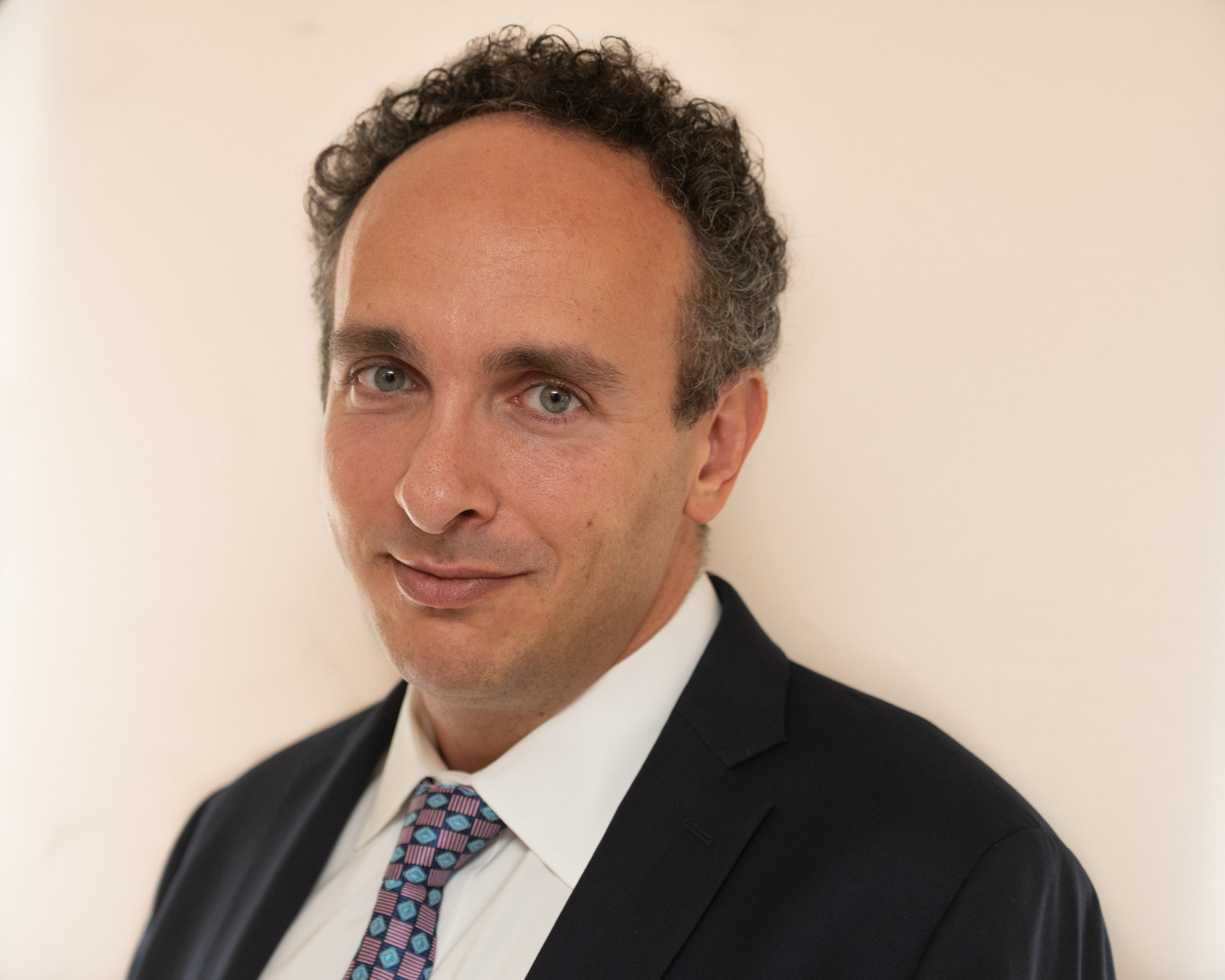
Jeff Kosseff
Professor
6
APPEARANCES
5
PODCASTS
Aug 7, 2026


Taylor LorenzHOST
And I mean, fundamentally, we're talking about expressive tools that are allowing users to create content, right?

Jeff KosseffGUEST
Yeah, and so I always get very concerned when someone says there's no First Amendment protection for this speech that I don't like, because the Supreme Court has repeatedly said that's not how we do things, and they've been pretty good.
Jeff KosseffGUEST
There are starting to be some cracks in that belief, but overall, they've been pretty good at saying, "We're not gonna keep carving out what we don't like." And I mean, I'll give you one example that's not AI related.
Jeff KosseffGUEST
This was back in 2021 when there were all the concerns about COVID misinformation, and there were members of Congress who proposed a law called the Health Misinformation Act, which is, like, this dystopian-sounding law, and what it basically said is that for platforms that algorithmically promote, which is pretty much how platforms operate, health misinformation, they lose their protections from liability under Section 230.
Jeff KosseffGUEST
And you say, "Okay, well, what's health misinformation?" And you look in the definition, and it says it's defined in guidance by the HHS secretary.
Jeff KosseffGUEST
So I really started raising alarms about that and saying, you know, that this is really concerning.
Jeff KosseffGUEST
And I was on a panel with someone who was a supporter of the bill who said, "Well, the current president, we trust his administration." And I said, "Well, could you ever imagine a scenario where there's someone else in office and you might not agree?" And the point is, you shouldn't agree or disagree with them.
17 MINS LATER
Taylor LorenzHOST
You can imagine how they would use these laws to maybe go after people that are creating software for those communities or more niche interests.

speaker_7UNKNOWN
Do you think that xAI has a strong case here? Are there other examples that you can point to maybe in other states?
Jeff KosseffGUEST
So I, I think that, um, there are a lot of really unsettled legal questions that I think will come out from this case as well as other litigation in the near future.
Jeff KosseffGUEST
First is- As I said, it, uh, applies regardless of the technology provider's state of mind.
Jeff KosseffGUEST
Uh, so even if it's saying, you know, "We really wanna take steps to cut down on the use of, of this technology for these purposes," they could still be liable.
Jeff KosseffGUEST
Uh, the definition of an intimate part, which is basically what triggers the liability, is very broad.
speaker_7UNKNOWN
Does it cover perhaps AI chatbots? Are users' rights prioritized?

Nina MoiniHOST
Do you think that xAI has a strong case here? Are there other examples that you can point to maybe in other states?
Jeff KosseffGUEST
So I, I think that, um, there are a lot of really unsettled legal questions that I think will come out through this case, as well as other litigation in the near future.
Jeff KosseffGUEST
First is that, as I said, it, uh, applies regardless of the technology provider's state of mind.
Jeff KosseffGUEST
Uh, so even if it's saying, you know, "We really wanna take steps to cut down on the use o- of this technology for these purposes," they could still be liable.
Jeff KosseffGUEST
Uh, the definition of an intimate part, which is basically what triggers the liability, is very broad.

Jeff KosseffGUEST
So we had a solid core of Supreme Court justices who applied neutral principles to very difficult cases.
Jeff KosseffGUEST
And in the book, we go through this, and we look at four particularly hateful men who had speech that most people would not stand up and say, "I agree with," or, "I, I will defend the merits of this speech." But, uh, they brought their cases to the Supreme Court for various reasons.
Jeff KosseffGUEST
The first was someone named Jay Near who, in the 1930s, published a really vile anti-Semitic newspaper in Min- Minneapolis, and the district attorney got an injunction to shut it down under a public nuisance law.
Jeff KosseffGUEST
And the Supreme Court, in a five-four decision, these were mostly close cases, not all of them, uh, the Supreme Court said, "No, you can't do that.
Jeff KosseffGUEST
That's a prior restraint on speech, and that's one of the most abhorrent things that the government can do to speech, to stop it from ever happening." And you might think, "Well, why would you wanna defend Jay Near and what he was doing?" Well, that precedent would be cited in so many other cases involving prior restraints, including the Pentagon Papers case, that the Supreme Court relied on that.
Jeff KosseffGUEST
Uh, we talk about someone named Arthur Terminiello, who's a defrocked Catholic priest, who gives a speech, an anti-Semitic speech, in Chicago that causes riots outside, and he's charged, and the Supreme Court overturns his conviction.
14 MINS LATER

Nick GillespieHOST
Uh, what, what was the import of that decision, and where are we kind of standing now when it comes to the issues that were raised by it?

Jeff KosseffGUEST
issue.Yeah, a-and I-I'm not gonna say why people take that approach, and again, they, they might...
Jeff KosseffGUEST
They just think, you know, "This speech is so bad that we have to do something." And th-this is actually, uh, how I got the title for my previous book, Liar in a Crowded Theatre, um, because that, that book is about why the First Amendment protects most, most false speech and what the different rationales are for false speech being protected in the United States.
Jeff KosseffGUEST
And the reason I titled it Liar in a Crowded Theatre was I, I actually came to that title pretty late in the writing process because as I read all of the court documents in these cases where the government or litigants were trying to punish or suppress what they viewed as false speech, time and again, the justification by the censor was, well, just as you can't yell fire in a crowded theater, you also can't say X, Y, or Z, when in fact, you usually could say X, Y, or Z.
Jeff KosseffGUEST
And, um, fire in a crowded theater really became a proxy for, well, yeah, we have free speech, but there is something-- there are some things that are really bad that we've got to be able to suppress, and, uh, free speech has limits.
Jeff KosseffGUEST
And even in the United States, which really has extraordinary protections for freedom of speech, it-it's true that the First Amendment i-is not absolute.
Gad SaadHOST
What is unique about America that it came up with the First Amendment, and that hasn't been followed in the rest of the Western tradition?


Jeff KosseffGUEST
their own policies and procedures in terms of taking content down and keeping it up.
Jeff KosseffGUEST
So it's not... an accident that so many of the biggest success stories of the internet are based in the United States because we have Section 230 and the other countries have much weaker protections for
8 MINS LATER
speaker_22SOUNDBITE_SPEAKER
Ten-year-old Nyla Anderson died after taking part in a so-called blackout challenge, which went viral on TikTok.