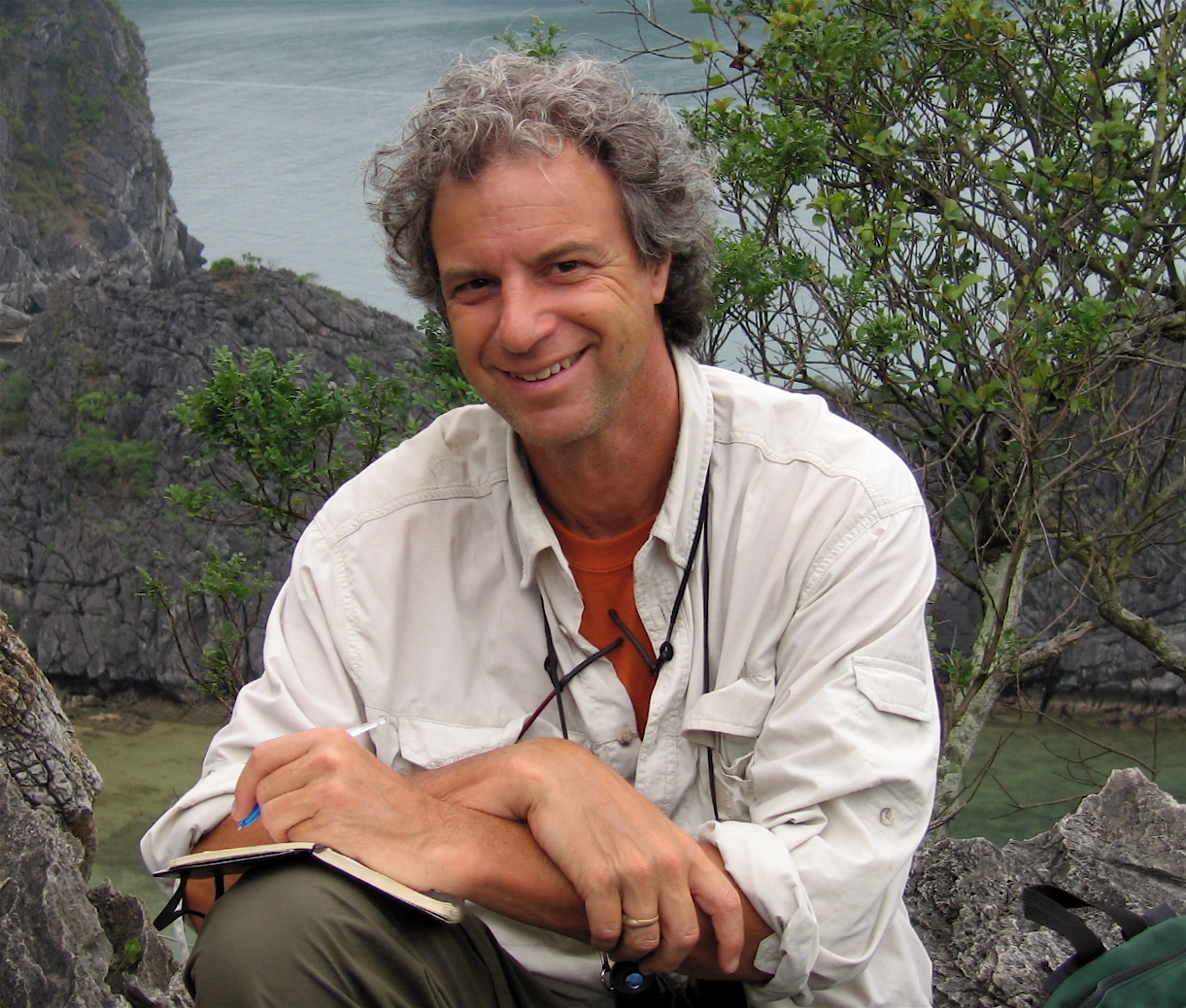
Jeff Greenwald
American author and photographer
5
APPEARANCES
3
PODCASTS
Oct 14, 2026


Jeff GreenwaldGUEST
... what we're, we're dealing with now is an attention crisis in a lot of ways.
Jeff GreenwaldGUEST
I mean, we're so splintered in our, with our focus, and deep focus, being able to drop in the moment and, and stay focused for, for a couple of hours, two, three, fi- up to five hours, you know, we've gotta train this.
Jeff GreenwaldGUEST
And, and social media is just, is nickin- Oh, it's taking, uh, takes a toll on players, right? And, and they, and they start to sort of obsess over it a little bit or just get a, yeah, a little obsessive with it.
Jeff GreenwaldGUEST
And, and so to really help them understand how important focus is, stay in the bubble, as we call it.
Jeff GreenwaldGUEST
And, uh, the best athletes in the world, they c- they stay in there longer, they come back quicker.
8 MINS LATER

Brad GilbertHOST
You could serve for the match and not make it"? What are some of these type of challenges mentally, you would say, that are very specific to our sport and unlike any other maybe in the world?


Mike RogersHOST
And I'm curious what the actual turning point where you realized the mental game and not the technical game was the missing piece to get you where you wanted to go.
Jeff GreenwaldGUEST
Well, funny, my mom would have said that we knew early that the mental game was a problem when I would yell after every point that I lost or felt I should make.
Jeff GreenwaldGUEST
But this sort of tendency, inclination for me to play safe on the safer side.
Jeff GreenwaldGUEST
But what really... uh, bothered me is that I, I look, you know, I played safe.

Mike RogersHOST
So why do you think players are especially hard on themselves when, you know, when they do choke?
Jeff GreenwaldGUEST
Yeah, I mean, avoidance is the number one sort of behavior we choose when we don't want to deal with something.
Jeff GreenwaldGUEST
We react to the tightness We often play too safe because of the tightness, and we're no longer in the driver's seat, right? And those feelings can come really quickly, and they don't feel great when you're tight, but we overreact to it.
Jeff GreenwaldGUEST
So we need to respond to the experience of being tight and that sort of choking response and try to remove the layer of the anxiety of the anxiety, if you will, right? The anxiety of being tight.
Jeff GreenwaldGUEST
Um, you know, but you get a lot of people now, think about it, who are retired or soon to be retired, may, you know, have some disposable income and time and, and tennis becomes a real, you know, a greater passion and, and maybe even an obsession, you know? And, and, and the identities that we have in other areas, what, you know, may- maybe you're just very successful in your, in your job and, uh, et cetera.
Jeff GreenwaldGUEST
And of course, there's, um, yeah, lo- all that success, you know, we sort of...
Jeff GreenwaldGUEST
That we don't lose that drive, you know? So I think that drive can, can be transferred into tennis, and it becomes, uh, can get really, um, yeah, a little...
Jeff GreenwaldGUEST
We can get a little neurotic about it, and we can get in our own way really easily when we're trying to either protect an identity or, you know, create a new one that really make, you know, matters to us.
Mike RogersHOST
So how c- how can we do that when, when our bodies really don't feel like that, when we're fatigued and we have soreness, uh-

BriHOST
Would you mind telling readers about The Size of the World in, like, a little synopsis? Um, for those who haven't read it, maybe listeners have read it, but for those who haven't, why is it so special, and why is it so even as important and as insightful today, 30 years later?
Jeff GreenwaldGUEST
So I was about to turn 40 when I decided to try to take a big trip that would, in a way, give back something to the world, 'cause I'd been a fairly successful travel journalist up to that point.
Jeff GreenwaldGUEST
And I thought, "What kind of trip can I take that will be sort of both a literary and an adventure and a spiritual enterprise, an odyssey?" You know, I'd...
Jeff GreenwaldGUEST
Like you, I'd spent a lot of time in Asia, and I was familiar with this idea of something called the kora, K-O-R-A, which is when you make a devotional clockwise circle around a sacred object, be it a temple or your guru or a sacred mountain, like Arunachala in India.
Jeff GreenwaldGUEST
So I thought, "Why not try to do a kora around the planet Earth?" I would try to go around the planet Earth in one direction without ever leaving the ground.
Jeff GreenwaldGUEST
Basically, I would not ever get on an airplane, but I would sort of make a devotional spiritual circle around the Earth as a measure of my respect for the planet and my gratitude towards it, and also as a way to test myself and see if this could be done.
46 MINS LATER
BriHOST
[laughs] Yeah.