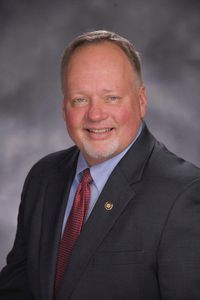
Jeff Coleman
Missouri State Representative
6
APPEARANCES
6
PODCASTS
Sep 25, 2026


Jeff ColemanGUEST
So, and I don't know that I approach this in a way some salespeople would or even think about, but AI gives you the tools to do things you couldn't do before in a time-effective way.
Jeff ColemanGUEST
So one of the things we do with prospects is we do an analysis of their business differentiators.
Jeff ColemanGUEST
What makes them stand out? And are they aware of that? Preferably from reviews from clients, you know, Google reviews or whatever.
Jeff ColemanGUEST
We also do a first pass at personas because I can do all of this in 15 minutes before I talk to someone.
Jeff ColemanGUEST
I think it gives you an opportunity to talk with them about stuff that's much deeper than like, how many leads are you looking for this month? Instead, we're talking about who are you trying to reach? And here's something we put together.

Nevena BažalacHOST
And does this mean when somebody come and say, hey, let's say people are listening, they have different type of businesses, some of them are self employed, and they say we want Google ads, would you say to some of them Google ads are not for you? Like, do you believe that Google ads do not work necessarily for every business?
Jeff ColemanGUEST
And so when we, you know, I will discourage people from using Google ads if I don't think it's a fit for their business, but there are a lot of businesses we don't know.
Jeff ColemanGUEST
It's not, um, you know, we can't guarantee that this is going to work for them because the cost per click is high.
Jeff ColemanGUEST
I mean, you asked what's different about a long time ago, we could get 25 cent clicks 20 years, you know, 17 years ago where most clicks we're looking at are $7 to $30 a click.
6 MINS LATER
Nevena BažalacHOST
How things change with Google in general? And how do you think this is affecting businesses?

Matthew BertramHOST
They don't, they're not always running it to a CRM and they don't have like a good like feedback loop to know, like, is this lead good or not? And so, you know, if you're using like GA4 or like, what, what are you to a business owner that is, is trying to measure, like, is this a good lead, not lead? Like, you know, I mean, you could thumbs up, like thumbs down, like, but how are you measuring that to feed it back to the AI to help it get better leads to get to the right answer faster?
Jeff ColemanGUEST
And with smaller clients who might be spending just a couple thousand dollars a month, it can get pretty challenging to figure out the way to do it.
Jeff ColemanGUEST
So I'll give you a couple examples because it's different for different clients.
10 MINS LATER


Rich BrooksHOST
What's your approach when it comes to divvying up the work that Google Ads needs to do?
Jeff ColemanGUEST
So landing pages come down to how each different thing shakes out and you want to explain it.
Jeff ColemanGUEST
So it can be different for different clients, even if you're running a similar type of campaign.
Jeff ColemanGUEST
So for example, we have a provider of site services that we run everything to the same landing pages because they offer exactly the same thing in each of their 140 locations.
Jeff ColemanGUEST
But we do separate out temporary fences from porta potties because if you were looking for a temporary fence, that's all you really want to see.
Rich BrooksHOST
What are the things that we're talking about here? How can we use conversion tracking or other signals to basically teach Google which leads are valuable to us and which do we want less of?


Guy PowellHOST
So how do you, how do you see those, and how do you, how do you test and, and improve the, the landing pages to really fit what's actually going on?
Jeff ColemanGUEST
So, you know, the ideal customer profile helps you figure out how you wanna speak to the people who are, um, coming.
Jeff ColemanGUEST
And a- as an example, we work with a credit union, and they have a, um, a high yield checking.
Jeff ColemanGUEST
And so when we actually broke down the personas there, we recognized there is a persona who's actually out searching for the best, um, rates, and then we realized there's a, a similar or another persona that knows they should be doing something but isn't very active in that searching.
Jeff ColemanGUEST
So obviously we want to target with search the, um, persona, person who's looking, and then use Google's display network as a way to reach people who know they should be doing more for their money.
Jeff ColemanGUEST
You know, they're very busy, but they really would like to earn more interest on their, um, the money that's sitting in the bank.
7 MINS LATER
Guy PowellHOST
Um, w- what do you see as where companies themselves fail, and what do you see as what they, they, they really missed when they were putting their, their, their campaigns together?

Jeff ColemanGUEST
Eli's building, uh, a sort of automation layer to get rid of a bunch of manual paperwork on top of modern payment infrastructure to move money faster.
Jeff ColemanGUEST
And so the simple e- explanation is that in these markets, often you have work being done, machines being installed, and then a whole bunch of paperwork and manual processes that end up feeding into some institution paying money out to different parties in, in the transaction, right? And the two points of friction that we address are the paperwork not being spread out across different departments and different organizations and actually kind of unifying all of that into a single workflow and automating it.
Jeff ColemanGUEST
And then second is using our own capital to just pay out the installers, pay out the workforce that's actually doing the work installing the machines within 48 hours of doing the work, and being able to h- let them move on to their next project, handling all the settlement layer kind of on the back end ourselves, right? And so we pay contractors in Massachusetts within two business days for the heat pump they just installed.
Jeff ColemanGUEST
And we're able to do that because our platform is able to understand the project and understand the risk and understand whether it qualifies instantly, and so we can issue the payment confidently and collect on the back end.
Jeff ColemanGUEST
I would say technology has a decent track record of being able to come into an industry and figure out how to remove a lot of friction.
19 MINS LATER
Steph SpeirsHOST
And what have been some of your biggest lessons in building this business that you didn't expect at the beginning? What have been some surprises?