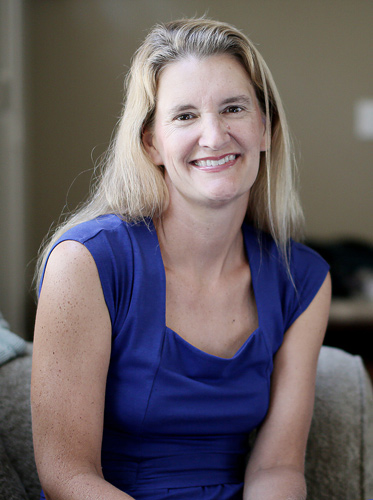
Jean Twenge
American psychology researcher
17
APPEARANCES
17
PODCASTS
Oct 27, 2026


Jean TwengeGUEST
I mean the evolution of these types of ideas is really interesting because you advance it and then the first reaction is you have to be wrong.
Jean TwengeGUEST
And then like within a couple of years – Why? But why? Is that big tech or – why is it – Oh, that's a whole – we could spend the entire podcast talking about that.
Jean TwengeGUEST
They fund researchers, and then those researchers have to say these types of theories are wrong.
8 MINS LATER

Robert GlazerHOST
And I just, to me, this is a fundamental abdication of a leadership in a parenting role.

Jean TwengeGUEST
Well, one thing that's important, I think, for this conversation is to start with the trends in mental health Because that's been one of the biggest drivers between the differences between particularly millennials and Gen Z at the same age.
Jean TwengeGUEST
So this is how I discovered Gen Z was already here, was these big data sets that I work with of young people, and seeing that as you get that transition in birth years of those born, say, early '90s, who are millennials, versus late '90s, Gen Z, that's when you start to see the increases in loneliness, anxiety, depression, unhappiness.
Jean TwengeGUEST
You, you name it in terms of mental health, it got worse in that transition from millennials to Gen Z for, you know, adolescents and for young adults.
Jean TwengeGUEST
So it's not just the kids, it's also entry-level employees up to about the age of 26 or so are seeing those increases in even major depression.
Jean TwengeGUEST
So, and I've noticed this with my undergraduates, 'cause I, you know, teach college students.
13 MINS LATER
Amanda SchneiderHOST
So what do you see as the role of education? What do you see as the role of kind of the workplace when they get there, and maybe even parenting? Like, like how are we getting here?


Jean TwengeGUEST
They don't know, they don't know how because they don't have as much experience.
Jean TwengeGUEST
They're not out playing with their friends outside in the way that previous generations grew up.
Jean TwengeGUEST
They're not solving problems on their own, developing that resilience and toughness that came up earlier.
Jean TwengeGUEST
It's just, it's not happening as much, and then it's not happening when they're teenagers, 'cause instead of the iPad, then they have the phone.
22 MINS LATER

Manny FidelHOST
University.So first up, I asked Dr. Twenge to define the generation line just so we can jump off from there.
Jean TwengeGUEST
[upbeat music] The book starts with the Silent Generation, so that's those born 1925 to 1945.
Jean TwengeGUEST
And so they were generally too young to fight in World War II, and their label of the Silent Generation is a pretty big misnomer because they changed a lot of things in the law and around equality.
Jean TwengeGUEST
So two of their most famous members, Ruth Bader Ginsburg and Martin Luther King Jr. [upbeat music] Then we have the baby boomers, born 1946 to 1964, known for being the babies born during that huge uptick in birth rates after World War II.
Jean TwengeGUEST
And because they're such a large generation, they've had an outsized impact on American culture and politics, and it's often thought they were the leaders of the civil rights movement and the feminist movement.
Jean TwengeGUEST
So the Silents changed the laws, and boomers changed hearts and minds just through the way that they lived their lives.
Manny FidelHOST
To zoom out a bit more, I asked what sort of data she's looking at to make these sorts of definitions, and here is her main theory on this.

Jean TwengeGUEST
Like, there's this pervasive rumor out there that particularly for women, that it's single women who are happier.
Jean TwengeGUEST
It's not true, and it's never been true, and- and no data set has ever shown that.
Jean TwengeGUEST
It's just this- this very strong perception and this cultural message that gets put out there, and it's, and it's not true.
Jean TwengeGUEST
And then there's been even more debate back and forth about having children and whether that's linked to happiness.
Jean TwengeGUEST
Now, that's an interesting one because really, do, you know, are, is that really why you're having children, to be happy? Well, maybe, but I would hope it would also be to have purpose and meaning and all these other things, and we know that.

JoelHOST
And so c- can you speak to that? Why do Millennials feel poorer than they actually are?
Jean TwengeGUEST
I think one thing is that early on- There were, there was, you know, actual data showing that millennials weren't doing as well.
Jean TwengeGUEST
So the Federal Reserve of St. Louis, you know, put out a study that got all kinds of press in 2015 maybe saying how millennials might not ever catch up and so on, and that, you know, got a lot of attention, and I think it kind of put people in that mindset.
Jean TwengeGUEST
Of course, then the St. Louis Fed updated that, uh, in, later on and, and with the mos- most recent data, turns out millennials are neck and neck with Gen X and, and on track to catch up with boomers in terms of their wealth building.
Jean TwengeGUEST
So even with college loans and all that taken into account, millennials are still doing pretty well, you know, with, with wealth building.
Jean TwengeGUEST
Um, but, so I think some of it is that the perception got stuck at that previous point where recovery from the Great Recession was taking a long time, particularly for younger people.
28 MINS LATER
JoelHOST
But does that ever catch on and become, like, a, a phenomena in a generation that just kind of bucks the trend and, and moves headlong in a different direction?

Jean TwengeGUEST
More recently, also started to see connections to cognitive difficulties, academic performance.
26 MINS LATER
Marlon MorganHOST
Workarounds, mostly for time limits, aren't they just going to find a way around the parental controls and workarounds? Mm-hmm.


Jean TwengeGUEST
I just remember thinking like, "What's going wrong in the lives of teens at that point?" And you know, when you work with big data sets that go over time, when you have one year of data, you always have to pause and go, "Okay, this could be a blip, and it might go back to normal the next year." But it didn't.
Jean TwengeGUEST
So then I started thinking more broadly, well, could it be the economy? That's always kind of the first place that you have to go.
Jean TwengeGUEST
Those of us who lived through the Great Recession know how bad that got, but it was finally, finally over by twenty twelve, and things were getting better in the US economy.
14 MINS LATER

PaigeHOST
They are also one of the last generations where everyone pretty much watched the same things and heard the same music.
Jean TwengeGUEST
So if your parents are Gen Xers, ask them what they did on, on weekends when they were growing up, and they'll be able to tell you all about Saturday morning cartoons, um, and having a lot of freedom to ride around on their bikes.
SkyeAUDIENCE
The Millennials.
Jean TwengeGUEST
Millennials, born 1980 to 1994, grew up in a time of a lot of optimism during the 1990s, are known for being optimistic, although not as optimistic as they used to be.

Jean TwengeGUEST
And, you know, I do think you can take that argument too far because I've heard people say, oh, this is just the way kids are now.
Jean TwengeGUEST
But unless you're homeschooling your kids or sending them to the only school in the universe that doesn't have laptops, they're going to have some tech.
9 MINS LATER
Aliza PressmanHOST
But since we don't know, I guess what I'm trying to get at is, is 16, was there like, we're going to randomly assign some kids the phones at different ages and now we have information? Or was it like, given all that we know about developing brains? We're going to just pick an age that feels like it's not too young, that it's absolutely certain they won't be able to manage it well, but it's not too old that it feels like this is too prohibitive and nobody's going to follow it.

Jean TwengeGUEST
So when I first started looking at this area for research, my own kids were pretty young.
Jean TwengeGUEST
But then they grew into teenagers, and quickly, it was that collision between my research life and my life as a mom, and just realizing, in my view, a lot of the advice out there for parents around technology isn't particularly helpful.
Jean TwengeGUEST
A lot of it is focused on talking to kids, which of course we should do, but that's also not enough.
Jean TwengeGUEST
So in the course of raising the three kids, I realized that there were some things, some kind of compromises and rules that we came to that made a lot of sense, that intersected with the research and that I wanted to share with parents to try to make our lives easier, because it often is parents against the world in this area.
7 MINS LATER

Maggie PenmanHOST
What makes you feel hopeful when you look at how things are moving in our society?


Jean TwengeGUEST
No, I think that's an excellent point, um, that, that's right in line with my philosophy in this book, that, hey, we put guardrails and rules on pretty much everything else.
Jean TwengeGUEST
So are we really just gonna say, "Okay," to your seven or eight year old, or for that matter your 14 year old, "You need to go to bed at this time, otherwise you're going to be tired tomorrow." And you could say, "Okay, they'll figure that out eventually." No, they won't.

Dr. Becky KennedyHOST
And I think everyone needs a little education and pep talk about how some of this is possible.
Jean TwengeGUEST
So let's say, you know, on a Mac laptop or an iPhone, um, or the Google setup on a, on an Android phone or a, or a Chromebook.
Jean TwengeGUEST
They're often really hard to figure out, even if you're educated, even if you, you know, research this stuff, even if you look it up online and do, you know, the step-by-step directions.
Dr. Becky KennedyHOST
Just, you know, flesh that out for us a little bit.


Henry BlodgetHOST
So, I, are you persuaded or why are you persuaded that this is much different than what seems to be an age-old feeling of parents that whatever new technologies have come along since they were kids are terrible?
Jean TwengeGUEST
So if it was just parents saying, "Hey, I don't like this stuff," we'd be having a very different conversation.
Jean TwengeGUEST
Instead, it's that young people themselves are suffering and are s- telling us that they're suffering through both what they're saying in terms of the symptoms and feelings and emotions they're having, uh, and their behaviors.
Jean TwengeGUEST
So suicide rate has gone up among teens, the rate of self-harm has gone up, and depression and depressive symptoms have gone up, unhappiness, just across the board.
10 MINS LATER

Jean TwengeGUEST
And then for, for millennials, there's a couple of things millennials are known for.
Jean TwengeGUEST
So, the idea that millennials really took a hit from the Great Recession, that they never recovered from, and they're never gonna own houses and never move out of their parents' basement and all of that, that does not appear to be true.
Jean TwengeGUEST
And then the other thing that millennials are known for is their individualism, their self-confidence, their optimism, sometimes even entitlement, and there's good truth to that based on what they say about themselves in the survey data.
15 MINS LATER
Tommy MischkeHOST
What prompted you to do this? Was it a natural offshoot of the book, Generations?

11:59

And one of the points that you made in terms of how difficult it is for those of us who are parents is that we didn't grow up using these technologies and so you know we get lost very quickly in it that certainly sums up my own experience when my kids were younger
Jean TwengeGUEST
yeah this is the challenge that even if we as parents you know use social media use our own smartphone i think we don't fully process that our kids' experience is going to be different, partially just because of their age and that their brain development is at a different state.
Jean TwengeGUEST
It's even harder for them to put down that phone, to close that social media app.
Jean TwengeGUEST
And also just that because of the social norms changing, their experience is often fundamentally different.
Jean TwengeGUEST
So one is that there's now the expectation among a lot of kids, teens, even young adults of instant response to texts.
5 MINS LATER
18:31
Dr. Twenge, how is it that so many of us who were raised, I'll give Lenore Skenazy a shout out because she deserves it, free range style, when we then had our own children became overly protective?


Fareed ZakariaHOST
And- and what do you think, you know, what explains that? It feels like it's more than just cell phones.
Jean TwengeGUEST
Well, there's obviously a number of factors, but yes, that's one of the symptoms of depression, it, uh, that- that feeling of not feeling useful, you know, increases at the same time as saying you don't enjoy life, that, um, you don't feel that sense of purpose.
Jean TwengeGUEST
It also goes hand in hand with pessimism, of not having hope for the world.All of...
Jean TwengeGUEST
We see all of those things, um, in Monitoring the Future, this very large, um, survey of teens that's done across the US that I analyzed, um, for my book, Generations.
Jean TwengeGUEST
So the cause, of course, is harder to determine, but nothing else really fits as much as the growth of smartphones and social media that happened in the early-2010s.
Jean TwengeGUEST
Because it wasn't just that, it was its downstream effects that had this huge effect on teens' day-to-day lives, that they started spending a lot more time online, a lot less time with each other in person, and less time sleeping, and you put those three things together, that is a terrible formula for mental health.
Jean TwengeGUEST
Yeah, and you know, I always wanna be clear that rule does not mean we're gonna go back to the days of the ultimate parental authority, but still, that the buck stops with you, and that you can make the rules.