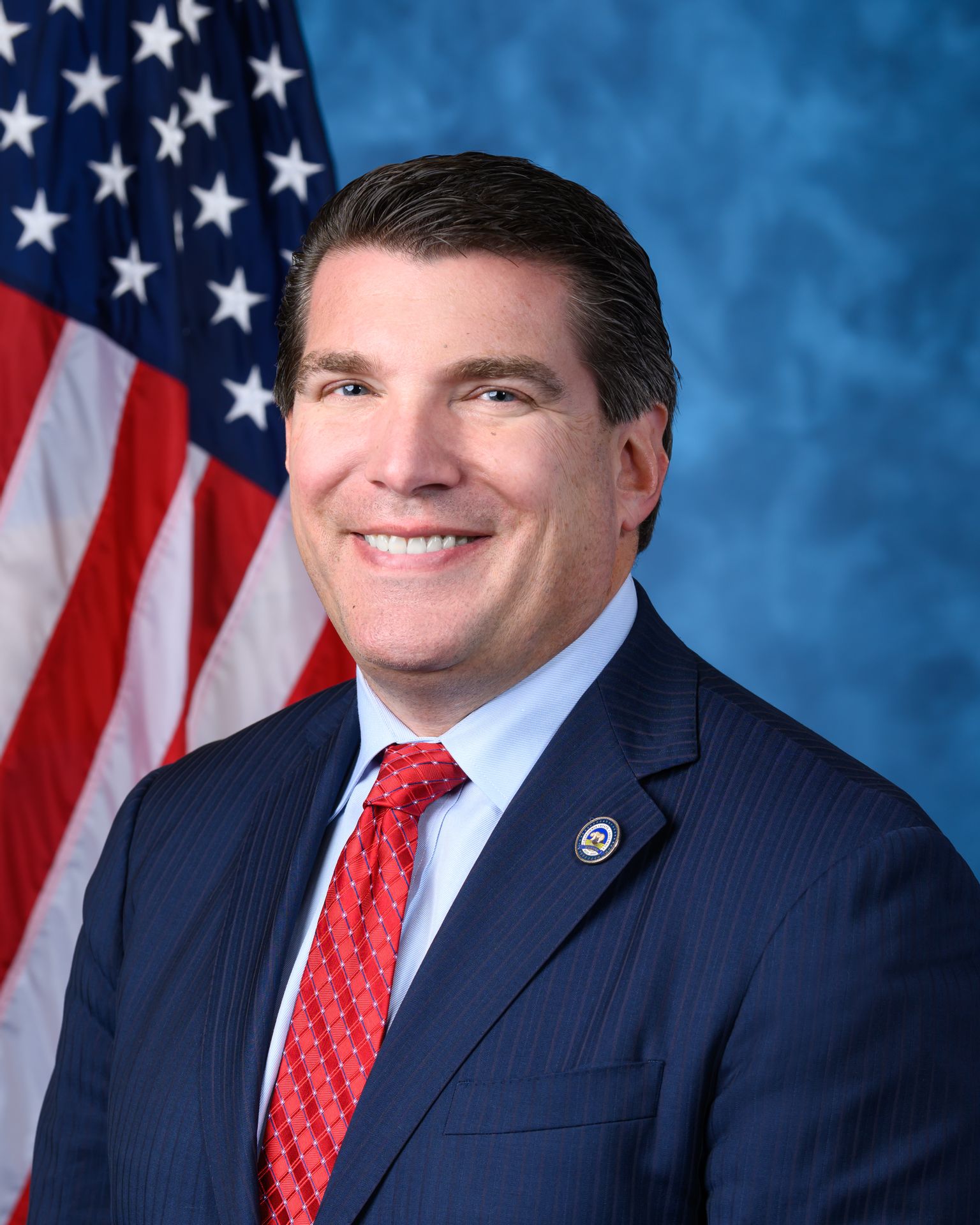
Jay Obernolte
Businessman and former United States Representative
15
APPEARANCES
10
PODCASTS
Sep 26, 2026


Anderson CooperHOST
Does this just reinforce warnings coming from a number of tech leaders? Where do you stand on, on this?

Jay ObernolteGUEST
Well, these incidents are very concerning, Anderson, because they are another example of a loss of human control, uh, and a loss of awareness by these companies in testing these frontier models over what their models were doing.
Jay ObernolteGUEST
So computer scientists call this an alignment problem, where the model's behavior was not aligned with our standards for human behavior, and this is a perfect example where OpenAI, you know, was testing these models and asked them to do something pretty innocuous, asked them to gather information, which is something that, uh, is a usage that most of us would find, uh, you know, v- very utilitarian out of, out of a model.
Jay ObernolteGUEST
But no one told the model that it wasn't okay to break into non-public databases to get access to this information.
Jay ObernolteGUEST
So that's an example of why we need to align the values that these models are trained on with human values.
Jay ObernolteGUEST
And if we can do that, we can get these models to conform to our standards for human behavior.
Jay ObernolteGUEST
Uh, it's also an example of why we need closer monitoring of the behavior of these models.


Kristen WelkerHOST
Do you agree? Are you confident that lawmakers, that you yourself have, have a strong enough grasp of this technology to craft legislation that, that properly creates guardrails?
Jay ObernolteGUEST
Well, we had a bipartisan AI task force in the last Congress that worked for an entire year in 25 different hearings to put together the plan that we're trying to enact, and we, uh, came up with a nearly 300-page report that was unanimously approved by all 24 members of our task force.
Jay ObernolteGUEST
In fact, I asked the speaker when he, uh, asked me if I would chair the task force to not send me a bunch of technologists.
Jay ObernolteGUEST
I wanted a diversity of, of opinion and background, and I wanted to be able to surface problems early before we got legislation to the floor.
Jay ObernolteGUEST
And I think one of the greatest things that the task force accomplished is that it- we now have there's this core nucleus of members of Congress who are deeply educated on the issue of artificial intelligence, and that should give everyone some hope.
Kristen WelkerHOST
Do you think the concerns about AI potentially getting out of control are a hoax?


Jay ObernolteGUEST
Well, I think it's important to keep in mind that these recent incidents have been exposed through testing.
Jay ObernolteGUEST
And the models that we're testing in all of these cases were models that had their safety controls intentionally removed.
Jay ObernolteGUEST
So the companies were asking, as they should, what's the worst thing that can happen? And we're finding out what the worst thing that can happen.
Jay ObernolteGUEST
So we're finding out a lot more about alignment, where we need to align the values of AI to human values.
Jay ObernolteGUEST
And we're finding out a lot more about the ways that we impose guardrails on AI.
7 MINS LATER

Jay ObernolteGUEST
Congressman Liu's bill would require a kill switch to be built into every frontier model.
Jay ObernolteGUEST
The bill that Congressman Trahan and I did, the broader bill that we call the Great American AI Act, addresses a lot of the different recommendations of the AI task force.
Jay ObernolteGUEST
But the second thing is I'm a little skeptical that it's actually going to be implementable.

Ayesha HosniHOST
Do you think that this is a conversation worth having between our president and Xi? Yeah.


Jay ObernolteGUEST
Well, I think what the president is warning about are the dangers of overregulation, and that's something I very much agree with him on.
Jay ObernolteGUEST
But I think he's also warning against our geopolitical adversaries using misinformation to try and influence American public opinion against AI.
Jay ObernolteGUEST
China is behind us substantially in the race to develop and deploy frontier-level AI, and they've determined that the best way of them to catch up is to poison American public opinion against it, and they're working very hard at that.
Jay ObernolteGUEST
I mean, first of all, uh, it is just one element of the safety framework that needs to be enacted.
Jay ObernolteGUEST
So, uh, the, the bill that Congressman Trahan and I did, the broader bill that we call The Great American AI Act, addresses a, uh, a lot of the different recommendations of the AI task force.
Jay ObernolteGUEST
Uh, but the second thing is I'm a little skeptical that, uh, it's actually going to be implementable, and, uh, let me tell you why.
Ayesha HasnieHOST
Do you think that this is a conversation worth having between our president and, and Xi?


Amanda HeadHOST
What's the remedy to that? Is it, is it a required disclaimer at the bottom? How do we make sure that we don't stifle that technology and that development and that innovation, but also make sure that we're keeping things honest?
Jay ObernolteGUEST
As you know, I chaired the House AI Task Force in the last Congress, and we took a look at the larger issue of, uh, of, uh, content, synthetic content labeling and watermarking.
Jay ObernolteGUEST
And what we concluded is, uh, we need to instill in our entire society a more healthy skepticism about what things are authentic.
Jay ObernolteGUEST
And, uh, w- we can't solve this problem b- m- by putting, you know, requiring warning labels or requiring a watermark on AI-generated content for the same reason why we can't solve the problem of currency counterfeiting by requiring someone to pa- f- uh, to stamp fake on, uh, on fake currency.

21:00

I- is your sense, though, that there's a, a, a clear and present danger today? Do you think that the danger is in, um, multiple years from now, decades from now? W- w- how do, how do you, how do you all see that?
Jay ObernolteGUEST
Well, there are a number of hazards that AI poses to Americans, particularly in the hands of malicious human actors.
Jay ObernolteGUEST
And, uh, we want to make sure that Americans are protected against those risks, while still setting the groundwork for an industry that's going to have tremendous positive impact on American consumers, American economy, and, uh, our national security.
Jay ObernolteGUEST
So we think the discussion draft that we've put together accomplishes that, where we're balancing the guardrails that need to be put in place against, uh, still creating an environment that allows this industry to flourish and to bring all the good things it's going to bring to Americans and our economy.
Jay ObernolteGUEST
... that's something out of a Terminator movie, right? Where an army of evil robots rises up to take over the world.
Jay ObernolteGUEST
And, and honestly, what you're talking about is what computer scientists call AGI, artificial general intelligence.

Amanda HeadHOST
What's the remedy to that? Is it a required disclaimer at the bottom? How do we make sure that we don't stifle that technology and that development and that innovation, but also make sure that we're keeping things honest?
Jay ObernolteGUEST
As you know, I chaired the House AI Task Force in the last Congress, and we took a look at the larger issue of content, synthetic content labeling and watermarking.
Jay ObernolteGUEST
And what we concluded is we need to instill in our entire society a more healthy skepticism about what things are authentic.
Jay ObernolteGUEST
And we can't solve this problem by requiring warning labels or requiring a watermark on AI generated content for the same reason why we can't solve the problem of currency counterfeiting by requiring someone to stamp fake on fake currency because all of the law abiding actors will comply and the people that won't comply are the ones who really have an intention to deceive and that would happen with AI as well.

John SolomonHOST
I'd like to get your thoughts on that approach that the president has introduced.
Jay ObernolteGUEST
Well, I think it's an indication of a larger, uh, a larger problem, which is that we have, uh, shamefully underinvested in energy generation and our grid infrastructure for the last 50 years.
Jay ObernolteGUEST
It's driving a lack of affordability, and it's making that slippery slope down into poverty even steeper and easier to slide down and harder to crawl back out.
Jay ObernolteGUEST
So, uh, I think Americans are feeling the pinch, and they're right to be upset about that, and we need to invest in more generation.
6 MINS LATER
Unknown podcast
Extra: Why Gen Z is Booing AI at Graduation
May 23 · 21m
Jay ObernolteGUEST
Well, I think it's an indication of a larger, uh, a larger problem, which is that we have, uh, shamefully underinvested in energy generation and our grid infrastructure for the last 50 years.
Jay ObernolteGUEST
Uh, and that is having, uh, consequences for Americans in every walk of life.
Jay ObernolteGUEST
It's driving a lack of affordability, and it's making that slippery slope down into poverty even steeper and easier to slide down and harder to crawl back out.
Jay ObernolteGUEST
So, uh, I think Americans are feeling the pinch, and they're right to be upset about that, and we need to invest in more generation.
6 MINS LATER
Unknown podcast
Who Has Time On Their Side, The U.S. Or Iran?
May 20 · 32m
Jay ObernolteGUEST
Uh, I mean, most recently AI and the internet, but going all the way back to the dawn of the printing press.
Jay ObernolteGUEST
Uh, but if you look at each one of those revolutions, uh, it has created many more human jobs than it has displaced.
Jay ObernolteGUEST
And so although it's, they've, they've always been disruptive, uh, they've always created more jobs.
Jay ObernolteGUEST
them.Right, and this has always been a concern with technological revolutions.
Jay ObernolteGUEST
Uh, I mean, most recently AI and the internet, but going all the way back to the dawn of the printing press.
Jay ObernolteGUEST
Uh, but if you look at each one of those revolutions, uh, it has created many more human jobs than it has displaced.
Jay ObernolteGUEST
And so although it's, they've, they've always been disruptive, uh, they've always created more jobs.

Dori PhamHOST
So to start us off with, can you tell us a little bit about your job and what you do on a day-to-day basis?
Jay ObernolteGUEST
And if your listeners aren't familiar with where that district lies, it is most of San Bernardino County and a little piece of Los Angeles and a little piece of Kern.
24 MINS LATER

Dave AnthonyHOST
Russia or North Korea, that, that do fraud and hacking and phishing and all the things like that.... how do we compete with China in AI and, uh, try to avoid that world?