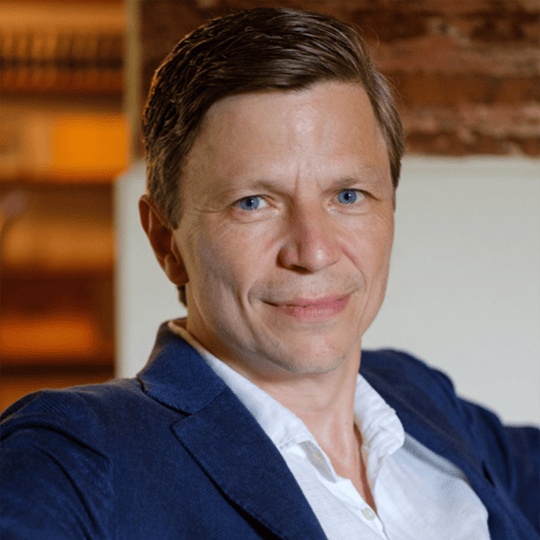
Jason Wild
12
APPEARANCES
10
PODCASTS
Sep 10, 2026


Jason WildGUEST
And so, yeah, when Linda invited me, Linda Hill, my co-author, who's the chair of the leadership program at Harvard Business School, and I've known Linda for many, many years, but when she invited me to co-author and write her next book, In the moment, I thought it was a candid camera moment of like, oh, that's a good one, Linda.
Jason WildGUEST
And obviously, I'm really honored and privileged that out of all the people she's gotten to know and collaborated with over the years that that she picked me.
Jason WildGUEST
And so I got to know Linda first and then her research assistant, Emily Tedderts, several years later.
18 MINS LATER
speaker_2ADVERTISER
And


Shadd DalesHOST
In your own words, what do you think this signals for the cannabis industry when you see an ETF that has been trading on this exchange for six years, but is now being fully embraced by the exchange? It's, I guess, the next chapter of the cannabis industry,
Jason WildGUEST
I think it's... just goes to show how we're breaking down the walls in terms of the stigma, obviously.
Jason WildGUEST
We all heard that little speech from the New York Stock Exchange representative earlier, how he's looking forward to having individual companies list going forward.
Jason WildGUEST
Once these companies can be listed on regular exchanges, it'll lower our cost of capital, obviously.

Kwame ChristianHOST
And so when it comes to influence without authority, where do people start when it comes to gathering up the political capital, capital you need within an organization, especially to actually get fini- uh, projects, um, green, the green light, but then get it across the finish line as well?
Jason WildGUEST
Yeah, I mean, I think influence without authority is, uh, you know, argu- arguably one of the most important things that I think that we, we uncovered in, in the almost 10 years of research of our book.
Jason WildGUEST
And I think just building on what we were just talking about before, I'm convinced personally that Self-awareness is, is the most underappreciated and undervalued skill for any leader.
Jason WildGUEST
And I think for me, at the beginning of my own personal journey, you know, I define that a bit narrowly of almost how the external world perceives me.
Jason WildGUEST
And, and I think one of the things this conversation reminded me of was probably the best career advice that I ever got, and it happened early in my career, um, from a guy by the name of Joel, who's now kind of a mentor, retired, but at the time he was the managing partner of Egon Zehnder, uh, which is a Swiss-based executive search, um, CEO board placement kind of firm dealing with sensitive issues and, you know, CXO and above.
Jason WildGUEST
And I think, you know, I appreciate that Joel at the time saw something in me, and he had more confidence in me than I had in my- myself.
26 MINS LATER
Shadd DalesHOST
What is driving us that margin expansion this quarter? And at this level, is it sustainable going into the back half of the year here?
Jason WildGUEST
And I would say the fact that we did not have to discount as much as maybe we have had in the past.
Jason WildGUEST
I mean, the quality has really, and a lot of people talk about quality, But Zia and I talked about it on our earnings call.
Jason WildGUEST
We spent about a week in April going to all of our dispensaries, and that was the universal thing that we heard from all of our bud tenders was we just need more of our own product.
22 MINS LATER

Jason WildGUEST
And, uh, so yeah, I, I have a couple of personal views, right? As a parent, I've got four kids, one of my sons- You know, adores and admires Elon Musk.
Jason WildGUEST
I think, you know, the positive that I see and what I like about him is that he has no limits.
Jason WildGUEST
I think one of the things, you know, having made my career in innovation, in trying to get people to invent the future, um, as human beings we have biases, right? We bring baggage, right? Our previous experiences form and shape our beliefs.

Tommy MelloHOST
I don't wanna cut you off, but, like, you wanna bring innovation out of people, but you probably need some innovation leaders in the business.


Michael KeeganHOST
Would you walk through with us what these three roles are? How are they distinct and how do they relate to one another? And are these roles something leaders cycle between, adopt sequentially, or deploy simultaneously?
Jason WildGUEST
In the book, one of the underlying patterns that we saw were these patterns of mindsets and behaviors of different leaders.
Jason WildGUEST
Bottom up, we identified what we call the ABC framework, A for architect, B for bridger, C for catalyst.
Jason WildGUEST
but roles that different leaders, exceptional leaders, you know, take in different contexts, depending on what's needed to be able to, you know, accomplish the mission of whatever it is that they're trying to do.
Jason WildGUEST
So give me a second at all, you know, after I define kind of the framework at a high level, a architect, architects are really about building community, the cultures and capabilities where people are willing and able to to want to innovate.
Jason WildGUEST
I mean, one of the things that we learned is crisis or not, you can't mandate innovation.
13 MINS LATER
Michael KeeganHOST
Can you tell us a little bit more about how all three of you complemented each other for this effort? Sure.

Michael KeeganHOST
Would you walk through with us what these three roles are? How are they distinct and how do they relate to one another? And are these roles something leaders cycle between, adopt sequentially, or deploy simultaneously?
Jason WildGUEST
In the book, one of the underlying patterns that we saw were kind of these patterns of mindsets and behaviors of different leaders.
Jason WildGUEST
And kind of bottom up, we identified what we call the ABC framework, A for architect, B for bridger, C for catalyst.
Jason WildGUEST
but roles that different leaders, exceptional leaders, you know, take in different contexts, depending on what's needed to be able to, you know, accomplish the mission of whatever it is that they're trying to do.
Jason WildGUEST
So give me a second and I'll, you know, after I define kind of the framework at a high level, a architect, architects are really about building community, the cultures and capabilities where people are willing and able to to want to innovate.
Jason WildGUEST
I mean, one of the things that we learned is crisis or not, you can't mandate innovation.
18 MINS LATER
Michael KeeganHOST
Can you tell us a little bit more about how all three of you complemented each other for this effort? Sure.

Anthony VarrellHOST
Has that caused you to have more emphasis on that market and looking to acquire assets there, let's say, quicker than expected? Is it showing relative strength or are you still taking the cautious approach to M&A in that market?
Jason WildGUEST
The fact that the market is doing better is good for us, obviously, from the perspective of the one store that we own.
Jason WildGUEST
It also is hopefully an indication of what may happen in the coming months when the full intoxicating hemp ban goes into effect and some other states start being a little stricter about enforcing that.


Paula PantHOST
And so what's interesting to me about hearing this description of the bridger, am I correct in my interpretation that I'm hearing that again?

Jason WildGUEST
Um, so as a part of my time at IBM, I was part of the team that, uh, helped with Watson and on Jeopardy and the go-to-market.
Jason WildGUEST
So it's been interesting to see just AI go mainstream, especially over the last couple of years.
Jason WildGUEST
I'm a parent, so I have a range of emotions and share some of the same trepidation.
Jason WildGUEST
I do subscribe to the notion that, you know, asking the question, uh, will AI take your job, is not really the right question.

Linda HillGUEST
So I need to, going back to do you need emotional intelligence or whatever it is, this is a moment when only a human can provide the kind of comfort that will allow the parents to make the right decisions about what to do.


Jason WildGUEST
And, you know, as I was working on these projects and, y- you know, long story short, I was seeing these incredibly talented people literally pour their life, you know, into these projects or whatever it is they were working on, but accepting very low success rates, five, 10, 15%.
Jason WildGUEST
And, you know, I bought into the same notion that innovation was all about coming up with the best idea, that it was about, you know, the lone genius, the person with the biggest title and the power.
Jason WildGUEST
But over time, I became really curious about what really did set out in a small company or in a big company.
Jason WildGUEST
You know, why did some ideas, you know, go far enough along to actually change the way that we live or work, change a system, and others didn't? And it kind of became a little bit of my career and life passion.
Jason WildGUEST
And, and I saw so many of these people that I really looked up to just approaching it kind of the wrong way, falling in love with the ideas, focusing on the what of innovation.


Jason WildGUEST
Just find a way together to bring together the best of IBM and harness it into this relationship." And for a young person in my 20s to hear...
Jason WildGUEST
'cause I thought Wall Street and the stock market and, right, nobody challenges them, right? And to hear a CEO who is successful basically talking about customer centricity, and one of the first things that I really learned, and, and I think it was that moment, so I became really passionate about customers, and I realized that for different reasons, it wasn't always natural that people think of customers first, right? You think of any company 100 years old or one week old, Mick, they pretty much have the same origin story, right? Some entrepreneur came up with an idea of a solution to solve some problem in the world.
Jason WildGUEST
You find a customer, right? And it's kind of like you're right like this at the beginning of that relationship.
Jason WildGUEST
But as you grow over time, you got lawyers and operations and supply chain, and right? The decision maker gets farther and farther away from the customer.
Jason WildGUEST
So as crazy as it was, one of the first projects I worked on was with a regulated utility.
7 MINS LATER

Jason WildGUEST
When I was leading innovation at IBM, Linda was finishing up her last book, Collective Genius, with her other co-authors.
11 MINS LATER
Travis ChappellHOST
Jason, I'm curious from your perspective researching this book, as a practitioner, was there anything that you found in just interesting data sets or a study that you found, a story that you found that you thought was maybe the antithesis to what the book was? Anything that was surprising that came up in the research to put this book together?