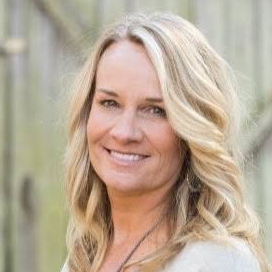
Janelle Voss
Co-presenter of "Tassie Encounters," a weekday morning Christian program on Faith FM (Australia), appearing in regular Bible-study segments alongside Jason Cook.
21
APPEARANCES
1
PODCASTS
Sep 10, 2026

Janelle VossGUEST
Uh, so then you wanna spend time actually thinking about what you've just read, and this is the important bit, and the word that I'm gonna say here is slow.
Janelle VossGUEST
It's just finding whatever strategy works for you to slow down and, and give the, the words that you're reading an opportunity to sink in in some way.
Janelle VossGUEST
This is where we respond to whatever it is that we've discovered, and we, we then talk to Jesus, so it becomes like a conversation.
Janelle VossGUEST
So he spoke to us through his Word, and then we speak to him through, um, yeah, whatever it is that, that we've learned.
5 MINS LATER

Janelle VossGUEST
I, I [laughs] do that too, and I will read the same book over and over because I can immerse myself in the experience that the book is giving me.
Janelle VossGUEST
But a lot of the time we're reading for information, and, and we're trying to understand the information, and we might even be trying to retain the information.
Janelle VossGUEST
When we read the Bible that way, and we do need to read the Bible that way too, because there is information that the Bible is wanting to give us about, um, uh, the, the best way to live, for example.
Janelle VossGUEST
Um, and when you read the Bible for the first time, of course, if you're reading a story for the first time, your brain needs to pick up on the information to understand the story.
Janelle VossGUEST
But when we only read for information, we get to a point where we go, "Well, I know the information.

Jason CookHOST
When you're trying to understand what somebody's really like, how much difference is there between hearing what other people say and actually hearing from them yourself?
Janelle VossGUEST
Because when you hear what someone else says, it is filtered through their experience, their judgments perhaps.
Janelle VossGUEST
You might get differing opinions, contradictions that you've then got to try and figure out.
9 MINS LATER
Jason CookHOST
um i guess that leading on from what you were just saying there um What does it tell us about God when we look at creation? Or what sort of things can we learn about God when we look at the created world and the intricacies of the creation?
Janelle VossGUEST
Yeah, the way He is so generous in what He provides for us and and gives us, yeah, I just, I love this, this contrast between, between the teeny tiny details and then the enormity of, of what he's created.
5 MINS LATER
Jason CookHOST
That God cares even for the sparrow, but the sparrow is not anywhere near the tiniest of things.
Janelle VossGUEST
Well, I kind of noticed something along those lines, Ben, that it actually begins with Moses tending the flock.
Janelle VossGUEST
So he's gone back to the heritage of his ancestors who, when they entered Egypt, that's what they did.
Janelle VossGUEST
So he's gone from being a prince of Egypt to actually taking on board that kind of heritage.

Ben AshbyGUEST
Is there anything significant about God saying, I am the God of your fathers, Abraham, Isaac, Jacob? Is there anything meaningful to that? For Moses, do you think at all? Maybe Janelle?
Janelle VossGUEST
Um, so she has to trust, trust the, the child to the sister, and the sister does a sterling job, can I just say? Keeps an eye on the baby, but also has the courage to then run up to the third woman, who happens to be Pharaoh's daughter.
Janelle VossGUEST
Now, if you're a young Hebrew girl and you're a slave to the Egyptians, and this woman's dad is the one who is actually commanding the death [laughs] of all the-
Ben AshbyGUEST
Um, I'm just thinking, uh, can, can you imagine, would there, do you think there would've been a tension there? Uh, is there anything that you've read that suggests that, Janelle?
Janelle VossGUEST
Yeah, I was literally just reading this before, um, before we started the program.
Janelle VossGUEST
But in Hebrews it actually talks about how, uh, Moses eventually, and I don't want to give away spoilers either, but he had to make a decision, but it talks about, uh, this is Hebrews 11 from verse 24.
Janelle VossGUEST
Well, as a parent like Jason, I'm sure there were times where I had to intervene.
Janelle VossGUEST
Nora and I were talking last night trying to come up with whether I'd had to intervene during a swimming lesson at some stage.
Janelle VossGUEST
But in general, one of the things that comes to mind as a parent is that you need to stop your kids running across the road.
Janelle VossGUEST
Well, in my case, my other son, Levi, who listeners will know from this program, he had to actually intervene to prevent me running across the road one day.
15 MINS LATER
Janelle VossGUEST
Then you will experience God's peace, which exceeds anything we can understand.
Janelle VossGUEST
Um, most people would probably have a shower, although I know in our household, uh, to make that all fit in, some members shower at night rather than in the morning.
11 MINS LATER
Janelle VossGUEST
Well, if you think about the way a branch remains in a vine, there is some external strength and there is an internal flow of life and vitality.
Janelle VossGUEST
Um, so I guess in terms of remaining in Christ, I think what we're looking for is that he becomes our strength, the thing that enables us to, um, to live each day with all of the stuff that's, that's happening around us.
Janelle VossGUEST
But also that there is a flow between, between me and him, that there are things that are going in both directions, communication, um, that is heading in both directions.
11 MINS LATER
Janelle VossGUEST
Um, "So I'm in control of those." And yeah, we, we forget actually that we can submit everything to God.
Janelle VossGUEST
Um, all of our plans, all of our dreams, all of our hopes, every moment of our day, we can actually submit and stay connected to Him.
Jason CookHOST
It's about having that connection with Jesus that actually brings life to the world.
Janelle VossGUEST
Yeah, and what we've got here is we've got heaven and we've got the world and we've got Jesus bringing those two together in a way that wouldn't have been possible without him.
Janelle VossGUEST
So I guess if we're thinking about him in terms of bread and we're thinking about him in terms of the one who manages to bring those two worlds together, who can bring heaven and earth together, who can reconnect us to God, spending that time actually But understanding who Jesus is, what he has done, what he wants to do, that can actually really nourish our faith.
Janelle VossGUEST
Because there are times when we're living in this world where there's so much going on in this world that it's hard to just see beyond what's happening moment by moment in this life.
Janelle VossGUEST
And I guess he's giving us an invitation to actually look up and have confidence as to what he has achieved and is achieving for us and to let that nourish us and bring us peace and bring us well-being that is beyond just what happens day to day in this life.
Jason CookHOST
But In the next hour, what might it look like in practice to stay focused on Christ?
Janelle VossGUEST
So I think that it is recognising when my mind is getting busy with other things and stopping for a moment and just speaking a word to Jesus and just having a quiet moment.
Ben AshbyGUEST
I would find it odd if the blessing was only from a numerical kind of thing, which then makes me wonder, why do you think the Egyptians were afraid of the Israelites? Now, I know in the text it says because they were numerous, right? But is there anything else there, Janelle, like touching on, you know, if the Israelites were actually doing good things for Egypt, why do you think they might have been scared? It's a bit speculative, I know, but yeah.
Janelle VossGUEST
Yeah, I think Pharaoh perhaps was feeling a bit tormented torn about about what to do because um on the one hand he didn't necessarily want these people there continuing to grow stronger and stronger and stronger and more numerous but on the other hand he didn't want to lose all the benefits he was getting from them in terms of all that um infrastructure being built and if you think about the culture at the time um pharaoh's greatness depended on him building an empire that was better than than the one he'd received he needed to hand on something that was better than what he received yes you know that that's how he would be remembered that's how he would um you know enter into the next phase of of life in in his belief system
Janelle VossGUEST
So I think sometimes there's... power imbalance and I think as human beings we are constantly measuring ourselves against everyone else around us and figuring out where we fit that you know maybe I'm above those people but I'm below those people you know and aspiring to climb up ladders you know we talk about climbing up ladders professionally, for example, but I think we try and do that personally.
Janelle VossGUEST
We see that a lot on social media where we try and present ourselves a certain way so that, you know, we appear to be – in a certain place in the social hierarchy, yeah, to keep up with the Joneses, for example.
6 MINS LATER
Ben AshbyGUEST
humanity's rebellion and the old testament promise and i just kind of want to dive into a couple of those hot spots just so that we've got them in the back of our mind as we go into exodus in this this ongoing series um you know would you mind praying and then jump take us straight to the very first verse of the bible genesis 1 1
Janelle VossGUEST
So this story is found in Luke chapter 15, and I encourage you to read it for yourself because I won't give you a perfect retelling of it.
Janelle VossGUEST
But essentially what's happened is that there is a family and the father has two sons.
Janelle VossGUEST
And in the culture of the day, there is an expectation that when the father passes away, The inheritance will be divided up between the sons.
Janelle VossGUEST
Usually the eldest son gets the greater inheritance, but there will still be something for the youngest son.
Janelle VossGUEST
But in this particular story, the youngest son wants to know if he can take his inheritance now.
8 MINS LATER
Jason CookHOST
most of us realise that there's still some issues within ourselves that need addressing.
Janelle VossGUEST
Yeah, and what is the standard that we're holding ourselves to when we ask that question? It's always going to be a standard that is above where we currently are.
Janelle VossGUEST
But at the same time, I think it's a very natural place to be in and I've been a Christian for many years now and I still sometimes get an unpleasant shock when I discover that I'm still doing this.
Janelle VossGUEST
Yeah, and I caught myself about a year or so ago realising that that in some way in the back of my mind I thought that I was trying to please God in order to gain his love or approval instead of realising I already have his love and approval and it's not dependent on how good I am at pleasing him or not pleasing him.
Janelle VossGUEST
And it was almost a shock to me to realise that that's how I was relating to God.
7 MINS LATER
Janelle VossGUEST
So then belief and trust, I'll tell you what I think they are and you can tell me if you've got the same idea.
Janelle VossGUEST
So for me, belief is more about the knowledge and the way that my mind kind of interacts with what I'm learning about God.
Janelle VossGUEST
This is where I'm getting to know God and starting to have some confidence in who he is and what he wants.
Jason CookHOST
Do you want to give us a little bit more background on that story before we read just the punchline here?
Janelle VossGUEST
No, and the rest of the discussion, as you say, is sort of part of this bigger discussion of prayer.
Janelle VossGUEST
But he talks about if a child needed a meal, would a parent give them a scorpion or a snake instead? Like a parent knows what the child needs.
Janelle VossGUEST
Now, the child doesn't want to be given their broccoli and their Brussels sprouts and their peas and for some reason all the green things.
Janelle VossGUEST
But a loving parent will still give their child those things because they know that the child needs them.
Jason CookHOST
That's it, getting to know him and many of the steps I think that we've been working through over these past programs, getting to acknowledge where we're at and not being fearful of putting our request to God but actually going with a certain level of trust and faith and confidence that, When we ask according to his will, what pleases him, and where do you think is the best place we can find out where that is? How do we know? If somebody's saying, yeah, but I don't know what God's will is.
Janelle VossGUEST
I'm meant to be on holidays and I had in my mind an idea of what this holiday time would look like because I really felt like I needed the rest.
Janelle VossGUEST
And so I was looking forward to all these days where I didn't have a huge amount of things to do and activities that I had planned that I felt were going to give me that sense of rest and relaxation so I could head into next semester feeling good and ready to go.
Janelle VossGUEST
And so, yeah, all these things had happened and I've already had a few weeks off and I hadn't yet even had one day that had worked out the way that I had planned.
Janelle VossGUEST
And I was starting to feel really frustrated with this and really almost slightly panicked that I wasn't going to get the rest that I wanted.
7 MINS LATER
Jason CookHOST
Do you ever feel like that? I know I should exercise, but I don't feel like exercising.
Janelle VossGUEST
Yeah, I think with Paul, one thing I really like about Paul, I think he'd have made a great psychologist actually.
Janelle VossGUEST
He's often showing us what not to do, but he always adds to that, well, here is what you do do.
Janelle VossGUEST
He never sort of leaves us in this position of you've just got to stop doing things, you've just got to give things up, and then that kind of leaves you empty.
Janelle VossGUEST
He's always saying, well, you give that up, but it's sort of so that you can embrace this.
5 MINS LATER
Janelle VossGUEST
And this is something that I've been mulling over recently, what sin looks like.
Janelle VossGUEST
And as you know, Jason, and a lot of our listeners will know that I'm living with cancer.
Janelle VossGUEST
My particular cancer sends out a whole lot of teeny tiny tumours that you would never know are there, but they're doing damage.
Jason CookHOST
But it brings the question, so what does it really mean? And what's the difference with just giving God a little bit of our attention versus all of our heart?
Janelle VossGUEST
This idea challenges me, to be honest, because I love spending time in the Bible.
Janelle VossGUEST
But sometimes I forget... that as well as trying to understand what it says and share that with other people and the joy of that, I also need to let it actually sink deep into me and change me.
Janelle VossGUEST
And when we talk about this all being based on love, what happens inside? is actually the important thing because from that, the outside things will change.